Last updated November 17, 2026







Free written scope consultation - allowances, timeline, and change-order rules on paper before a single trade is scheduled
Seasonal Construction Care for Summerlin: Year-Round Homeowner’s Guide
Most of the exterior damage we’re called out to fix in Summerlin isn’t old. It’s recent, and it failed in September. The monsoon runs July through September here, and a single storm cell over the Spring Mountains can drop more water on your roof and stucco in ninety minutes than the entire winter wet season delivers. Homes that looked fine in June show cracks, popped window seals, and ponding against the foundation by October. This guide lays out Summerlin construction care on the calendar that actually governs it: a demolition phase, a build window, and two short transitions. You’ll get the pre-storm checklist, the post-storm inspection list, and a clear picture of when to schedule real work.
Quick Answer
Seasonal construction care in Summerlin runs on a three-part calendar, not four equal seasons: seal and drain everything in May and June before the monsoon, assess storm damage in October, and schedule real exterior construction between October and April. Summer heat, from June through September, is a demolition phase for outdoor work and a real constraint on indoor tile, grout, and flooring installations. Time the work to the calendar and the same job lasts longer.
Table of Contents
- Why Summerlin’s Calendar Isn’t Four Seasons
- Pre-Monsoon Checklist: May and June
- Post-Monsoon Damage Assessment: October
- Why October Through February Is the Build Window
- Summer Heat and Interior Work: Adhesives, Grout, Flooring
- The Cooling Season Premium and How to Schedule Around It
- The Two Transition Periods Nobody Talks About
- Common Mistakes to Avoid
- When to Call a Professional
- Frequently Asked Questions
Why Summerlin’s Calendar Isn’t Four Seasons
A homeowner from Ohio moves into a house in The Ridges and asks about “spring maintenance.” We have to redirect them. The Midwest calendar assumes a hard freeze that splits masonry, a thaw that reveals it, and steady summer rain. Summerlin doesn’t work that way. Our wettest, most destructive weather is concentrated into ten or twelve weeks, our driest stretch runs roughly May through June and again in October, and our real construction stress is heat, not cold.
Break it down and you get three useful periods:
- Demolition phase (June through September): sustained highs over 100°F, spotty but violent monsoon storms, and a labor market where every tradesperson is chasing emergency work.
- Build window (October through April): moderate temperatures, workable stucco and concrete cure rates, and crews who actually have room in the schedule.
- Transitions (roughly late April and late September): short stretches when the calendar flips from assessment to execution. These are the two best weeks of the year to get on a contractor’s books.
Everything below hangs off that structure. If you’d rather just know who to call when the assessment turns up real damage, our Bradford Remodeling Co Summerlin home page covers the services we run here.
Pre-Monsoon Checklist: May and June
The month before the first storm is the highest-value maintenance window on the Summerlin calendar. Every repair you make in late May costs less than the same repair in November, when it’s storm damage instead of preventive work. Here’s what to walk through, in order:
- Walk the stucco and seal every crack. Hairline cracks under a sixteenth of an inch are cosmetic. Anything wider, angled, or showing a stair-step pattern needs a proper elastomeric patching compound, not caulk. Caulk over a moving substrate fails in one season.
- Inspect every roof penetration. That means the boots around plumbing vents, the roof-to-wall flashing, the chimney counter-flashing, and any skylight curb. These are the four spots that leak first. Look for lifted sealant, rusted fasteners, and cracked neoprene boots.
- Confirm the weep holes at every window are open. Window weeps drain water that gets behind the frame. Paint, stucco patches, or bug screens clog them, and the water goes into the wall instead. A toothpick is enough to check.
- Clear site drainage. Swales, area drains, and the grade away from the foundation. Water should fall at least six inches over the first ten feet away from the house. If your lot was graded to pool against the slab, monsoon season will find it.
- Look at the hardscape. Lifted pavers and settled joints at the driveway or patio edge tell you the base is failing. Cambridge Pavers and Belgard systems are built to hold up, but a bad base under them fails regardless of the product.
That last item is worth being specific about. A paver that’s heaved after a monsoon usually means water got under the base layer. Re-sanding joints with a polymer product like Sakrete or Quikrete polymer sand before the first storm is cheap insurance. Digging up the base after the season is not.
Post-Monsoon Damage Assessment: October
October is the second critical month on the Summerlin calendar, and it’s the one most homeowners skip. The monsoon is over, the ground is still warm, and everything that’s going to fail from the wet season has already failed. This is the inspection that separates a $400 fix from a $4,000 one.
Walk the house with a notepad and look for these five things:
- New stucco cracks. Compare against your May photo set. Cracks that appeared during the monsoon and follow a stair-step pattern are movement cracks and need a contractor to look, not a homeowner with a tube of caulk.
- Water staining at window jambs and weep holes. Interior staining around a window frame is a sign the weep system backed up. The frame is fine; the drainage behind it isn’t.
- Foundation drainage signs. Efflorescence (the white powdery staining) on the slab edge, soft soil against the foundation, or visible ponding marks mean the grade is moving water wrong.
- Roof tile and shingle displacement. Wind-driven rain lifts tiles, dislodges ridge caps, and turns up granular loss on asphalt shingles. A GAF or CertainTeed roof doesn’t fail from rain alone, but a lifted tile lets the water in behind it.
- Door and window operation. If a door or window suddenly sticks in October that opened clean in June, the frame has shifted. That’s a structural question, not a hardware question.
Do this assessment before you do anything else with the budget. It tells you where the money actually needs to go.
Why October Through February Is the Build Window
This is the part most Summerlin homeowners get exactly backwards. They assume exterior work belongs in spring or early summer. It doesn’t. The build window is October through February, and the reasons are technical.
Concrete cure rates. Concrete needs moderate temperatures and time. Pour a slab in July and the surface dries before it cures, which is the beginning of spalling and cracking. Pour in November and the concrete cures evenly. Summerlin doesn’t have a hard freeze problem, so winter pours are safe.
Stucco application windows. Stucco is installed in three coats, and each coat needs to cure before the next. High heat and low humidity pull moisture out of the stucco too fast, so it shrinks before it sets. That’s the most common cause of the microcracking we’re asked to fix every spring. October through February keeps the cure rate where it needs to be.
Rough-in scheduling and inspection. Framing, electrical, plumbing rough-in, and the inspections that follow all go faster when the city inspection calendar isn’t jammed with emergency work. In Summerlin, pulling a permit in October means you’re working with Clark County’s normal turnaround, not the summer crunch.
If your plan is a whole-home renovation or a real exterior project, book the build window in the September transition. If you want a sense of the shape of a larger scope, our General Contractor in Sandy Valley page shows how a similar project is structured. The calendar is the same.
Summer Heat and Interior Work: Adhesives, Grout, Flooring
There’s a common assumption that summer is the perfect time to do interior work. Half right. The house is closed up and the crew isn’t roasting on the roof. But the interior environment matters as much as the exterior one, and Summerlin summers break two things consistently.
Flooring acclimation. Every solid or engineered wood floor, laminate, and luxury vinyl plank has an acclimation requirement, typically 48 to 72 hours at the home’s living conditions. In July and August, an empty Summerlin home can hit 85°F or higher inside, especially during an outage. If the material acclimates at 85°F and the house is at 74°F when the family moves back in, the boards gap. We hold the boxes in the conditioned space until the thermostat is stable, and we don’t install until it is.
Adhesive and grout cure. Thin-set mortar, mastic, and grout need a stable temperature to cure correctly. Above about 90°F, they skim over before the tile goes down, which is how you end up with a hollow-sounding floor and tiles that lift within a year. Below about 50°F, they don’t cure at all. Summer interior tiling in Summerlin gets done with the thermostat set and the fans running, not with the windows open.
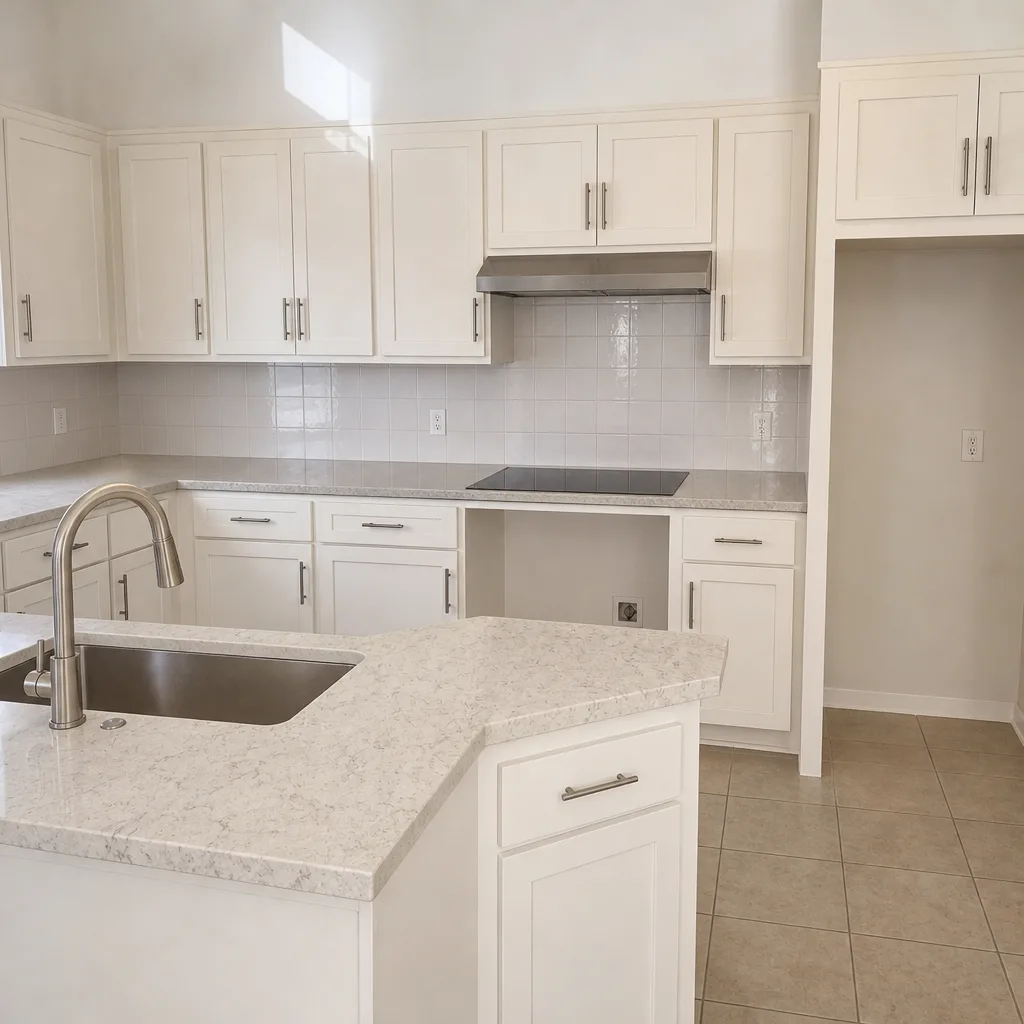
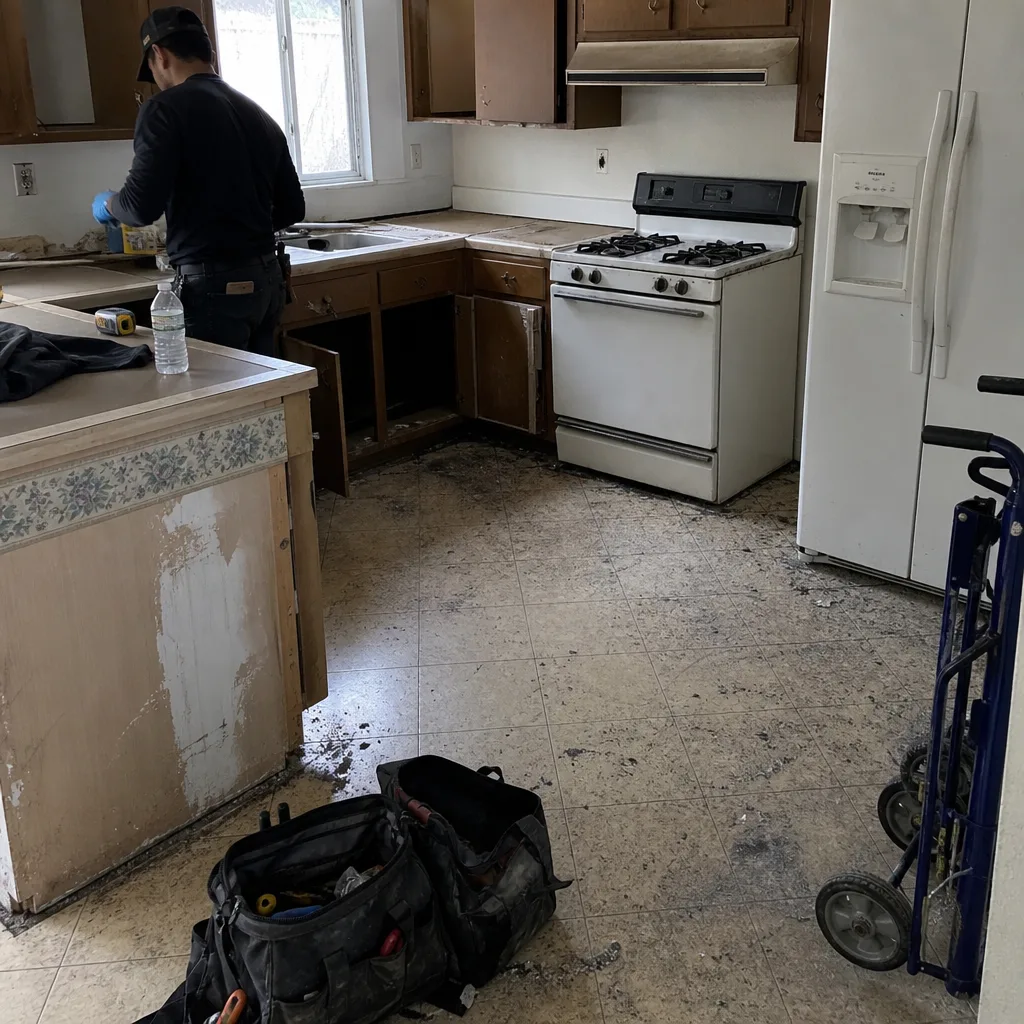
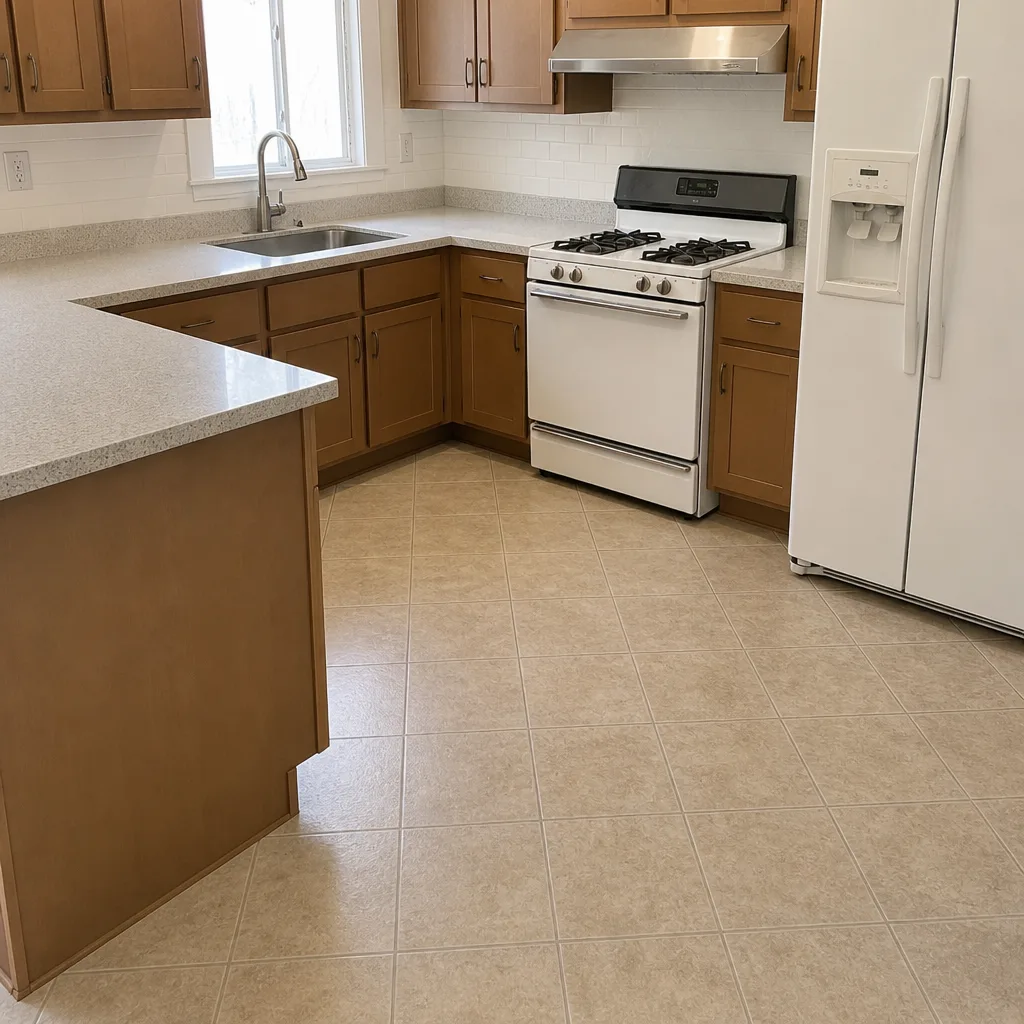
There’s a third, often-overlooked point. Cabinetry and countertop materials like Cambria and Caesarstone are dimensionally stable, but they want to sit in the room for a day before install. A July install with material brought straight from a 130°F truck into a 78°F kitchen is a fit problem waiting to happen. We stage it. If your scope includes a kitchen, our Kitchen Remodeling in Sandy Valley page walks through how the sequence works for a full kitchen rebuild.
The Cooling Season Premium and How to Schedule Around It
From June through September, every HVAC contractor in the Vegas Valley is booked solid. That has a knock-on effect most homeowners don’t expect: construction labor slows down across the board. Crews get pulled onto emergency calls, subs get chopped between jobs, and a scope that would take three weeks in November takes five in July. That’s the cooling season premium.
Schedule around it like this:
- Book real exterior work for the October transition, not June. Exterior projects scheduled in the first two weeks of October get labor, permits, and inspections at normal pace.
- Use late April as the other book window. It’s the only other point on the calendar when a crew can start a project without splitting attention across emergency work.
- Do assessment and design work in the summer, not the build. July is a great month for a design consultation, a scope walkthrough, and a written estimate. It’s a bad month for a slab pour.
- Expect material lead times to stretch in July. Cabinet, counter, and tile orders placed in the summer frequently arrive a couple of weeks later than in fall. Build that into the schedule, don’t argue with it.
- Get a written price locked in before any work starts. That’s not a slogan here, it’s how we operate. A firm written number collected in the summer holds through the build window. The price doesn’t move at the door.
We’ve seen summers where a homeowner called for an emergency bathroom repair in July, got one price, then got a very different number in October. That’s not how a scope is supposed to work, and it’s exactly what a written price prevents.
The Two Transition Periods Nobody Talks About
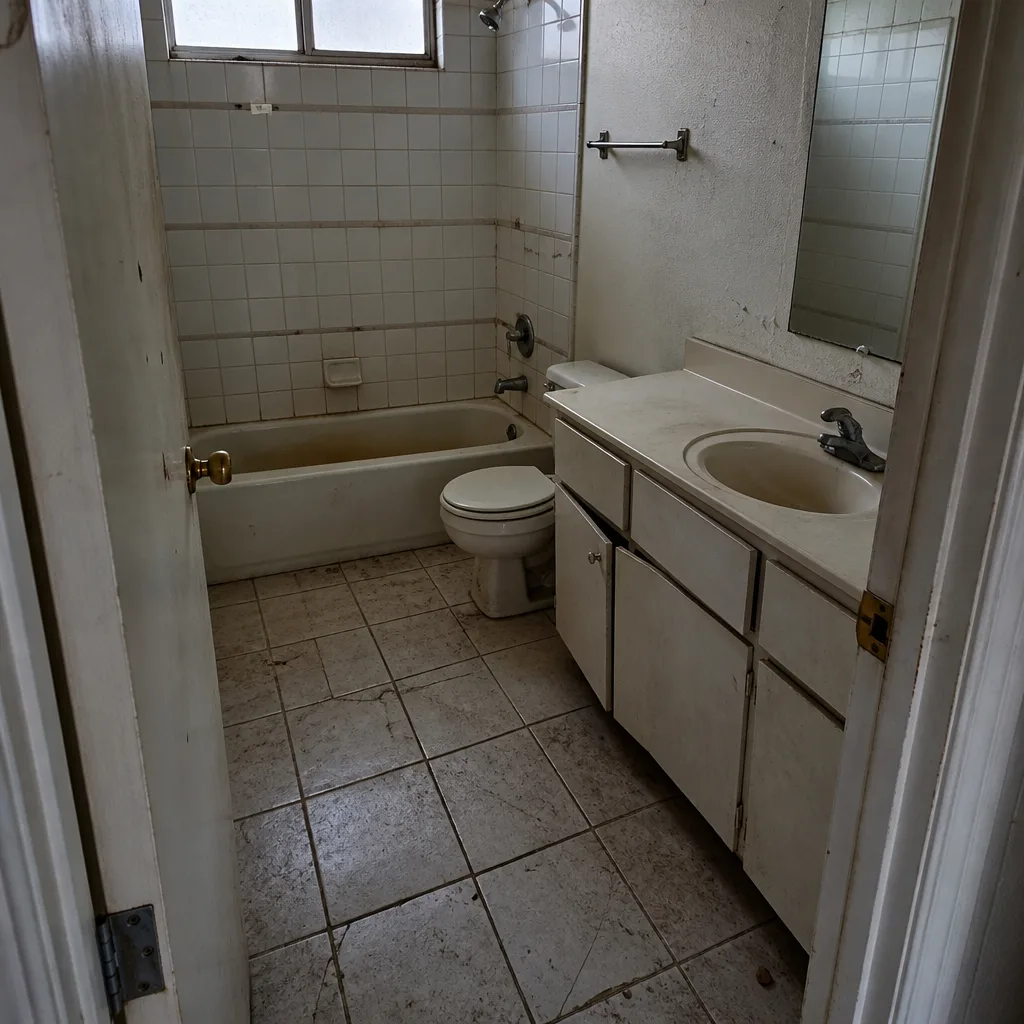
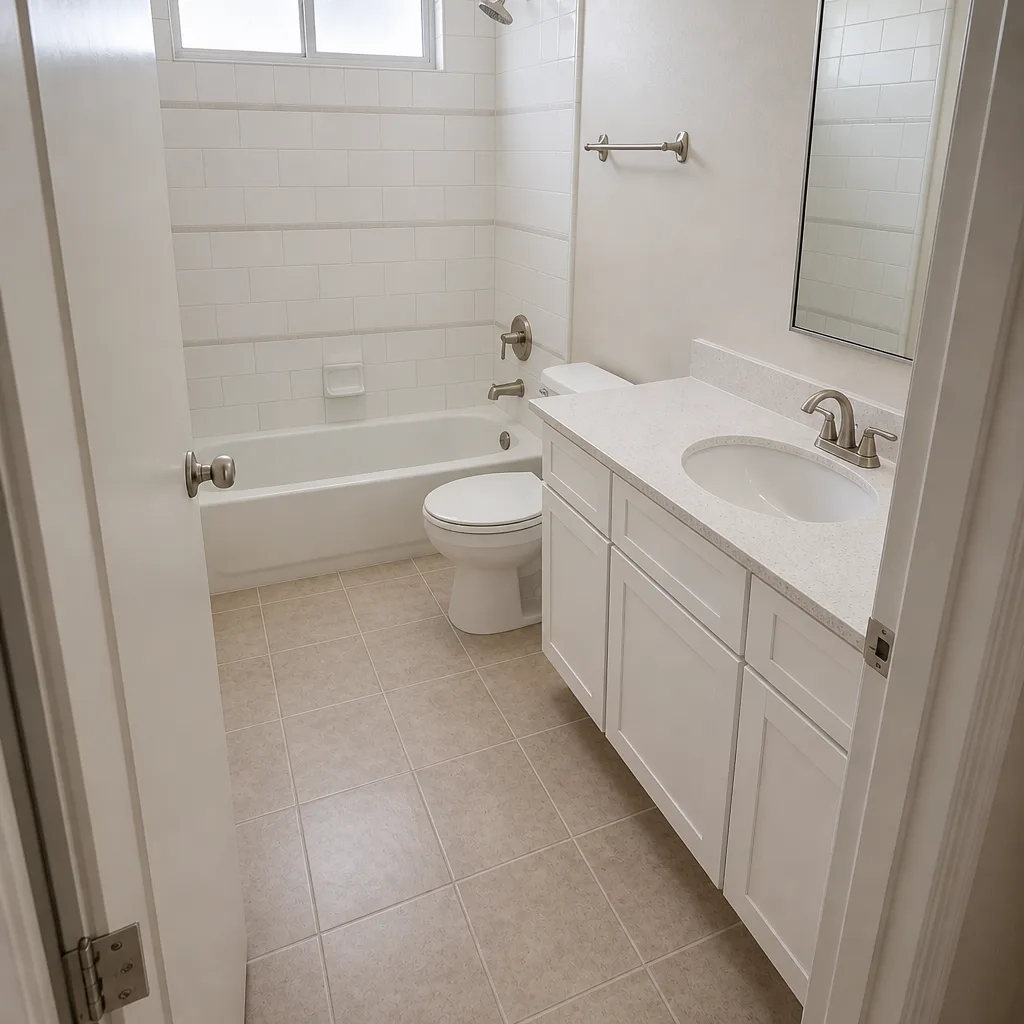
Everyone knows summer is hot and winter is cool. Almost nobody uses the two transition windows – roughly the last two weeks of April and the last two weeks of September – as the scheduling tools they are. These are the two weeks a year when the calendar is genuinely open. Stucco goes down cleanly, concrete cures at a workable rate, and inspection calendars are clear. If you’re planning a Bathroom Remodeling in Sandy Valley or any project with exterior elements, those two weeks are the highest-return scheduling decision you can make in a calendar year.
Common Mistakes to Avoid
- Treating the monsoon as a spring thing. In Summerlin the destructive rain is born in July, not April. A homeowner who seals stucco in March is sealing for the wrong weather. Do it in May or June.
- Caulking over a moving stucco crack. Caulk is a sealant, not a structural repair. A crack that returns within a season is a substrate problem and needs a contractor to look at it.
- Scheduling exterior work in June. The build window runs October through February. A slab poured in June in Summerlin will frequently surface-crack by the following spring.
- Installing flooring in an unconditioned house. In a summer outage, an empty home hits 85°F or more. Acclimating material in that environment and then moving in at 74°F produces gapped boards within a season.
- Ignoring the October assessment. Post-monsoon is when the real damage is quietest. A small amount of water behind a window weep is invisible in October and obvious as mold in February.
- Booking the cheapest summer bid. Low summer bids are usually built around a scope that will get repriced when the actual work is harder than expected. A written line-item price before work starts is the only bid worth comparing.
- Forgetting the hardscape. Pavers are not maintenance-free. Cambridge Pavers and Belgard systems need joint sand refreshed after monsoon season. Skip it and you’ll be resetting base material the following summer.
When to Call a Professional
Some things belong to the homeowner, and some don’t. Call us when you see stair-step stucco cracks, when a window frame is wet on the inside after a storm, when a door or window stops opening cleanly, when a slab edge shows efflorescence, or when the paver base has heaved. Those are contractor calls, not homeowner calls. Same for anything that requires a permit: structural changes, electrical rough-in, plumbing changes, or a roof replacement. A stucco patching job that needs substrate repair is also a contractor call, because the substrate is underneath the thing you’re patching and you can’t see what failed until you take the patch off.
Bradford Remodeling Co Summerlin offers free estimates in Summerlin – call (844) 588-0072. Every price we give is written before any work starts, and every completed project is covered by the 365-Day Done Right Promise. If the work fails inside that window, we come back and correct it at no charge. Our technicians have up to 22 years of experience, and every crew is background-checked and uniformed, so you know who’s walking through your door before they arrive.
Frequently Asked Questions
Pre-monsoon stucco sealing and roof penetration inspection in May and June. That’s the single highest-return window on the Summerlin calendar because it converts storm damage into a small preventive fix. Call (844) 588-0072 for a free pre-monsoon assessment – estimates are free.
October through February. Concrete cures evenly, stucco shrinks less during application, and permit and inspection turnaround is normal instead of jammed with emergency work. The two-week windows at the end of April and the end of September are also strong book windows. Call (844) 588-0072 to get on the schedule early.
Yes, with one condition: the house needs to be conditioned for the whole install. Adhesives, grout, and flooring material all cure at the interior temperature. If the house is running at 85°F during an outage and the material acclimates there, you’ll get gapping and lifted tile later. A crew that stages material properly can do a mid-summer interior install.
It depends entirely on scope. A stucco patch is a small number; a roof penetration re-flash plus an interior drywall repair runs higher. The honest answer is that a written estimate is the only price you can budget against. Call (844) 588-0072 – we give the number in writing before any work starts, and the price doesn’t move at the door.
No. Our price is written before any work begins, and it doesn’t move at the door. If we discover a hidden condition – rotted sheathing under a patch, failing substrate under tile – we stop and show you the condition and a written scope change before doing anything further. Scope changes require your signature. Nothing else does.
Yes. On any project that requires a permit – structural, electrical, plumbing, roof replacement – we pull the permit and the final inspection is passed before we sign the job off. Under The Garrison Standard, that’s not optional. It’s part of the scope from day one.
The Bottom Line
Summerlin construction care is a scheduling problem disguised as a maintenance problem. The monsoon runs July through September and delivers the heaviest moisture load most homes will see all year. Seal and inspect in May and June, assess in October, and schedule real exterior work in the October-through-February build window. Interior work in summer is fine when the house is conditioned and the material is staged. Book around the cooling season premium rather than fighting it, and use the two-week transition windows at the end of April and the end of September as your scheduling levers. Do that and the same repair budget covers more of the house, and the same job lasts longer.
Bradford Remodeling Co Summerlin writes every price before work starts: no numbers that move at the door, no surprise invoices, no unfinished scope. Every completed project is covered by the 365-Day Done Right Promise – if it’s not done right within a full year, we come back and make it right at no charge – and every crew is background-checked and uniformed. A live person answers the phone 24 hours a day, 7 days a week. Call (844) 588-0072 for a free estimate in Summerlin. We’ll walk the house with you, tell you what the calendar says about your project, and put the number in writing before a tool comes out.
Written by the team at Bradford Remodeling Co Summerlin.
Styles & brands we work with
- Kitchen remodeling
- Bathroom remodeling
- Home additions & ADU
- Roofing
- Windows & doors
- Driveway & pavers
- Fence
See the difference
 Before
 After
 Before
 After
 Before
 After