Last updated November 17, 2026

Free written scope consultation - allowances, timeline, and change-order rules on paper before a single trade is scheduled
Bathroom Remodeling Warning Signs Every Homeowner Should Know
Waterproofing failure behind a tiled shower usually takes 18 to 36 months to show visible damage. That is a long time. Long enough for the bond to lapse, long enough for the statute of limitations clock to start, and long enough for a contractor to be three towns over building someone else’s bathroom. By the time a homeowner notices soft drywall at the shower base or a hollow thud underfoot, the paper trail that should have held the installer accountable has gone cold. We’ve watched this pattern repeat itself across Summerlin, and it almost always starts in the bid, months before the tile goes up. This guide covers the specific warning signs in that bid, what a legitimate one itemizes, and how to check the paper before you sign.
You’ll find the bid red flags first, then the deposit and permit rules that apply in Clark County, then how to verify a bond actually covers your scope. Every section is written to be useful whether you hire Bradford or someone else.
Quick Answer
The biggest bathroom remodeling red flags are bids that never name a waterproofing membrane or its thickness, quotes that lump the whole shower into one line, contractors demanding more than 10% deposit before materials arrive, and any contractor who claims a bathroom remodel needs no permit. A legitimate bid itemizes substrate, waterproofing, and setting materials; a legitimate contractor puts the deposit in writing under Nevada’s contract limits; and in Clark County, a shower pan replacement or tile installation in a wet area almost always requires a permit, regardless of what the contractor tells you. When a bid hides these details, the failure is coming – you just won’t see it until the guarantee has already expired.
Styles & brands we work with
- Kitchen remodeling
- Bathroom remodeling
- Home additions & ADU
- Roofing
- Windows & doors
- Driveway & pavers
- Fence
Table of Contents
- What Are the Bid Red Flags That Signal a Waterproofing Shortcut?
- Why the Deposit Structure Is the First Thing to Check
- What a Legitimate Tile Installation Bid Should Itemize
- The “No Permit Needed” Claim: What Clark County Actually Requires
- How to Verify a Contractor’s Bond Covers Your Project
- Summerlin-Specific Risks: Climate, Market, and Materials
- The Membrane Spec Question You Should Never Skip
What Are the Bid Red Flags That Signal a Waterproofing Shortcut?
The waterproofing line is where a shortcut hides, because it is completely invisible after the tile is grouted. A bid can say “waterproof shower” and satisfy a homeowner while telling an installer nothing. Here is what to look for.
- No membrane brand or specification. A legitimate bid names the membrane – Sheet-type like Schluter Kerdi, a liquid-applied product like RedGard or Hydro Ban, or a foam board system. It also lists thickness, coverage, or product number. “Apply waterproofing” is not a spec.
- “Cement board” listed without thickness or a vapor barrier. Cement board is not waterproof on its own. It has to be paired with a membrane or a vapor-retarder assembly. If the bid says “cement board” and nothing else, ask what’s behind it.
- No shower pan liner – or a liner without depth. A pan liner (also called a membrane pan or a prefabricated pan) needs a specific thickness, typically 30 or 40 mil PVC, and a specific pre-slope under it. A bid that mentions “liner” without saying how deep the pre-slope or pan goes has not told you the whole story.
- Tile set over drywall in a wet area. Drywall behind a shower surround is one shortcut that shows up two years later as crumbling board. A legitimate bid specifies backer board or a foam board system.
- Cut corners at the curb and niche. The shower curb and niche are the two spots where water sits. Look for the bid to mention curb wrap, corner sealant, or a niche substrate that resists water.
We’ve seen Summerlin bids where the whole shower waterproofing was described in three words: “waterproof as needed.” That’s the phrase to walk away from. It’s not a lightweight observation – that phrase is doing the same job a blank line does on a contract.
Why the Deposit Structure Is the First Thing to Check
Nevada has a specific rule about advance deposits on residential improvement contracts, and it exists because of jobs that never started but were paid for. Under state law, a home improvement contractor is generally limited in how much they can collect before materials are delivered or work begins – as a rule of thumb, more than 10% up front before delivery is the signal to stop and look closer. Requirements get more specific with contract size and the exact scope of the work, so verify the current rule text with the Nevada State Contractors Board before you write a check.
Why this matters so much in a bathroom remodel: the deposit is often the first and largest check a homeowner writes. If a contractor asks for 30% or 50% up front “to secure the schedule” and hasn’t ordered a single tile or fixture yet, they’re using your money to float another job. That’s when the “he took the deposit and disappeared” story starts. It is also why the deposit structure is one of the most underrated warning signs on the list – the waterproofing shortcut costs you $8,000 two years from now, but a bad deposit structure can cost you the whole contract next month.
What good looks like:
- Deposit that is small and clearly tied to a milestone – materials delivered or a milestone reached.
- Every draw tied to something the homeowner can physically see or verify.
- The payment schedule written into the contract, not spoken at the kitchen table.
- No cash-only request. A check or verifiable method protects both sides.
What a Legitimate Tile Installation Bid Should Itemize
A lump-sum quote on a bathroom is the single most effective way to hide a shortcut. If the whole shower is one line item, you cannot tell whether the contractor is pricing a proper waterproofed assembly or two layers of cement board and hope. A real bid lets you compare scope line by line.
Here’s what a legitimate tile installation bid should list separately:
- Demolition and disposal – tear-out, haul-away of old tile and backer board.
- Substrate – what goes on the walls behind tile: cement board thickness, foam board brand, or both.
- Waterproofing – membrane brand, thickness, and coverage area, including the curb and niche.
- Shower pan – pre-slope depth, liner thickness, or a prefabricated pan brand.
- Setting material – thin-set or mortar by brand and grade. This is what holds the tile to the wall, and it is a real decision, not a default.
- Grout and sealant – the product type, especially at corners and joints where movement happens.
- Fixtures and trim – valve, shower head, drain, and any brand listed by name.
- Tile itself – square footage of field tile, plus trim pieces and accent tile.
- Labor and cleanup – included, and stated.
When we write a bid, every line is a decision the homeowner can question. That is the point. Compare two lump-sum quotes on a Summerlin bathroom and you’re comparing two prices against two invisible assemblies – there’s no way to tell which one is actually waterproofed. The itemized version is the only bid you can turn into an apples-to-apples comparison.
The “No Permit Needed” Claim: What Clark County Actually Requires
“You don’t need a permit for this” is one of the most common and most damaging phrases in bathroom remodeling. In Clark County, most bathroom work that touches plumbing, electrical, or the wet area of a shower requires a permit and inspection. A contractor who waves that off is either uninformed or cutting a corner you’ll pay for later – usually at resale, when the unpermitted work gets flagged in a title search or a buyer’s inspection.
What typically requires a permit in Clark County:
- Relocating or adding plumbing fixtures – moving a toilet, adding a sink, running new supply lines.
- Replacing a shower pan or changing the shower footprint.
- New electrical circuits, outlet relocations in wet areas, or new exhaust fan wiring.
- Removing or altering structural walls, including a tub-to-shower conversion that changes framing.
- New gas lines or changes to a gas fixture location.
What generally does not require a permit: replacing a toilet, replacing a vanity top, or replacing a light fixture on an existing circuit. Notice that these are the cosmetic items a contractor wants you to think the whole remodel falls under. The moment you’re moving a shower valve or rebuilding a pan, you’re into permit territory.
Why this matters years down the road: a permit means an inspector saw the rough-in and the waterproofing before the tile went up. No permit means nobody saw anything, and if the shower pan fails or the plumbing leaks, the unpermitted status is a real problem at insurance and resale time. Our bathroom remodeling in Sandy Valley work follows the same rule – permit first, inspect the rough-in, then close the wall. Skipping that order is how a contractor puts you in the position of defending work you didn’t build.
How to Verify a Contractor’s Bond Covers Your Project
A contractor’s bond is not the same as a license, and it is not the same as insurance. The bond exists so a homeowner has something to collect against if the contractor takes money and doesn’t perform. The license is what says the contractor is allowed to work at all. In Nevada, both matter, and both are worth confirming before work starts.
The step-by-step check:
- Look up the contractor on the Nevada State Contractors Board license search. Confirm the license number matches the name on the bid, the address, and the classification. A bid with no license number is an immediate stop.
- Confirm the bond is current. The status shows as active with a specific amount. A lapsed bond is a hard warning sign – it’s the exact gap the opening of this guide warned about, where the failure shows up after the bond has gone.
- Compare the bond amount to your project value. The state minimum bond amount is often smaller than a full bathroom remodel. If the project is $30,000 and the bond is at the minimum, the bond isn’t really covering you – it’s covering the state’s grievance process. Ask whether the contractor carries additional coverage for larger scopes.
- Confirm general liability insurance separately. A bond does not pay to repair water damage; liability insurance does. Ask for a certificate of insurance current to the job start date.
- Ask whether the contractor works with a written guarantee and, if so, what it covers and for how long. Our 365-Day Done Right Promise means that if a completed project fails within the guarantee window, we return and correct it at no charge. Any contractor who can’t state a guarantee term in writing is asking you to trust a handshake – that’s the arrangement that fails 18 months in.
None of this requires special access. The state search is free. The paperwork is something any legitimate contractor hands over without flinching. If one does flinch, that’s your sign.
Summerlin-Specific Risks: Climate, Market, and Materials
Summerlin sits at elevation in the Mojave with very low indoor humidity and a big day-night temperature swing. That combination is hard on bathroom assemblies because the materials move differently than they do in, say, a coastal climate. Tile expands and contracts with the interior temperature cycle. Grout at corners and curbs is where it shows first. If the waterproofing at the pan isn’t done to spec, the movement opens a way for water before the homeowner ever sees a drip.
The hard-water issue in Summerlin makes shower assemblies work harder than the same shower in a soft-water city. Mineral deposits build up on the membrane inside the shower pan if the pre-slope isn’t pitched correctly, and that buildup is invisible until it slows the drain or shows up as a stain on the ceiling below. A proper pre-slope and a correctly sized membrane are not luxuries here. They are the difference between a shower that lasts and a shower that needs to be torn out in three years.
Summerlin’s market adds another layer. Bathroom remodels here resell well, which means a lot of bids come from contractors who are chasing the resale value and not paying attention to the assembly. We’ve seen Summerlin homes where a “recently remodeled” bathroom listed at closing has a shower that was tiled straight onto drywall with a mastic adhesive. It looks perfect. It will fail. That’s the exact wave of work our general contractor in Sandy Valley team gets called on a couple of years after the fact, and it’s why we won’t take a shortcut on membrane, pan, or permit – not on a Summerlin job and not anywhere.
The material roster helps here. KraftMaid and Wellborn cabinetry, plus Cambria surfaces and Kohler fixtures, come with manufacturer specs and warranties. Those specs are traceable. If the cabinet door delaminates or the finish fails, there’s a paper trail that backstops our guarantee. That’s not a selling point, it’s a requirement – the spec sheet is what makes any warranty worth the paper it’s written on.
The Membrane Spec Question You Should Never Skip
If you only ask one question of a bathroom contractor before you sign, ask this: which waterproofing membrane, and how thick? The answer will tell you more than a portfolio of photos. Here’s why, and how to interpret the response.
- Sheet membrane (like Schluter Kerdi or a bonded sheet system). Thickness is measured in mils and the brand is named. Correct answer: “Kerdi, applied with thin-set, lapped 2 inches at seams.” Vague answer: “sheet membrane.”
- Liquid-applied membrane (like RedGard or Hydro Ban). Coverage is measured in mils dry film thickness and requires multiple coats. Correct answer: “Hydro Ban, two coats, 20-30 mil wet film per coat.” Vague answer: “rolled-on waterproofing.”
- Foam board systems (like a bonded foam backer). Joints and fastener penetrations get sealant and banding. Correct answer: “seams banded with the manufacturer’s sealant, corners pre-formed.” Vague answer: “waterproof board.”
- No membrane named at all. This is the worst answer, because it means either there is no plan or the contractor is counting on you not to ask.
The follow-up question on the shower pan is just as important. Ask how deep the pre-slope is, what liner thickness is being used, and whether the liner runs up the wall at least 3 inches above the curb. These are the trade-level specifics that separate a legitimate installer from someone who is confident because nobody has caught them yet. A contractor who can answer these in plain sentences knows what they’re building. One who pivots to “we’ve been doing this a long time” is telling you they don’t.
Common Mistakes to Avoid
- Accepting a lump-sum quote on the shower. If every line item is one price, the waterproofing decision is invisible. Ask for the itemized version, every time.
- Paying more than a milestone-tied deposit before materials arrive. Nevada limits advance deposits on home improvement contracts. A contractor asking for a large up-front number is asking you to fund their schedule with your money.
- Believing “no permit needed” without checking. In Clark County, most bathroom work touching plumbing, electrical, or shower pan needs a permit. Verify with the jurisdiction before the wall closes.
- Trusting “recently remodeled” at resale. In Summerlin, a fresh bathroom can hide a drywall-and-mastic install. Get the actual build spec or assume the worst.
- Skipping the state bond search. A current bond and a matching license are the baseline. If the bond is lapsed, the guarantee you were promised is theoretical.
- Comparing two quotes without comparing scope. Two numbers that both say “shower remodel” can hide completely different assemblies – one waterproofed, one not.
- Not reading the guarantee. A guarantee that isn’t written is a conversation. A guarantee that names what’s covered and for how long is a contract term. Worth saying twice.
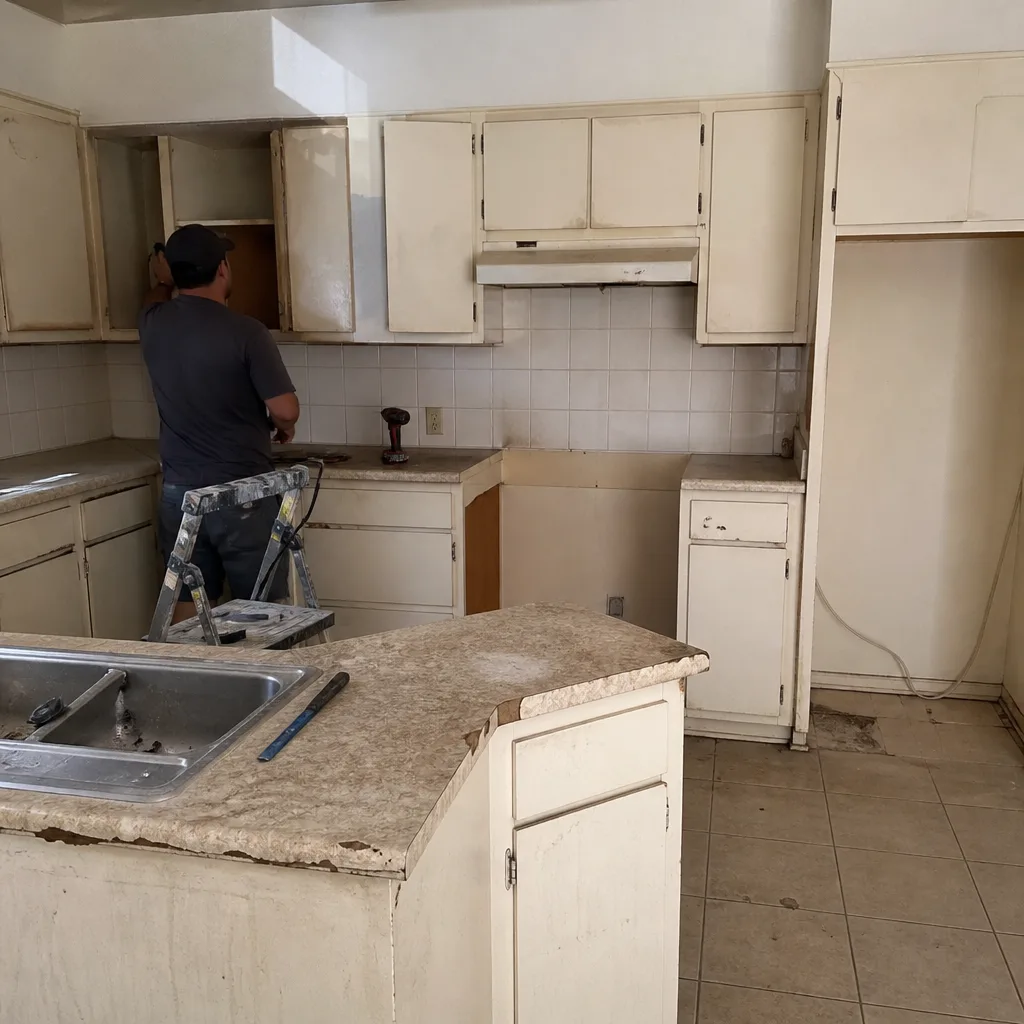
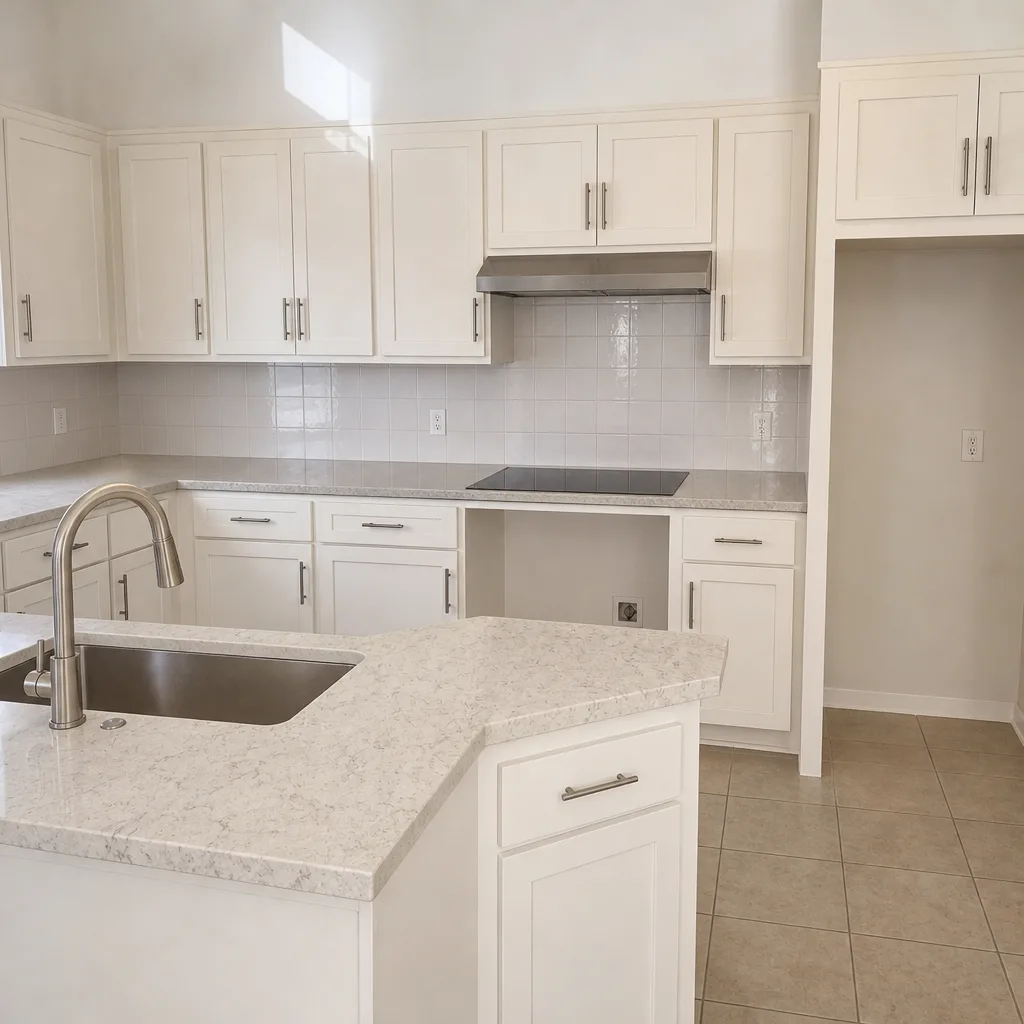
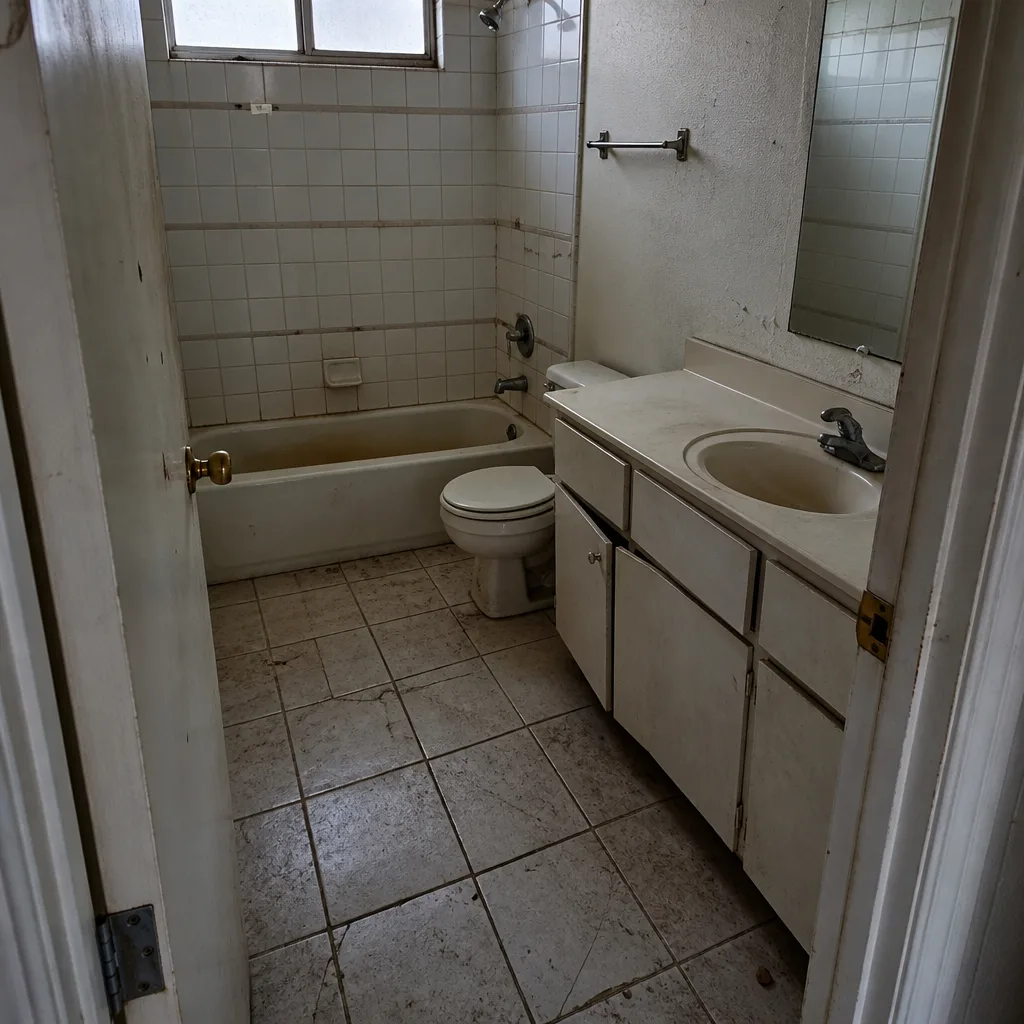
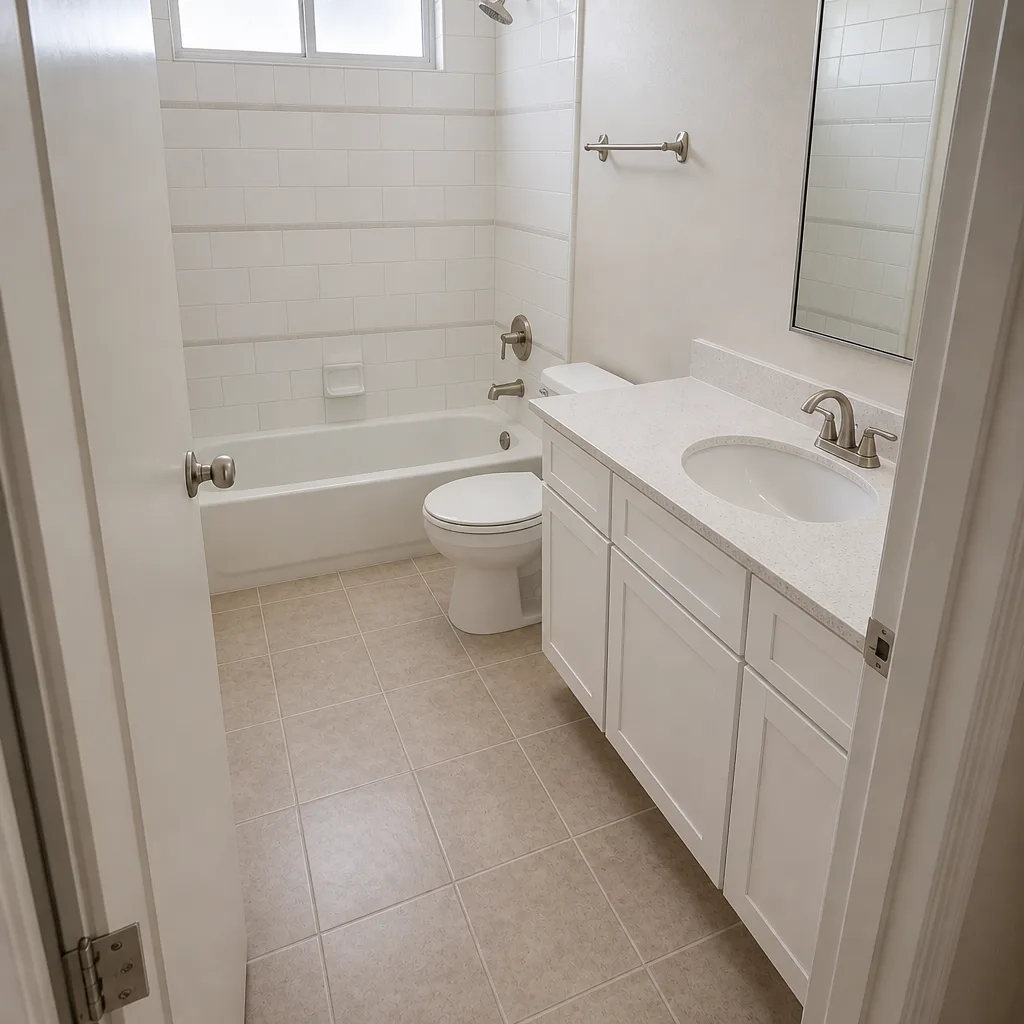
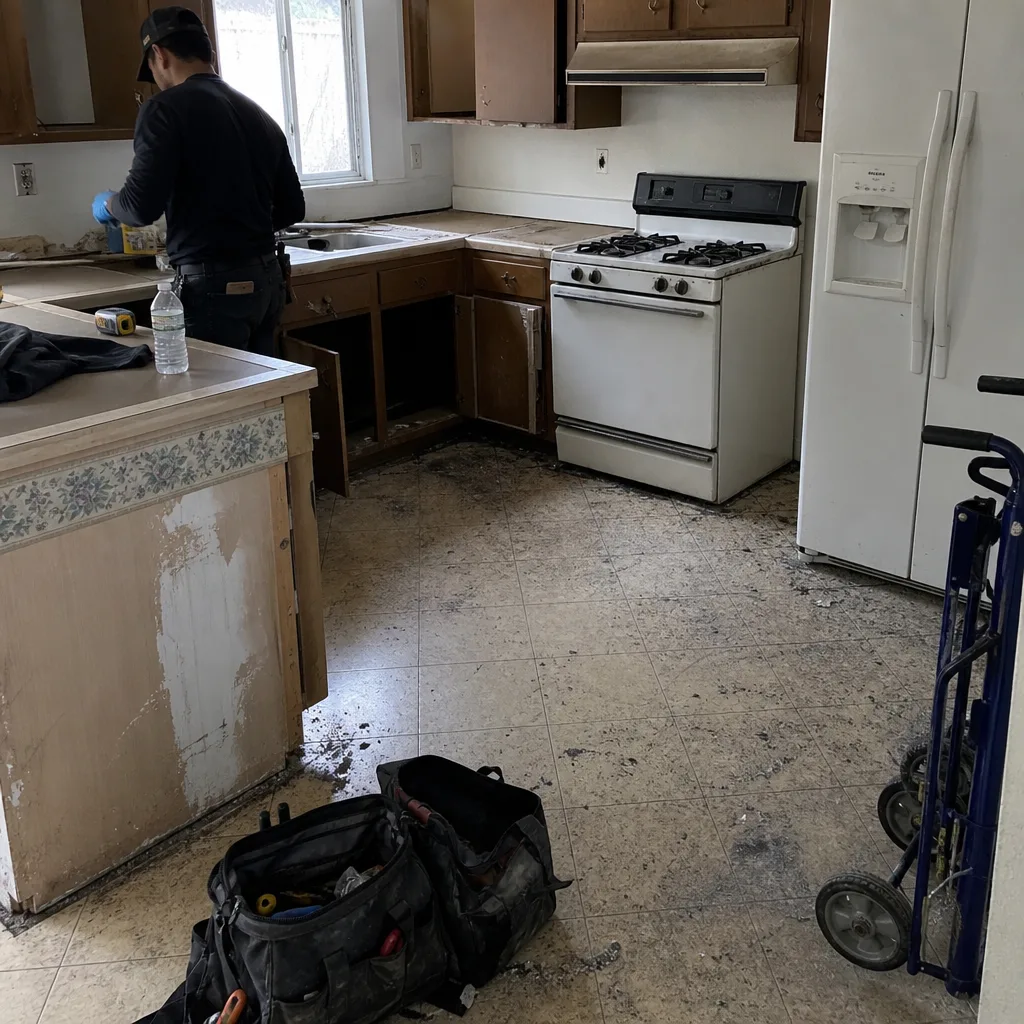
See the difference
 Before
 After
 Before
 After
 Before
 After
When to Call a Professional
Call a professional before you sign the bid if any of these are true: the contractor won’t name a membrane brand; the deposit is more than 10% and not tied to a milestone; the contractor says you don’t need a permit for a shower pan rebuild; the bond on the state search is lapsed or at the state minimum; or the guarantee is verbal only. Any one of these is a warning sign. Two of them together is a strong signal to walk. Also call if you’ve already had a bathroom remodeled and you’re seeing soft spots, hollow-sounding tile, or a ceiling stain below the shower. That’s a waterproofing failure, and the longer it goes, the more it costs to fix.
Bradford Remodeling Co Summerlin offers free estimates in Summerlin – call (844) 588-0072. Every bid comes with a written price before any work starts, a documented brand roster (KraftMaid, Wellborn, Kohler, James Hardie, and more), background-checked and uniformed technicians on every job, and the 365-Day Done Right Promise on every completed project. If the work fails inside that window, we come back and make it right at no charge.
Frequently Asked Questions
A bathroom remodel in Summerlin typically runs $18,000-$45,000 for a full gut remodel, or $7,000-$14,000 for a cosmetic refresh that keeps the layout. The range is wide because the assembly is where the money sits – waterproofing, permit, and substrate are a large part of the number, and a bid that omits them is not really quoting the job you’re asking about. Call (844) 588-0072 for an exact written quote – estimates are free.
Our policy is the price is the price – what we write before work starts is what you pay at the door, unless the scope changes because you asked for something new. If a hidden condition shows up after demolition (rot behind the wall, an unpermitted previous install), we stop, put the finding in writing, price the fix, and get your sign-off before we touch anything. No surprise invoices after the fact. Call (844) 588-0072 for a free estimate with a written price.
Yes. In Clark County, we pull the permit and coordinate inspection before the wall closes, on any job that touches plumbing, electrical, structural, or the shower pan. Skipping the permit puts the homeowner on the hook at resale and at insurance time, and that’s not a shortcut we take. We document the permit and inspection record so you have it in hand at project close. Call (844) 588-0072 to schedule a free estimate.
A full bathroom remodel in Summerlin typically takes 3 to 6 weeks from demolition to final inspection, with the shower waterproofing and cure time adding real days to the schedule. Cosmetic refreshes (paint, vanity, fixtures) run 1 to 2 weeks. We give you a written schedule with the bid, so you know the sequence and what each phase depends on. Call (844) 588-0072 for a schedule based on your scope – the estimate is free.
Get it inspected before you repair anything. A hollow thud under the shower floor, soft drywall at the base, or a ceiling stain under the shower usually means the waterproofing failed, and patching the visible damage without addressing the membrane just resets the clock. We inspect the assembly and put the repair scope and price in writing. Call (844) 588-0072 – free estimate, written price before work starts.
Search the contractor’s license number on the Nevada State Contractors Board website. The result shows the license status and bond status with the amount. If the bond shows lapsed, don’t sign – the guarantee you were promised has nothing behind it. If the bond is current but at the state minimum, ask whether the contractor carries additional coverage for a project at your scope. Confirming takes a few minutes and is the cheapest insurance you’ll ever buy.
The Bottom Line
Bathroom remodeling fails differently than other trades because the failure is hidden by the tile. The bid is where you catch it: a named membrane, an itemized shower assembly, a deposit under the Nevada limit, a permit pulled in Clark County, a bond that’s current and large enough to matter, and a guarantee you can read. Get those six things in writing, and the waterproofing problem that would have surfaced in three years is handled before demolition starts. That is what “squared away” looks like in Summerlin – a written price, a documented scope, and a signed guarantee in your hand at close. Our technicians bring up to 22 years of experience to every job, and every project is backed by The Garrison Standard.
If you’d rather compare bids against a good one before you decide, call (844) 588-0072. A live person answers, day or night. We write the price before any work starts, we pull the permits, and we stand behind the work for a full year. Start with a free estimate and see the difference in the paperwork. You can also start at the Bradford Remodeling Co Summerlin home page or see how we handle the kitchen remodeling in Sandy Valley side of the same standard.
Written by the team at Bradford Remodeling Co Summerlin.