Last updated November 17, 2026





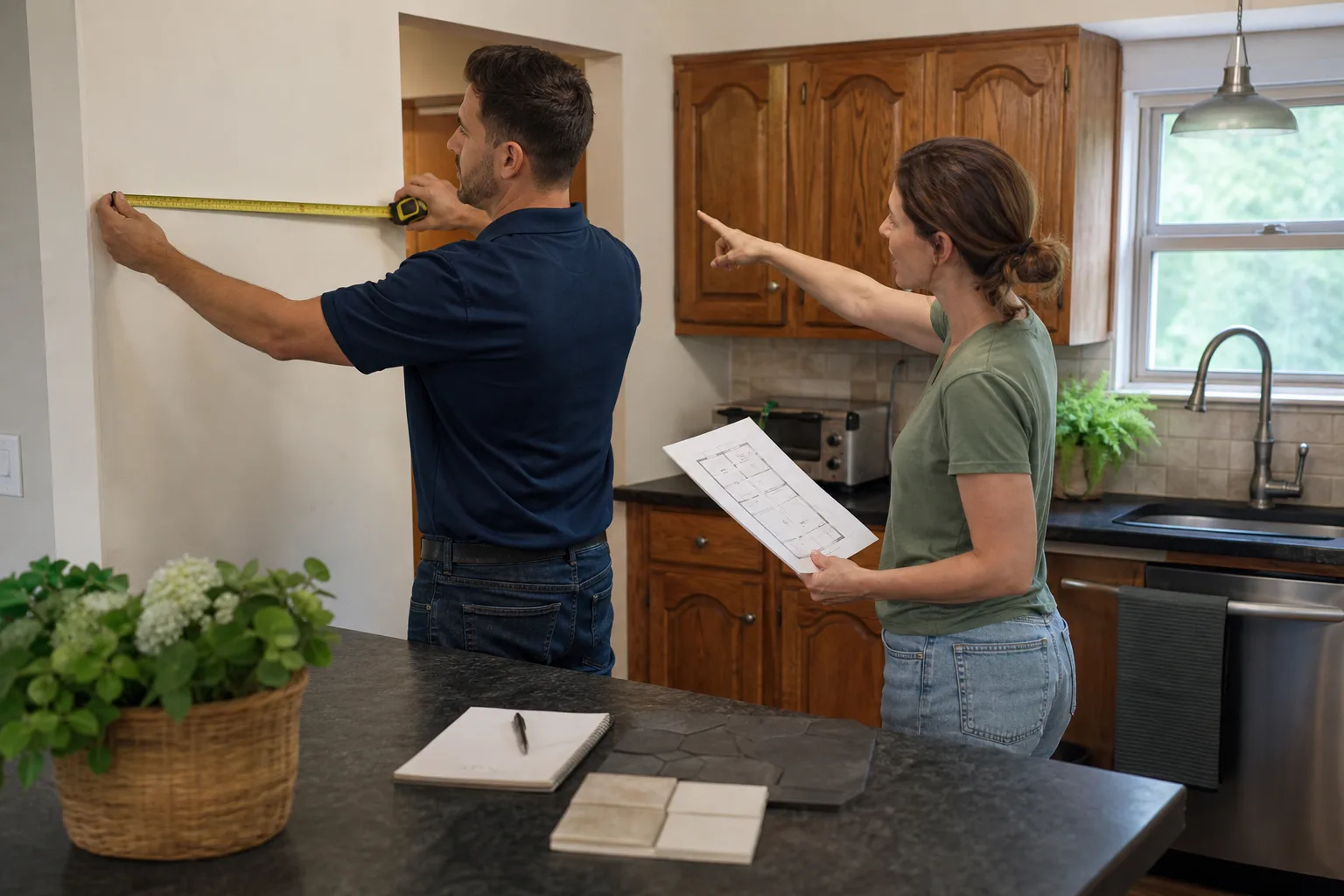
Free written scope consultation - allowances, timeline, and change-order rules on paper before a single trade is scheduled
How to Hire a Construction Contractor in Summerlin: A Step-by-Step Guide
Nevada’s State Contractors Board logs more complaints per capita than 43 other states, and Clark County, which covers most of Summerlin, accounts for the largest share of those filings. That’s not a knock on the trade. It’s a signal that this market moves fast, draws operators from out of state, and rewards homeowners who slow down long enough to check a license number before they sign anything. The standard advice, “get three bids and read reviews,” won’t catch the traps we see most often in Summerlin: unlicensed subs, verbal scope changes that never make it into the paperwork, and deposit-then-disappear operators with nothing but a post box. This guide walks through licensing, the three kinds of written numbers, and how to structure payments so your money only moves when verified work is on the wall.
Quick Answer
To hire a contractor in Summerlin, verify the license on the Nevada State Contractors Board portal, get a written contract (not just an estimate or a bid) that lists material specs by brand and grade, and tie payments to inspection milestones rather than a contractor’s calendar. Never pay more than a modest deposit up front. A licensed, insured contractor with a physical Las Vegas Valley presence and a written workmanship guarantee is the only kind worth signing with.
Styles & brands we work with
- Kitchen remodeling
- Bathroom remodeling
- Home additions & ADU
- Roofing
- Windows & doors
- Driveway & pavers
- Fence
Table of Contents
- How to verify a Nevada contractor license
- Estimate vs. bid vs. contract: which one protects you
- Las Vegas market red flags
- What a real scope-of-work document contains
- How to structure the payment schedule
- Summerlin-specific things to know
- Common mistakes to avoid
- When to call a professional
How Do You Verify a Nevada Contractor License in Summerlin?
You verify it by pulling the license number on the Nevada State Contractors Board (NSCB) public portal before you sign anything. The contractor is required to show the number in advertising, on bids, and on contracts. If you can’t find the number, that’s the answer: no number, no job.
Here’s what the portal actually tells you, and what to do with each field:
- Status: “Active.” This means the license is currently valid and the contractor is authorized to contract work. This is the only status you want. Anything else is a stop sign.
- Status: “Inactive.” The license exists but the contractor isn’t authorized to enter new contracts right now. Sometimes it’s a lapsed renewal. Sometimes it’s a disciplinary hold. Either way, signing with an inactive license means you have no NSCB recourse if the work fails, and the Residential Recovery Fund won’t cover you.
- Classification. Nevada licenses are classified by scope. A residential remodel of a single-family Summerlin home generally falls under a Class B (general building) or Class C-3 (carpentry and remodeling) license. A specialty sub like electrical or plumbing needs their own C-2 or C-1 classification. If a general contractor is doing everything with one license and no listed subs, ask why.
- Bond and insurance on file. The portal shows the current surety bond amount and whether it’s current. Ask for a certificate of insurance naming you as additionally insured for anything over a few thousand dollars. A contractor who hesitates on this is telling you something.
- Complaint history. The portal logs complaints and their disposition. One old complaint from years back that was resolved isn’t a dealbreaker. Three open complaints and a suspension is.
This check takes ten minutes. Skipping it is the single most expensive shortcut Summerlin homeowners take, because once the first check clears, the license status stops mattering to your bank account.
What’s the Difference Between a Written Estimate, a Written Bid, and a Written Contract?
Only the contract protects you. An estimate is a ballpark. A bid is a firm offer that may or may not survive the first site visit. A contract is the enforceable document that says exactly what will be built, with what materials, by when, and for how much. Homeowners get burned because they treat the first two as if they were the third.
Here’s how the three differ in practice:
- Written estimate: A range, usually loose. Sounds like “$18,000 to $26,000 for the kitchen.” Useful for budgeting, useless for enforcing. Most complaints about “the price went up at the door” start here, because nothing was locked in writing.
- Written bid: A single number for a defined scope, often with allowances (“$4,500 allowance for cabinets”). It’s better than an estimate, but allowances are the soft spot. If the cabinets you pick cost more than the allowance, the price moves. A bid without material specs by brand and grade is an estimate wearing a suit.
- Written contract: The actual document. It references the scope of work, states the total price with line-item breakdown, names the payment schedule tied to milestones, lists the brands and models or grades, names any subcontractors, includes the lien waiver process, and states the workmanship warranty in writing. This is the only document your lawyer, the NSCB, and a judge will care about.
At Bradford Remodeling Co Summerlin, we put a written price in the homeowner’s hand before any work starts, and it doesn’t move at the door. That standard comes from The Garrison Standard, the framework every Garrison Partners location operates under. You can’t tie a payment schedule to a document that doesn’t exist. Get the contract, then move to the next section.
What Are the Las Vegas Remodeling Market Red Flags?
The red flags specific to Las Vegas and Summerlin aren’t the ones on every generic hiring checklist. Here are the ones we see most often, and why each matters in this market specifically.
- Post-box or UPS-store address with no physical yard or shop. Nevada has a transient contractor problem. Some operators are here for the summer build season and gone before the monsoon. Before you sign, drive past the address. A real operation has a shop, a yard, or at minimum a business location you can walk into and see a human being at a desk.
- Demand for more than 50% upfront. This is the deposit-and-disappear model. Nevada doesn’t cap deposits by statute, but the industry standard for custom remodeling is a deposit in the 10 – 20% range with subsequent payments tied to milestones. Anyone who wants half the job’s money before the first sub shows up is either cash-strapped, uninsured, or planning to leave.
- Verbal scope changes. In Summerlin, additions often run into HOA architectural review, and the review can require a change. If the contractor handles that change verbally, you have no record of who agreed to what price. Every change order, no matter how small, needs to be in writing with a new line item.
- No physical brand tie-ins on cabinets, windows, or roofing. If a contractor can’t name the window line (PGT, for example), the cabinet brand (KraftMaid, Wellborn), or the roofing (Tamko or GAF), they’re buying from whatever’s on the truck that day. That’s fine for a patch. It’s not fine for a $60,000 remodel.
- No listed subcontractors. Most residential remodeling uses licensed subs for electrical, plumbing, and HVAC. Nevada requires those subs to be separately licensed with their own classifications. A general contractor who won’t name their subs, or who says “we do it in-house” when their license classification doesn’t cover it, is hiding something.
- Pressure to skip the permit. In Clark County, pulling a permit is a matter of public record. A contractor who suggests skipping the permit for a structural or MEP change (mechanical, electrical, plumbing) is offering you a cheaper job and a harder resale. Any Summerlin home sale can bottleneck on an unpermitted addition during the inspection period.
What Must a Scope-of-Work Document Contain Before You Sign?
A scope-of-work document must name every material by brand and grade, disclose every subcontractor and their license number, state the demolition and disposal plan, name the permit responsibility, and spell out the lien waiver process. If any of those are missing, the document is incomplete.
Here’s the checklist to walk through with any contractor before you sign:
- Material specs by brand and grade, not by allowance. “KraftMaid Homestead maple cabinets, White Sand finish” is a spec. “$6,000 cabinet allowance” is a hope. The same applies to countertops (Cambria vs. “quartz”), fixtures (Kohler, Moen), roofing (GAF, Tamko), windows (PGT, Boral), and exterior cladding (James Hardie). Brand-level specs are traceable and enforceable.
- Subcontractor disclosure. Name every sub, their trade, and their Nevada license classification number. A written contract should have this as an attachment, not a promise.
- Permit and inspection responsibility. Who pulls the permit? Who schedules the inspection? Who pays the re-inspection fees if a sub fails? All three should be in writing. In Summerlin, the homeowners’ association (HOA) review is a separate track from the Clark County permit, and both need to be named.
- Demolition and disposal plan. Where does the debris go, who hauls it, and is the cost of hauling inside the contract price or on top of it?
- Lien waiver process. Every sub who works on the property can file a mechanic’s lien if they aren’t paid. Your contract should require the general contractor to collect signed conditional lien waivers from every sub at each payment milestone. This is how you avoid getting a lien notice six months after the job closes. Any contractor who waves off the lien waiver process is one to walk away from.
- Written workmanship warranty. The document should state, in plain English, what the warranty covers, for how long, and how a return visit is scheduled. At Bradford, every completed project carries the 365-Day Done Right Promise, a full-year written guarantee. If the work fails inside that window, we come back and correct it at no charge.
- Close-out package. At the end of the job, you should receive a signed written guarantee, all product spec sheets and manufacturer warranties, the permit inspection sign-offs, and a lien waiver from every sub. “Squared away” means those documents are in your hand, not the contractor’s.
How Should the Payment Schedule Be Structured?
The payment schedule should move your money only when a milestone has been completed and verified, not on the contractor’s calendar. The standard is a modest initial deposit, then payments tied to specific inspected milestones, with a meaningful final payment held until close-out documents are delivered.
Here’s what a disciplined schedule looks like for a typical Summerlin kitchen or whole-home project:
- Deposit (10 – 15%): Due at contract signing. Covers permit filing and material orders. This is not the phase where a contractor should be paying their own overhead out of your money.
- Rough-in milestone (15 – 20%): Due after framing, electrical rough-in, and plumbing rough-in pass inspection. Inspection card is your proof.
- Substrate and drywall (15 – 20%): Due after drywall is hung, taped, and finished.
- Cabinet and finish (20 – 25%): Due after cabinets are set, counters are templated and installed, and finish materials are in.
- Close-out (15 – 25%): Held until final inspection, lien waivers from every sub, and the written guarantee are all in hand.
The rule that matters: no payment happens without a corresponding document or inspection. If a contractor asks for the next draw before the milestone they’re charging for has been verified, the honest answer is “not yet.” A contractor who accepts that answer is running a disciplined business. One who pushes back isn’t. You can read more about how we handle written pricing on the Bradford Remodeling Co Summerlin home page.
What’s Specific to Hiring a Contractor in Summerlin?
Summerlin has three conditions that shape a hiring decision more than they do in other parts of the Las Vegas Valley. The first is the HOA. Nearly every neighborhood in Summerlin, from The Ridges to Red Rock Country Club to the villages along Hualapai Way, has an architectural review committee with its own submission process. A contractor who has never filed an HOA architectural packet in Summerlin will cost you weeks.
The second is the desert climate. Las Vegas summers push 115°F, and exterior materials take a beating. Roofing shingles rated for wet climates fail faster here than the spec sheet suggests. James Hardie fiber cement holds up better than standard wood siding in the dry heat and monsoon storms. PGT windows with low-E glass reduce cooling load in a way that matters on a July power bill. These are decisions your contractor should be able to walk through with you, brand by brand, not just “we’ll use the good stuff.”
The third is the construction defect environment. Nevada has specific statutes covering residential construction defects, and the timelines for filing a claim are shorter than most homeowners realize. The written warranty you negotiate at signing directly affects what recourse you have later. A 365-day Done Right Promise is not a marketing line. It’s a written window during which your contractor is still on the hook for their own work.
We see this in practice across Summerlin every season. The homeowners who close out with no surprises are the ones who treated the contract as the job, and the build as the execution.
Common Mistakes to Avoid
- Hiring on the first bid without comparing scope. The cheapest bid in Summerlin is often cheapest because materials aren’t specified, subs aren’t named, and the permit isn’t included. Compare line items, not totals. A bid that’s 20% lower with the same scope is a bid that’s missing 20% of the scope.
- Skipping the NSCB check because the contractor “seems legit.” Every homeowner who lost money to an unlicensed operator felt the same way at the start. The portal check is non-negotiable.
- Signing an estimate as if it were a contract. An estimate isn’t enforceable. If the document doesn’t say “contract” at the top, has no payment schedule, and doesn’t name material grades, it isn’t the document you sign.
- Paying more than 15% upfront. Large deposits are the number one signal of a cash-flow problem that will become your problem. If a contractor needs 50% to start, they don’t have the capital to finish.
- Accepting verbal change orders. “We’ll sort that out at the end” is how $4,000 turns into $14,000. Every change is a written line item with a signature, even when it’s small.
- Forgetting the Summerlin HOA approval timeline. Architectural review can add two to four weeks. If your contractor built a schedule that doesn’t include that runway, they’ve either never worked Summerlin or they’re planning to start without the approval.
- Not getting lien waivers at each draw. This is the mistake that shows up six months after the punch list, when a sub you never met files a lien against your home. Collect waivers at every milestone, not at close.
When to Call a Professional
Call a licensed contractor when the scope crosses into structural work, electrical, plumbing, or gas, or when the project involves a permit the county or HOA will inspect. Do not DIY through a load-bearing wall, a panel upgrade, or a gas line. Those carry real injury and real resale risk. Call a contractor if you’re coordinating three or more trades (cabinetry, countertops, electrical, plumbing), if the project will take more than a few weekends, or if you’ve been burned before and want a written price before anyone touches a tool. Bradford Remodeling Co Summerlin offers free estimates in Summerlin, and we put the price in writing before work starts. Call (844) 588-0072 to schedule yours. You can also see how we handle neighboring areas by visiting our General Contractor in Sandy Valley page.
See the difference
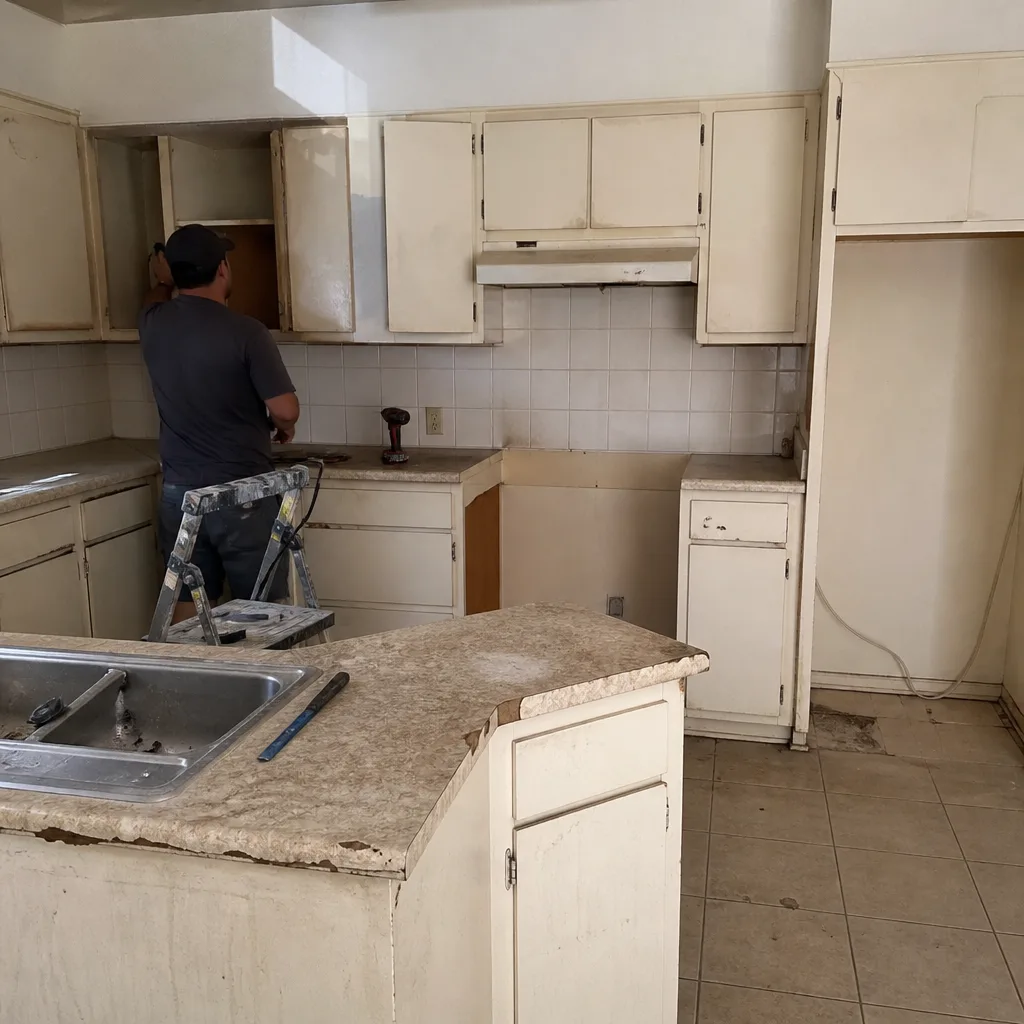 Before
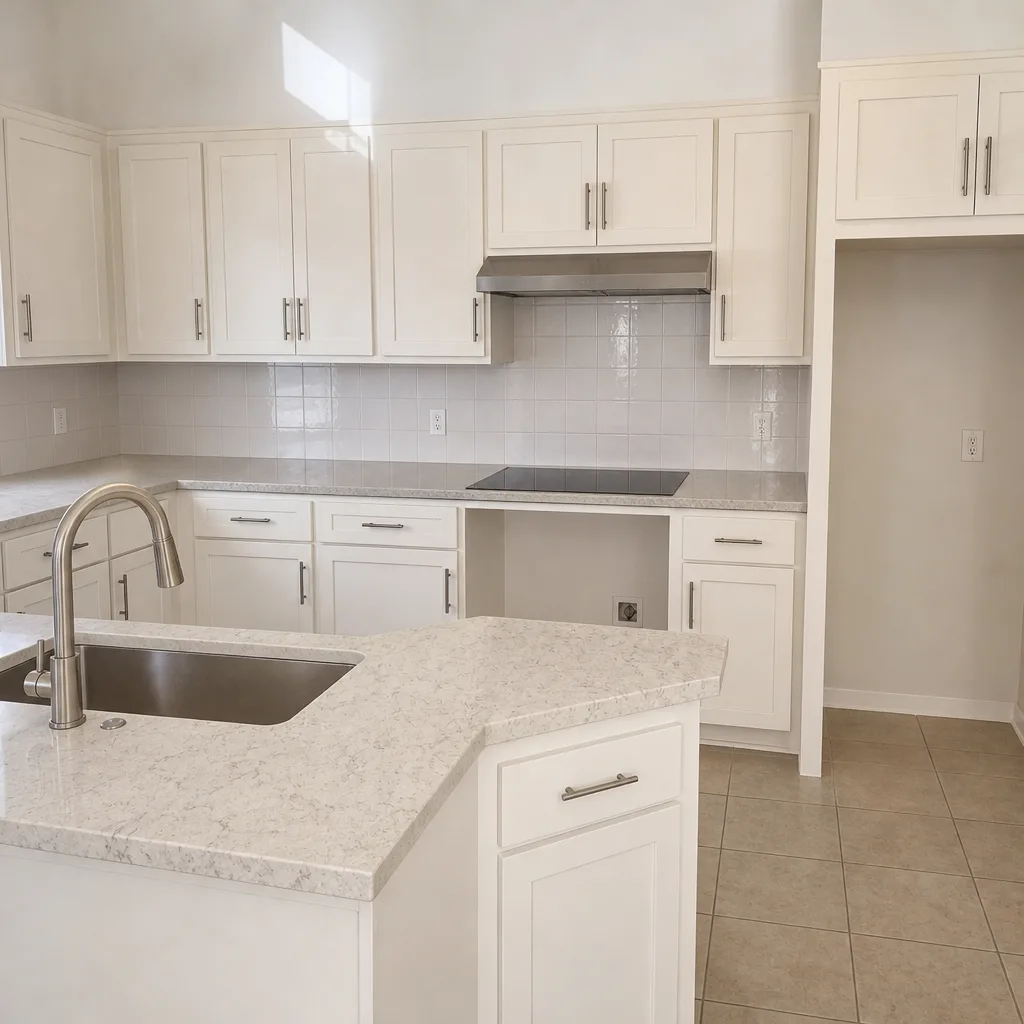 After
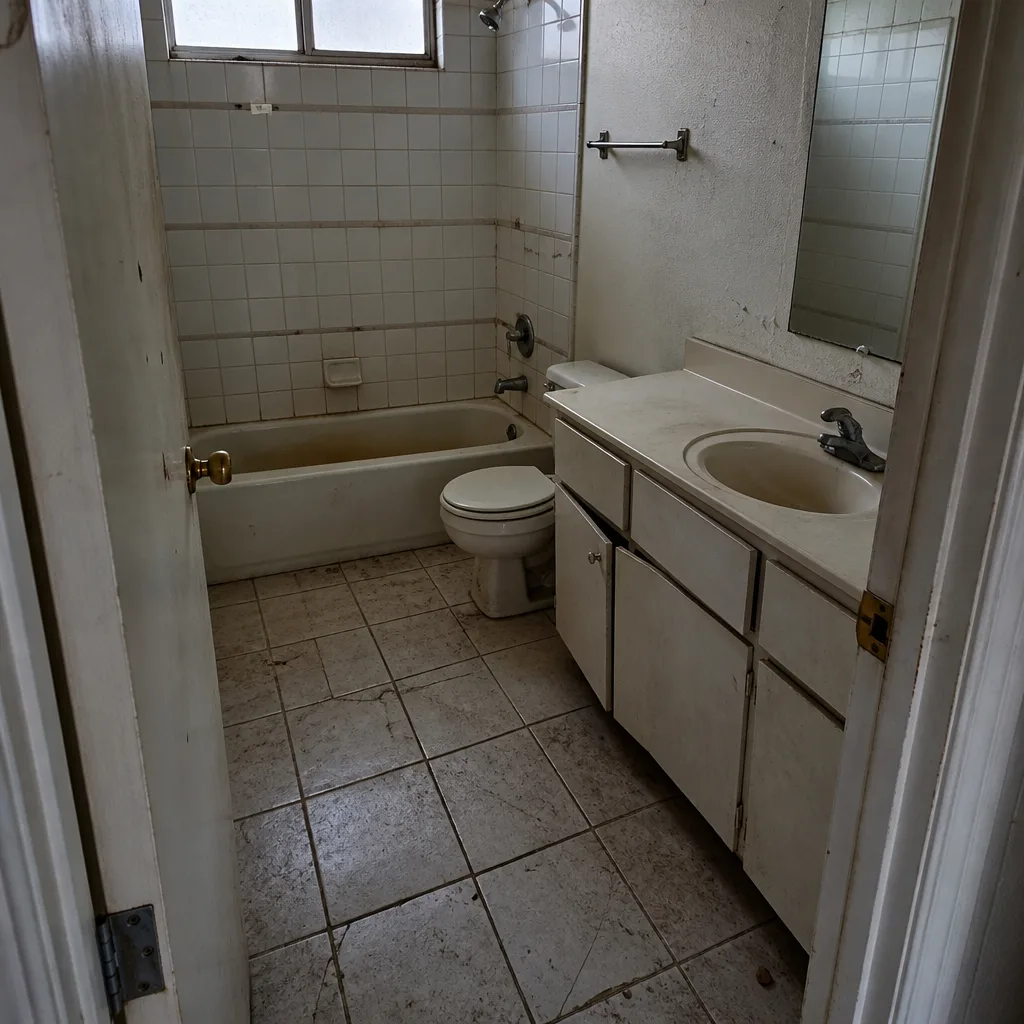 Before
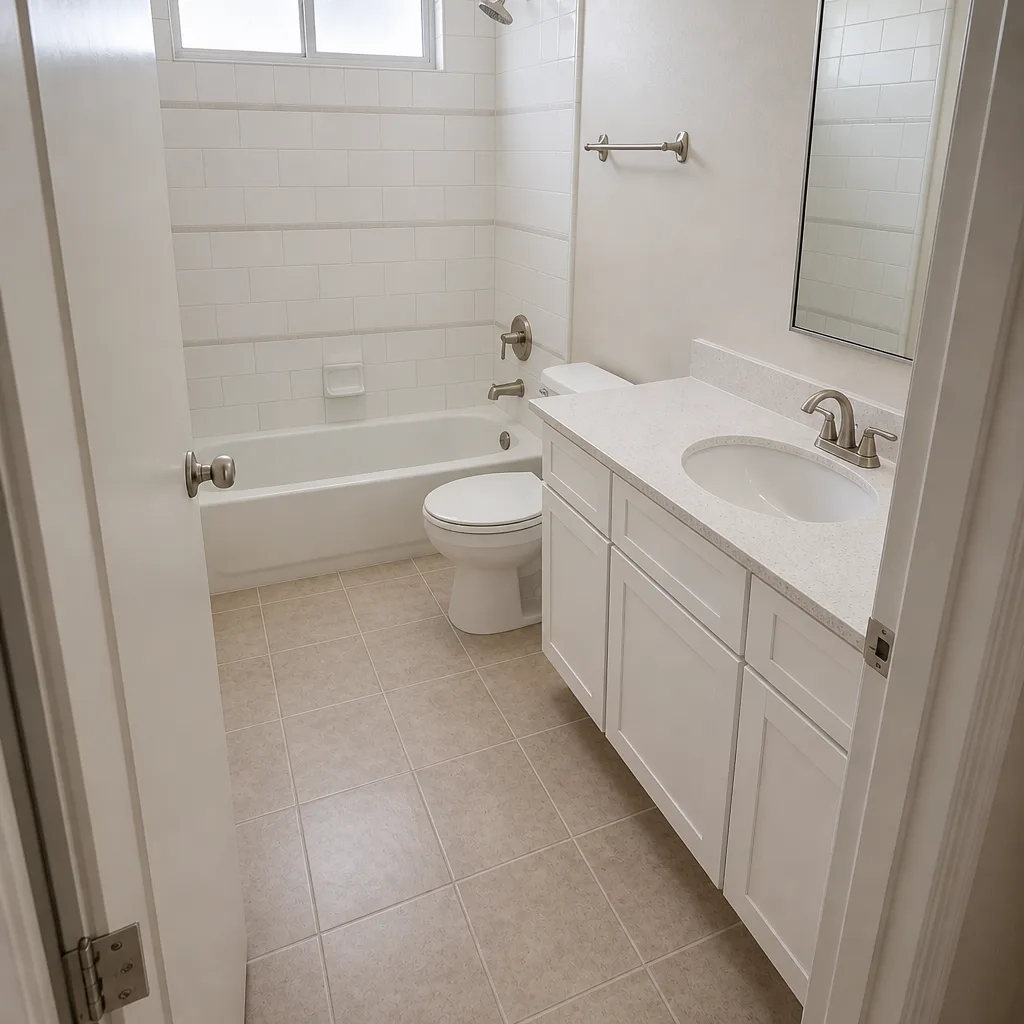 After
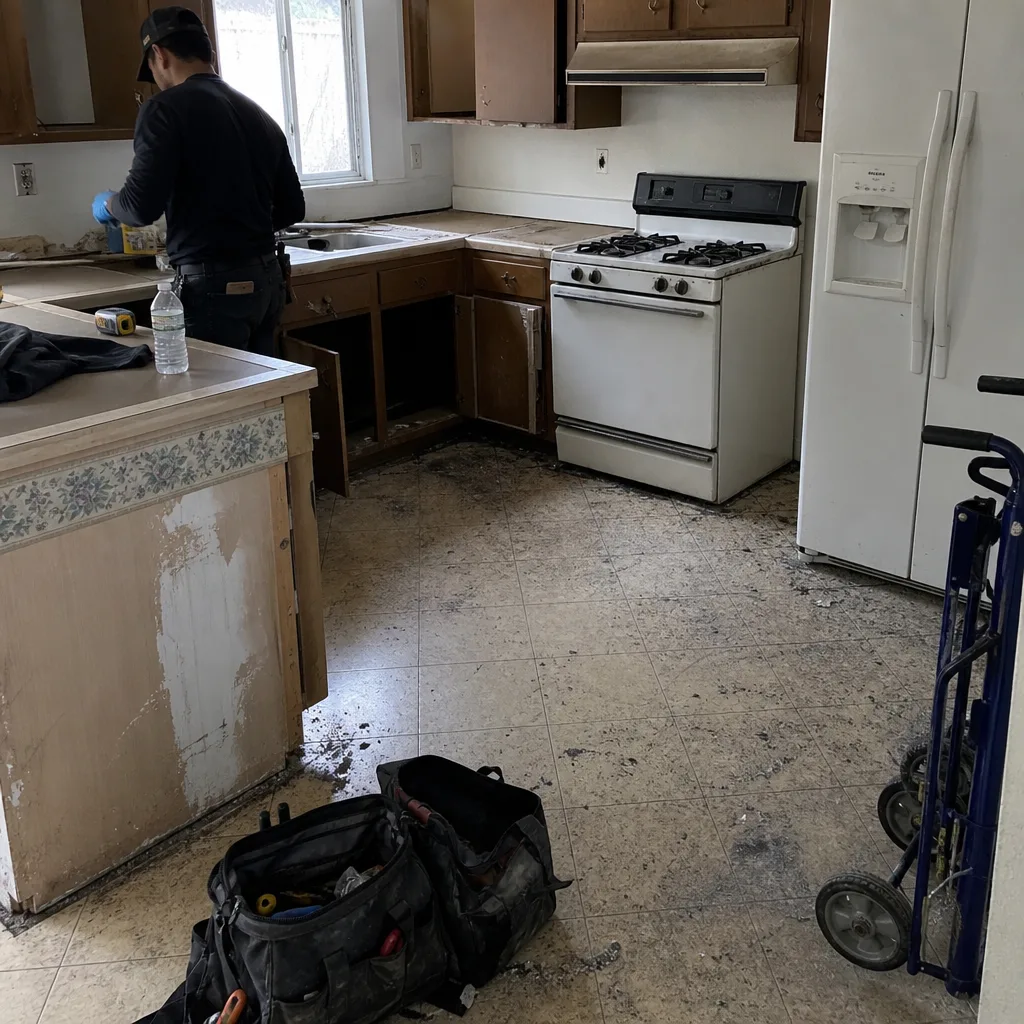 Before
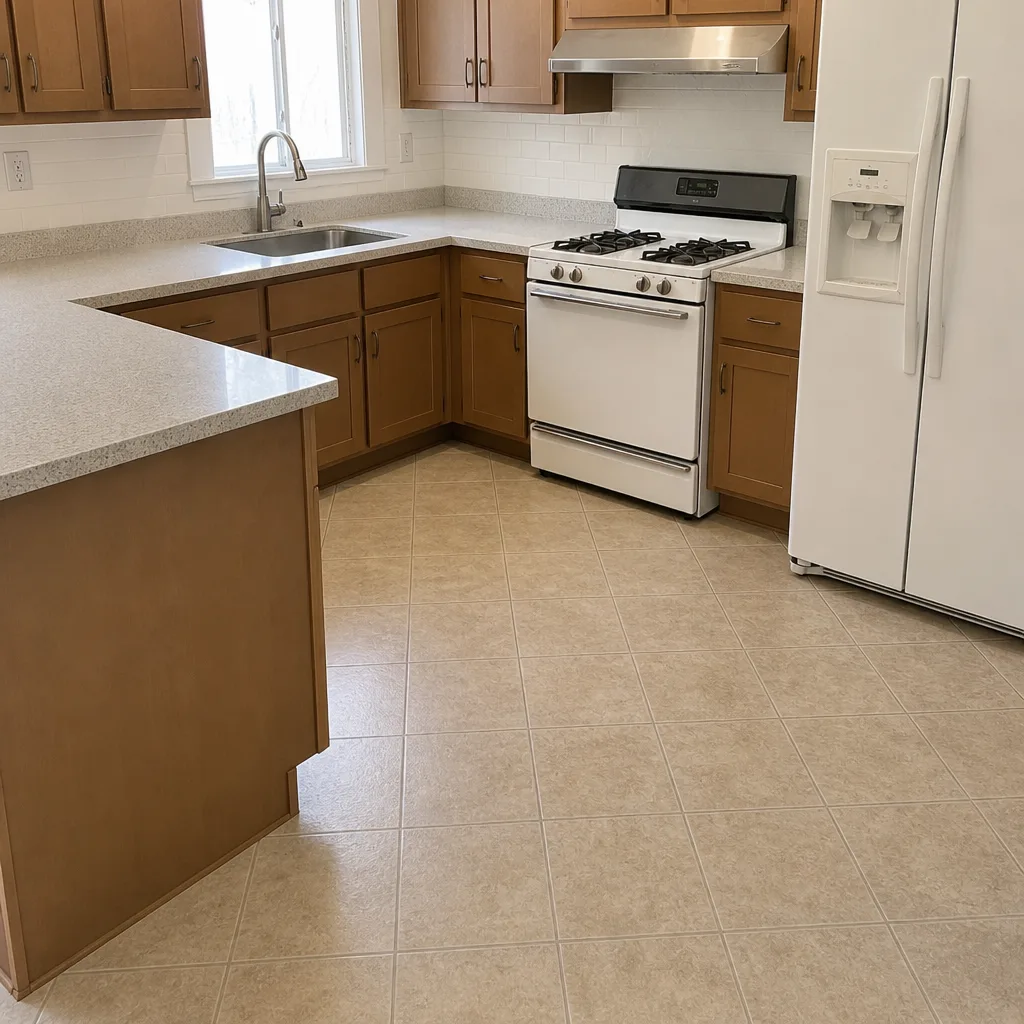 After
Frequently Asked Questions
Go to the Nevada State Contractors Board public portal, search the license number the contractor provided, and confirm the status reads “Active.” If the status is “Inactive,” the contractor is not authorized to enter new contracts and you should not sign. Also check the classification, the surety bond status, and the complaint history on the same page. Call (844) 588-0072 if you’d like a written quote from a licensed, insured contractor who can walk you through the document trail before you sign anything.
Get three written contracts and compare them line by line. Bids aren’t enforceable and estimates are ballparks. The written contract is the only document that names material specs by brand and grade, states the payment schedule tied to milestones, discloses subcontractors, and sets the warranty in writing. A contractor who gives you a bid but won’t produce a written contract is showing you where their discipline stops. Call (844) 588-0072 to start with a free written estimate from Bradford Remodeling Co Summerlin.
A normal deposit is 10 – 15% of the contract price at signing, with subsequent draws tied to verified milestones. Nevada doesn’t cap deposits by statute, which is why operators who want 50% upfront still find takers. Treat a demand for more than a fifth of the job upfront as a warning sign, not a negotiating position. Call (844) 588-0072 to see a written payment schedule attached to a real scope of work.
Yes, in nearly every Summerlin village you need HOA architectural review, and that review runs separately from the Clark County building permit. Approval timelines run two to four weeks depending on the village. Your contractor should build HOA review into the written schedule and should be able to walk you through the submission requirements for your specific association. Call (844) 588-0072 to talk through your project and we’ll help you plan the HOA runway before work starts.
Say no and ask for it in writing. Every scope change should generate a written change order with a new line item, a revised price, a revised schedule, and a signature. Verbal changes are how a $40,000 kitchen turns into a $52,000 kitchen with no document trail and no recourse, and they’re the most common complaint we hear about the Las Vegas market. Call (844) 588-0072 for a quote built on a scope of work that’s already in writing.
A workmanship warranty covers the contractor’s labor and installation, not the manufacturer’s defects, which come under the product warranty. The two run together, which is why the contract should spell out both. Bradford Remodeling Co Summerlin gives every completed project the 365-Day Done Right Promise: a full-year written guarantee, and if the work fails inside that window, we return and correct it at no charge. Call (844) 588-0072 for a free estimate and a written copy of what our guarantee covers.
The Bottom Line
Hiring a contractor in Summerlin comes down to three documents and one portal: the NSCB license check, the written scope of work, the written contract with a milestone payment schedule, and the close-out package with lien waivers and a written warranty. Reviews and referrals matter, but they don’t protect you if the paperwork isn’t there. The homeowners who close out a Summerlin remodel with no surprises are the ones who treated the contract as the job. Bradford Remodeling Co Summerlin runs every project on The Garrison Standard: written price before work starts, background-checked and uniformed technicians, live-person phone coverage around the clock, and a full-year written guarantee on the finished work. If you’re ready to put the price in writing, call (844) 588-0072 for a free estimate. You can also see how our remodeling work shows up in neighboring areas by visiting our Kitchen Remodeling in Sandy Valley and Bathroom Remodeling in Sandy Valley pages, or start at the Bradford Remodeling Co Summerlin home page.
Written by the team at Bradford Remodeling Co Summerlin.