Last updated November 17, 2026







Free written scope consultation - allowances, timeline, and change-order rules on paper before a single trade is scheduled
Home Remodeling Maintenance Schedule: What to Do and When
Most maintenance guides tell you to caulk annually. They don’t tell you that skipping it can void a contractor’s workmanship warranty on a tile installation you paid $6,000 for. That’s the gap we’re closing here. After a remodel, your home carries two sets of obligations running side by side: the maintenance you own as the homeowner, and the workmanship guarantee your contractor owes you. Miss the first, and you can weaken the second. In Summerlin, where summer heat pushes 110°F and the humidity drops below 20%, those obligations come due faster than they do almost anywhere else in the country. This guide maps every task to the trade that owns it, tells you which misses actually threaten a warranty, and gives you a printable annual checklist organized by trade instead of by room.
Quick Answer
A post-remodel maintenance schedule is a yearly, trade-by-trade list of tasks you perform as the homeowner to preserve both your home and your contractor’s workmanship warranty. The short version: inspect and reseal caulk and grout every 6 to 12 months, clear your drainage before monsoon season, exercise plumbing shutoffs yearly, and document everything with dated photos. Cosmetic wear is never covered by a warranty. Workmanship failure should be.
Styles & brands we work with
- Kitchen remodeling
- Bathroom remodeling
- Home additions & ADU
- Roofing
- Windows & doors
- Driveway & pavers
- Fence
Table of Contents
- Warranty Checkpoints: Which Tasks Actually Protect Your Guarantee
- Homeowner Responsibility vs. Contractor Warranty, by Trade
- The Sandy Valley Desert Timeline: A Seasonal Maintenance Calendar
- Cosmetic Wear vs. Workmanship Failure: Real Examples
- How to Document Your Maintenance (and Why It Matters in a Claim)
- The Printable Annual Checklist, Organized by Trade
- Monsoon Prep: The Tasks That Matter Most in Summerlin
- Common Mistakes to Avoid
Warranty Checkpoints: Which Tasks Actually Protect Your Guarantee
Not every maintenance chore carries the same weight. Some are pure housekeeping. Others are what we call warranty checkpoints: if you skip them and a failure follows, your contractor has a legitimate argument that the damage came from neglect rather than their work. Those checkpoints deserve your calendar.
The distinction matters because most workmanship warranties, including our own 365-Day Done Right Promise, cover defects in how the work was performed. They don’t cover damage caused by a homeowner who let standing water sit on a tile floor for a year, or who never sealed a shower surround and then blamed the installer for the mold. When we correct work at no charge inside the guarantee window, we’re honoring a failure in installation. When moisture came in through a gap the homeowner was told to maintain, that’s a different situation entirely.
Here’s how to sort your yearly tasks:
- True warranty checkpoints – caulk and grout integrity in wet areas, drainage clearance, plumbing shutoff function, attic and roof-edge ventilation, door and window weather seals. Skip these and you can weaken a legitimate claim.
- Protective but not warranty-critical – painting, deck sealing, appliance filter changes. Good practice, doesn’t touch the guarantee.
- Contractor-owned – structural settling, electrical faults at the panel, plumbing leaks inside walls, roof flashing failures. These sit on the contractor, not you. Document them and call.
A general contractor in Sandy Valley will tell you the same thing: the homeowner tasks are the low-cost ones, so there’s no reason to let them slide. Where the checkpoints matter most is in finishes that live near water. If you had a bathroom remodeled in Sandy Valley, the caulk lines and grout joints in that room are the first place a warranty dispute will focus. Keep them sound.
Homeowner Responsibility vs. Contractor Warranty, by Trade
When something fails in a finished remodel, the first question is always whose problem it is. The answer usually follows the trade. Here’s how we draw the line, spelled out plainly so you know what to expect from your contractor and what you owe your own home.
Tile
You own the caulk and grout. Reseal grout lines in wet areas annually and replace cracked caulk before water gets behind the tile. Your contractor owns the substrate and the installation itself – lippage that shows up without traffic, tile that lifts or hollows out, or a shower pan that leaks because of a waterproofing flaw. Deserts are hard on tile. Summerlin’s daily thermal swings cause expansion and contraction across large tile fields, and that movement shows up at the perimeter joints first.
Framing
You own nothing inside the wall, and that’s the point – don’t cut into framing or remove structural elements without a professional. Your contractor owns structural defects: out-of-plumb walls that weren’t shimmed correctly, squeaking joists from improper fastening, or a header framed short. Framing failures usually surface in the first heating and cooling cycle after a remodel. Summerlin’s swing from a 45°F winter night to an 80°F afternoon tests framing almost immediately, so note any new squeaks or cracks within the first year.
Electrical
You own the smoke and carbon monoxide detector batteries, and that one’s a genuine safety task – replace them on schedule. Everything at the panel, any outlet that runs warm, any breaker that trips repeatedly, belongs to a licensed electrician. Never open a panel yourself. Electrical work is dangerous and mistakes are often invisible until they start a fire. Call a professional.
Plumbing
You own the shutoff valves – exercise every supply valve once a year so it doesn’t seize when you actually need it. You also own fixture cartridge replacements when a faucet drips from normal wear. Your contractor owns leaks at rough-in connections, improperly soldered or crimped joints, and drain assemblies that fail because of installation error. In Summerlin’s low humidity, supply lines and fittings dry out and stiffen faster than they do in wet climates; a yearly visual check under every sink is worth the five minutes.
The Sandy Valley Desert Timeline: A Seasonal Maintenance Calendar
A generic maintenance calendar built for the Midwest will fail you here. Sandy Valley’s climate runs on a completely different rhythm: brutal late-spring and summer heat that expands everything, a dry winter that shrinks sealants, and a monsoon season that drops a year’s worth of water in a few violent storms. Your calendar should follow that rhythm, not a magazine’s.
Spring (March to May)
- Inspect and replace exterior caulk before the heat peaks – warm weather cures sealant fast, and low humidity pulls it tight as it sets.
- Clear roof valleys, gutters and scuppers of winter debris so monsoon water has somewhere to go.
- Check window and door seals; Summerlin’s spring winds push fine desert dust into any gap. Quality units like ES Windows and ECO Window Systems hold their seals well, but check the perimeter caulk line regardless.
- Photograph everything you’ve done, with dates.
Summer (June to September)
- Watch interior caulk and grout for shrinkage cracks – the 15-20% humidity and 110°F afternoons work against you.
- Prep for monsoon: confirm exterior drainage grading runs away from the foundation, test sump or drainage channels, and check that hardscaping isn’t holding water against the house. This is the season where a missed task can cost you real money.
- Check attic ventilation and HVAC condensate lines – a clogged condensate drain in July floods more walls than any plumbing leak.
Fall (October to November)
- Reseal grout in wet areas before indoor heating season starts drying the air further.
- Service the irrigation system and shutoffs before the first near-freezing nights.
- Schedule exterior paint touch-ups and seal any wood surfaces.
Winter (December to February)
- Test smoke and CO detectors and replace batteries.
- Exercise every plumbing shutoff valve.
- Inspect the roof and flashing after any winter storm – desert winters can drop a surprising amount of water, and flat or low-slope sections are where it pools.
Cosmetic Wear vs. Workmanship Failure: Real Examples
This is where most warranty disputes actually get decided, and where homeowners and contractors often talk past each other. The line between cosmetic wear and a workmanship failure comes down to cause. We’ve walked into enough of these to name the pattern.
Cosmetic wear is what happens from normal use: a scuff on a cabinet door, a grout line that darkens slightly over years, paint that fades in desert sun, a faucet finish that dulls. It’s age and use. It isn’t covered by a workmanship warranty, and it isn’t supposed to be.
Workmanship failure is an outcome of how the job was built: a tile that hollows and lifts because the thin-set was wrong, a shower that leaks because the waterproofing was incomplete, a cabinet run that separates from an out-of-plumb wall, a door that never latched right because it was hung crooked. Those aren’t age. Those are installation, and they should be covered.
A few real examples:
- Cosmetic: A Cambria or Caesarstone countertop with a hairline scratch from a cutting board slip. Normal wear. Not a warranty item.
- Workmanship: The same countertop showing a visible seam that’s coming apart a month after installation. That’s installation.
- Cosmetic: KraftMaid or Wellborn cabinetry with a chipped edge from a dropped pot.
- Workmanship: A cabinet door that won’t sit flush because the box wasn’t secured level.
- Cosmetic: A grout line that’s dulled and discolored in a high-traffic floor.
- Workmanship: Tile that’s losing bond across a whole field because the wrong mortar was used on a concrete slab.
When something goes wrong, ask the cause question first: did this fail because of how it was made, or because of how it’s been used and aged? At Bradford Remodeling Co Summerlin, every finished project carries a written 365-Day Done Right Promise – if the work fails inside that year, we come back and correct it at no charge. The point of documenting your own maintenance is that it lets you make that claim with a straight face, and lets us honor it honestly. Call (844) 588-0072 for a free estimate if it’s time to start a project of your own.
How to Document Your Maintenance (and Why It Matters in a Claim)
If a warranty dispute ever comes up, the homeowner with dated photos and a maintenance log wins the conversation before it starts. Bury it in your phone or write it on the fridge – the format doesn’t matter, consistency does.
Here’s the system we recommend for Summerlin homeowners, and it’s the one we’d suggest to anyone planning a claim on a remodel:
- Keep a single folder – paper or digital – labeled by year. Everything goes in it.
- Date and photograph every maintenance task you complete: caulk fresh, grout sound, shutoffs exercised, detector batteries swapped. Timestamped phone photos are enough.
- Log the small stuff too, like a hairline crack you noticed but decided to watch. The date you first observed a symptom matters.
- Keep the written estimate, the signed contract, and the written workmanship guarantee together – the paperwork is the proof of what was promised. When Bradford completes a job, the homeowner walks away with a documented scope and a signed written guarantee in hand, and that’s the document your maintenance log should reference.
- Date any contractor callback, note who came out and what they found, and keep a photo of the corrected work.
Two minutes a month during the dry season builds a year of defensible history. If you’re considering a whole-home project, the same discipline applies from day one – see how we approach it through our Summerlin home remodeling page.
The Printable Annual Checklist, Organized by Trade
Most checklists are organized by room, which fails you when it’s time to call someone. If a task fails, you don’t need to know “the bathroom” – you need to know “the plumber.” So here’s the checklist organized by the trade who owns each task, with the coverage question answered for each one.
Caulk and Tile
- Reseal grout in wet areas: every 6-12 months. Homeowner task.
- Replace cracked caulk at shower pans, backsplashes, and sinks: every 6-12 months. Homeowner task.
- Report hollow-sounding or lifting tile: any time. Contractor warranty.
Plumbing
- Exercise all supply shutoff valves: yearly. Homeowner task.
- Check under sinks for moisture or corrosion: quarterly. Homeowner task.
- Report leaks at rough-in connections or drain assemblies: any time. Contractor warranty.
Electrical
- Test smoke and CO detectors, replace batteries: twice yearly. Homeowner task.
- Note any warm outlet or repeatedly tripping breaker, and call a licensed electrician. Professional – never DIY.
Roofing and Exterior
- Clear roof valleys and gutters: spring and before monsoon season. Homeowner task.
- Inspect window and door weather seals and perimeter caulk: yearly. Homeowner task.
- Report flashing failures or water intrusion at roof penetrations: any time. Contractor warranty. For entry door and window systems, tracked brands like Mr-Glass hold their seals well, but the seal line is still yours to check.
Framing and Structure
- Note new cracks, squeaks, or sticking doors: yearly. Report it.
- Report out-of-plumb walls or separating cabinet runs: any time. Contractor warranty.
Print this and tape it inside a cabinet door. It matches tasks to the right phone number before a small issue becomes an expensive one.
Monsoon Prep: The Tasks That Matter Most in Summerlin
Monsoon season is the one time of year where a skipped task in Summerlin turns into real damage fast. The desert doesn’t handle sudden water well – hard, sun-baked soil sheds it, and grading that looked fine all spring can channel a flash flood straight to your foundation. If you’ve added hardscaping, patios, or pavers in the last year, this is where Belgard and Unilock installations get tested, and where a drainage flaw at the perimeter can undermine a warranty claim on grading work.
Before the first real storm:
- Walk the perimeter and confirm soil and gravel slope away from the foundation on every side. Water should shed, not pool.
- Clear every scupper, drain, and channel – even a hand-sized clog can turn a manageable storm into a flooded patio.
- Check that hardscaping limits are pitched away from the house, and note any low spot that’s formed since installation.
- Inspect window and door sills from the outside; desert dust plus a hard storm can find any gap.
- Photograph the exterior and drainage before and after the first monsoon to establish a baseline.
If monsoon water finds a flaw that traces back to how drainage was graded or how flashing was installed, that’s a workmanship issue and worth a call. If it finds a gap you were shown how to maintain, that’s a homeowner task. Either way, keeping it squared away starts with the exterior. Our kitchen remodeling in Sandy Valley projects get the same monsoon walk-through at close, because an interior remodel still depends on the envelope staying dry.
Common Mistakes to Avoid
- Treating all caulk as cosmetic. In a $6,000 tile job, caulk is a warranty checkpoint. Let it fail and you’re arguing against yourself if moisture gets in.
- Skipping monsoon prep because “it never floods here.” Sandy Valley gets sudden, violent storms, and desert terrain concentrates water rather than absorbing it. Clear the drains anyway.
- Resealing over a wet joint. In Summerlin’s heat, caulk applied over moisture fails fast. Confirm the joint is dry before you seal, and give it extra cure time in the dry season.
- Documenting nothing. A warranty claim with no maintenance history is an argument. A claim with a dated log and photos is a conversation you win.
- Confusing cosmetic wear with a defect and blaming the contractor. A scuffed cabinet door isn’t a failed install. Naming the cause correctly keeps the real failures covered.
- DIY-ing anything at the electrical panel. This is the maintenance task no homeowner should attempt. Call a licensed electrician – the risk is fires and shock, and it’s invisible until it isn’t.
- Assuming a warranty lasts forever. Read the guarantee term and note the date it expires. Our guarantee runs a full 365 days; after that, maintenance is yours alone.
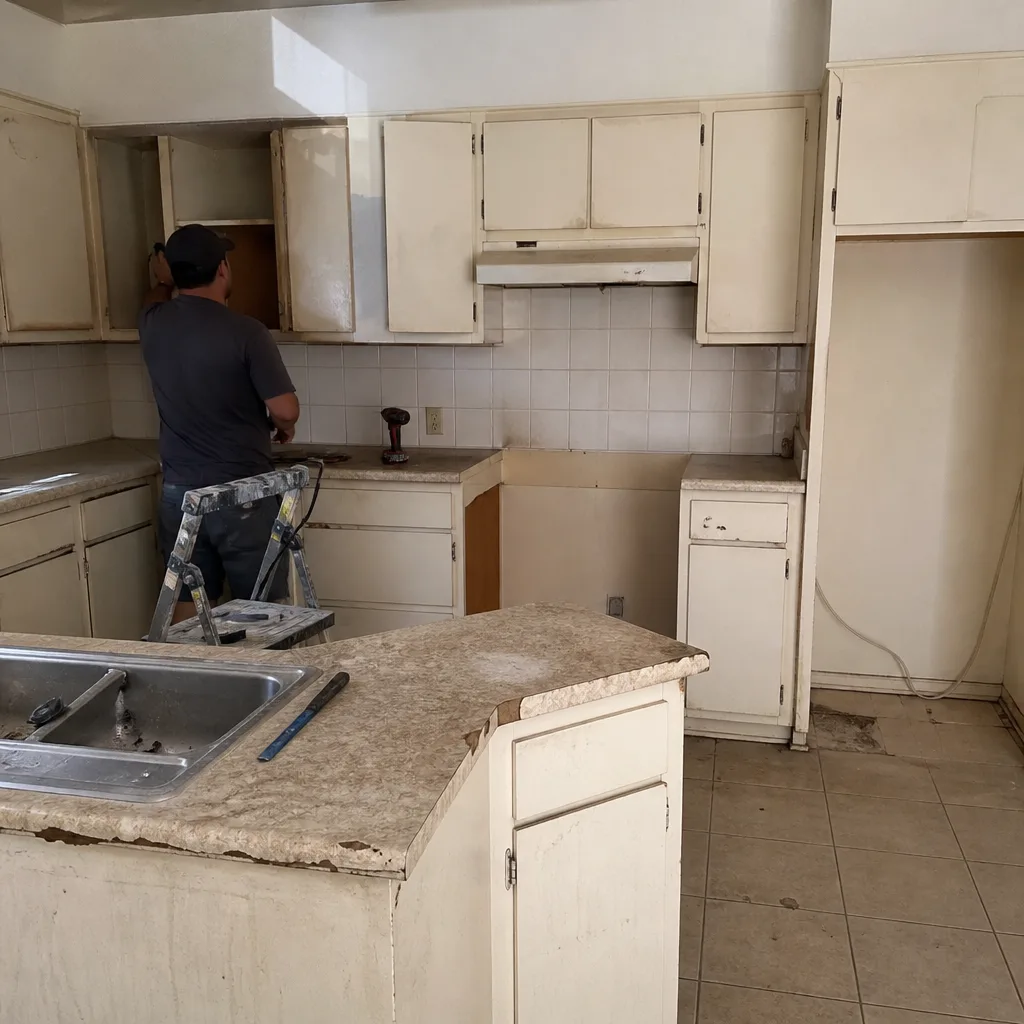
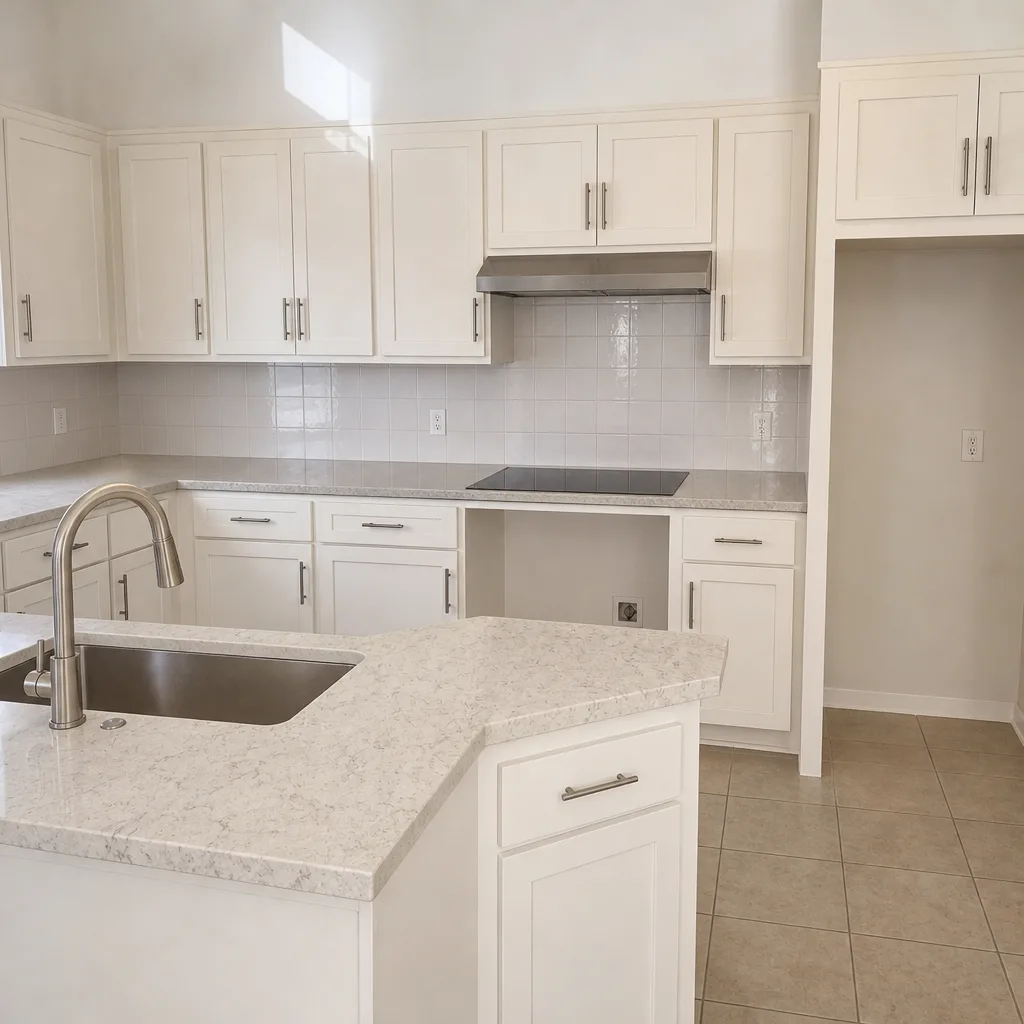
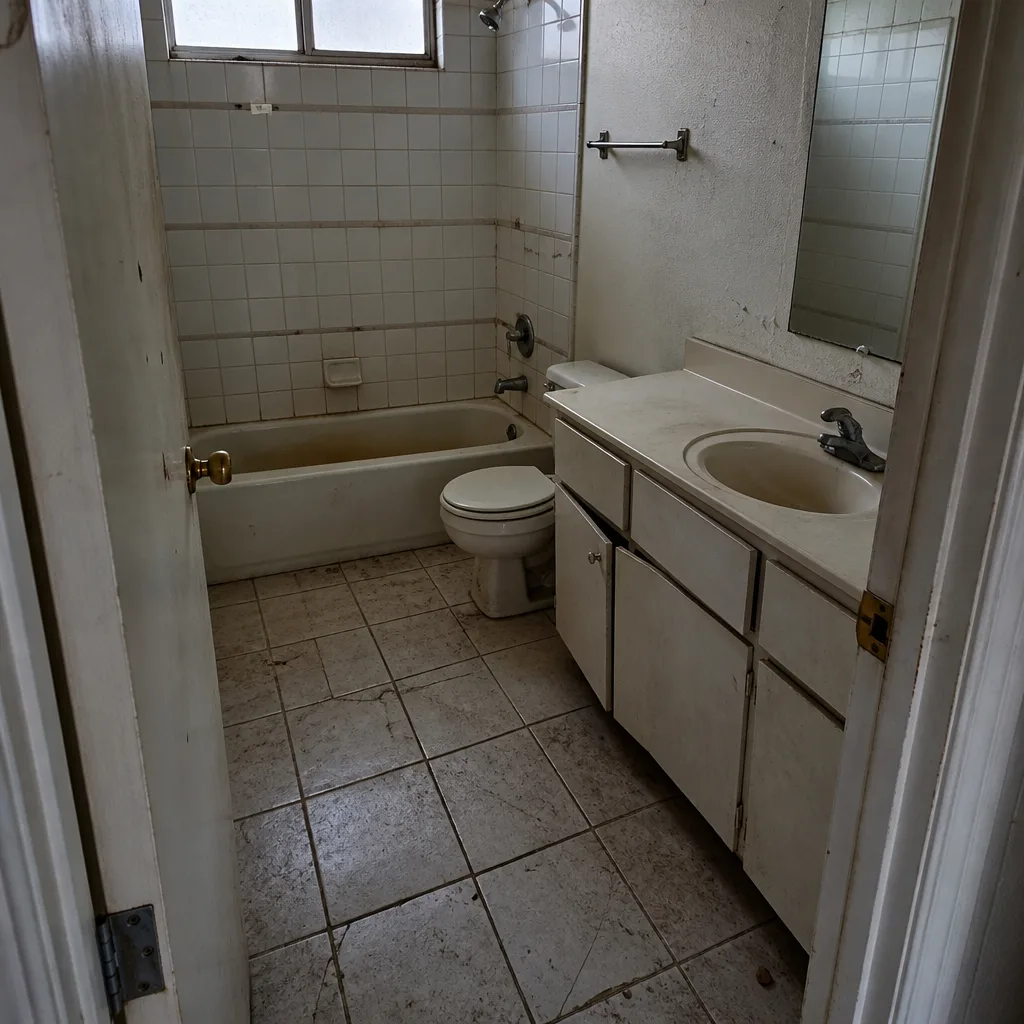
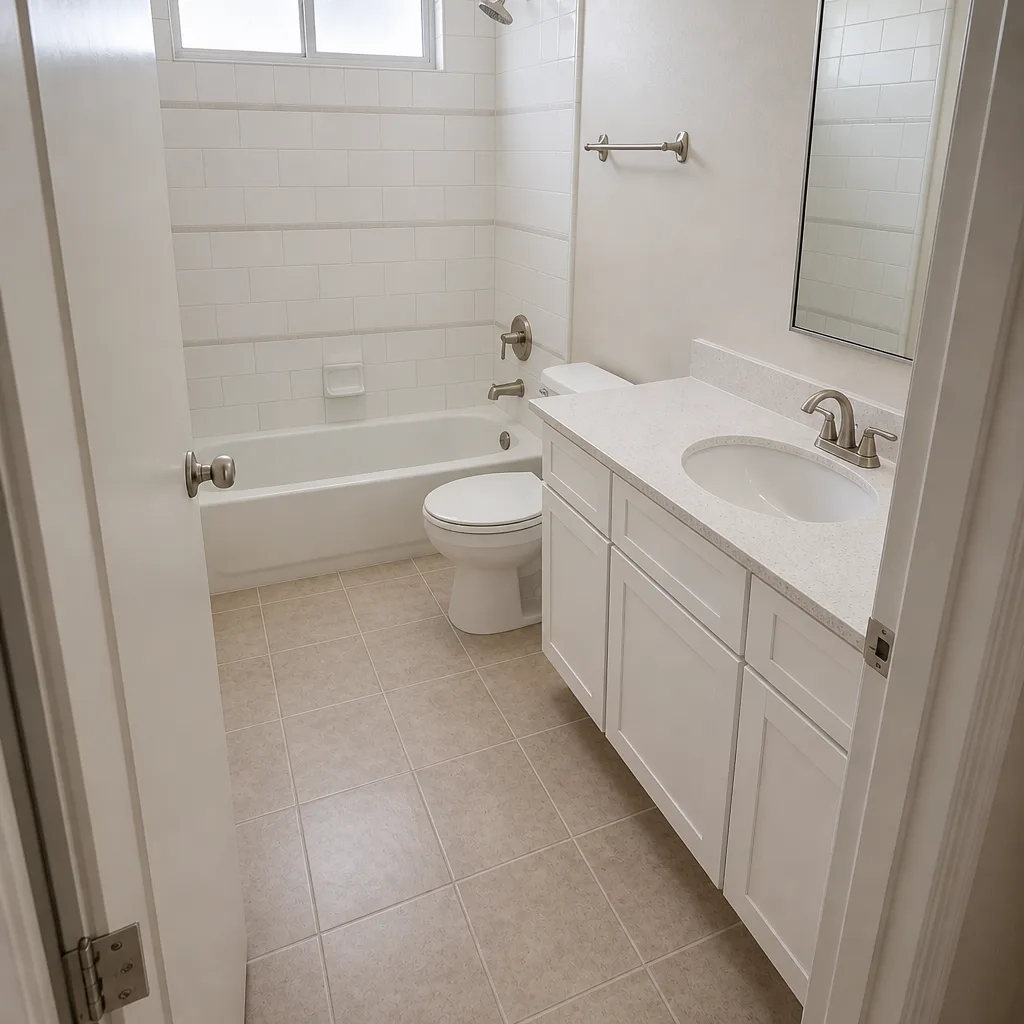
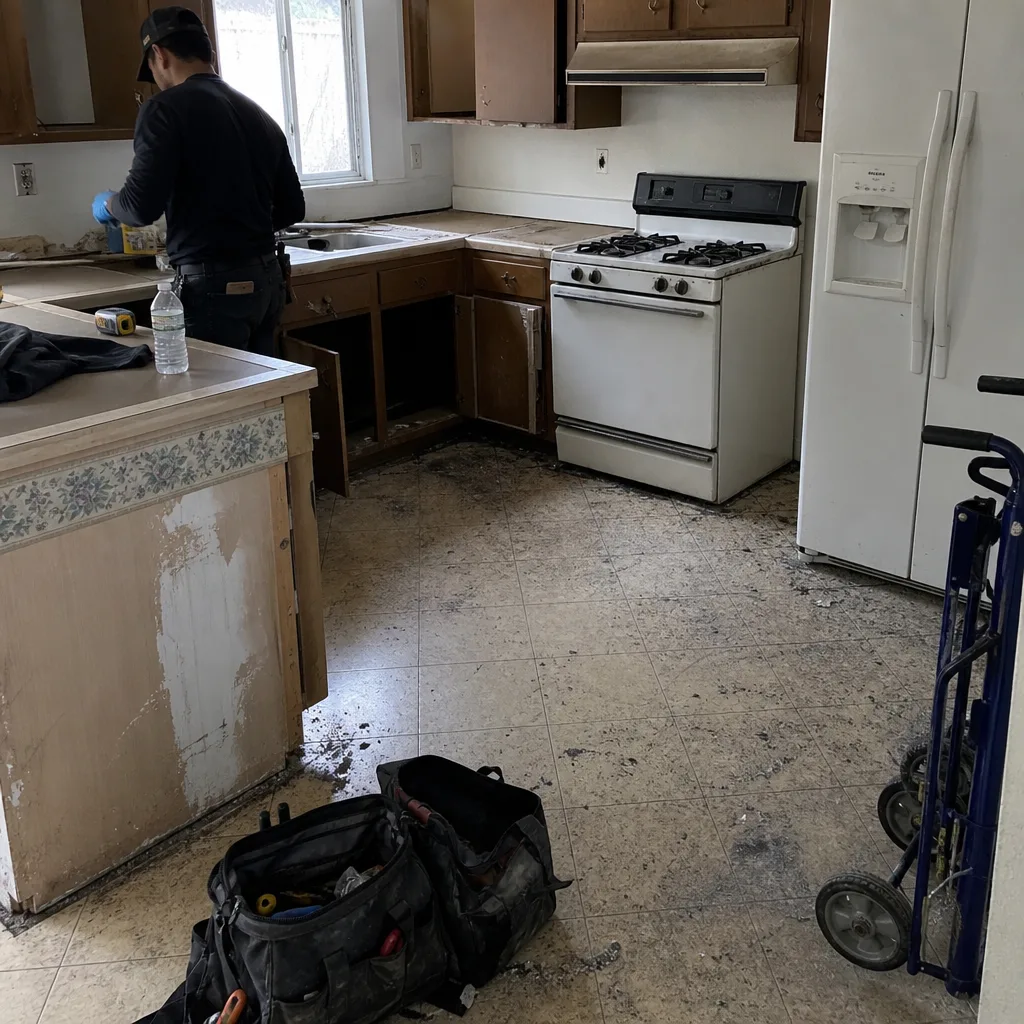
See the difference
 Before
 After
 Before
 After
 Before
 After
When to Call a Professional
Some failures announce themselves: a tile field that hollows and lifts, a shower that leaks into the room below, a cabinet run pulling away from the wall, a door that stopped latching after installation. Those are invoice-and-call situations, and they fall on the contractor’s side of the line. Others are simply beyond safe DIY: any electrical work, anything inside a wall, and any structural change. Don’t wait for a small symptom to become a repair. Bradford Remodeling Co Summerlin offers free estimates in Summerlin – call (844) 588-0072. We give you a written price before any work starts, background-checked uniformed technicians on every job, and a live person answering the phone whenever you call. If it’s work we did and it failed inside the year, our 365-Day Done Right Promise says we come back and make it right at no charge.
Frequently Asked Questions

Every 6 to 12 months in wet areas like showers, sinks, and backsplashes, and faster in Summerlin because the low humidity shrinks sealants and the summer heat expands the substrate. Inspect seams seasonally and reseal as soon as you see a crack or gap. Call (844) 588-0072 for a free estimate if you’d rather have a crew handle the inspection as part of a larger project.
It can, if the skipped task was directly related to the failure. Workmanship warranties, including our 365-Day Done Right Promise, cover defects in how the work was performed, not damage from homeowner neglect. Keep a maintenance log so you can show the work was cared for, and if you’re unsure whether an issue is covered, call us to find out before assuming.
No. A scuff, a faded finish, or a dulled grout line from normal use is wear, not a defect, and a workmanship warranty doesn’t cover it. Workmanship failures look different – tile losing bond, a shower leaking from a waterproofing flaw, a cabinet run separating from the wall. Those should be covered, and they’re worth a call.
Monsoon preparation – clearing drainage and confirming grading runs away from the foundation – because Sandy Valley storms concentrate water and the damage from a single missed season can be severe. Right behind it is caulk and grout integrity in wet areas, which protects both your finishes and your warranty. Call (844) 588-0072 for a free estimate on any project those tasks reveal.
You can and should handle caulk and grout, detector batteries, shutoff exercising, and visual checks yourself. Never handle electrical panel work, anything inside a wall, or structural repairs – those are dangerous and belong to a licensed professional. If a task falls on the contractor’s side of the line, that’s what your written guarantee is for.
Keep a single dated log by year, photograph every task when you complete it, and file the written estimate, signed contract, and written guarantee together. Timestamped phone photos are enough. If you have a project starting soon, ask us how the written scope and signed guarantee will be documented at close – call (844) 588-0072.
The Bottom Line
Maintenance isn’t about keeping your home pretty. It’s about protecting the work you already paid for. The tasks that preserve a workmanship warranty are specific and few: keep caulk and grout sound, clear drainage before monsoon season, exercise your plumbing shutoffs, and document everything with dates. Leave electrical and in-wall work to professionals. Know the difference between cosmetic wear and a genuine installation failure, because that distinction decides most claims. Most of all, keep your written guarantee on file and know its term. If a failure traces back to workmanship inside the window, call – that’s what the guarantee is for. If you’re ready to start a project with a written price and a full-year guarantee, call Bradford Remodeling Co Summerlin at (844) 588-0072 for a free estimate. We’ll give you a straight number and a squared-away job.
Written by the team at Bradford Remodeling Co Summerlin.