Last updated November 17, 2026








Free written scope consultation - allowances, timeline, and change-order rules on paper before a single trade is scheduled
Home Remodeling Troubleshooting: Common Problems and How to Fix Them
The number one reason homeowners lose disputes with remodeling contractors isn’t that they were wronged. It’s that the contract didn’t define the standard clearly enough to prove it. We’ve watched homeowners in Summerlin hold a phone full of photos of cracked tile and still get nowhere, because the paperwork never said what “installed correctly” was supposed to mean. That’s the gap this guide closes. Below you’ll find the complaints that actually land in mediation, the contract clause that would have prevented each one, and the exact steps – including the Nevada statutes most homeowners skip – that turn a grievance into leverage. Whether you’re mid-dispute or signing a contract next month, this is the troubleshooting reference.
Quick Answer
Most post-remodel problems – surprise invoices, unfinished punch lists, subcontractor liens – trace back to a missing or vague contract clause, not bad luck. To fix a live dispute, gather your documentation, send written notice under NRS Chapter 40, and use the Nevada State Contractors Board complaint process and lien-waiver requirements as leverage. To prevent one, insist on a written scope, capped allowances, milestone payments, and signed lien waivers before the first tool comes out.
Styles & brands we work with
- Kitchen remodeling
- Bathroom remodeling
- Home additions & ADU
- Roofing
- Windows & doors
- Driveway & pavers
- Fence
Table of Contents
- Why Remodeling Problems Start at the Contract Stage
- The Four Most Common Post-Remodel Complaints (and the Clause That Stops Each)
- Nevada’s Residential Construction Defect Law (NRS Chapter 40): The Notice Step Homeowners Skip
- Using the Nevada State Contractors Board Complaint Process as Leverage
- Mechanics Liens: How a Subcontractor Can File One Even After You Paid in Full
- The Documentation Checklist That Makes a Defect Claim Actionable
- Step-by-Step: What to Do When a Remodel Goes Wrong
- Summerlin-Specific Problems: Desert Climate, HOA Rules, and Punch-List Delays
Why Remodeling Problems Start at the Contract Stage
By the time a Summerlin homeowner calls us about a failed shower pan or an invoice that grew by thousands, the decision that caused it was made months earlier at a kitchen table. A vague scope. An allowance with no ceiling. A payment schedule tied to “progress” instead of completed milestones. Each of those is a blank check, and blank checks get cashed by whichever party has more leverage when the work gets hard.
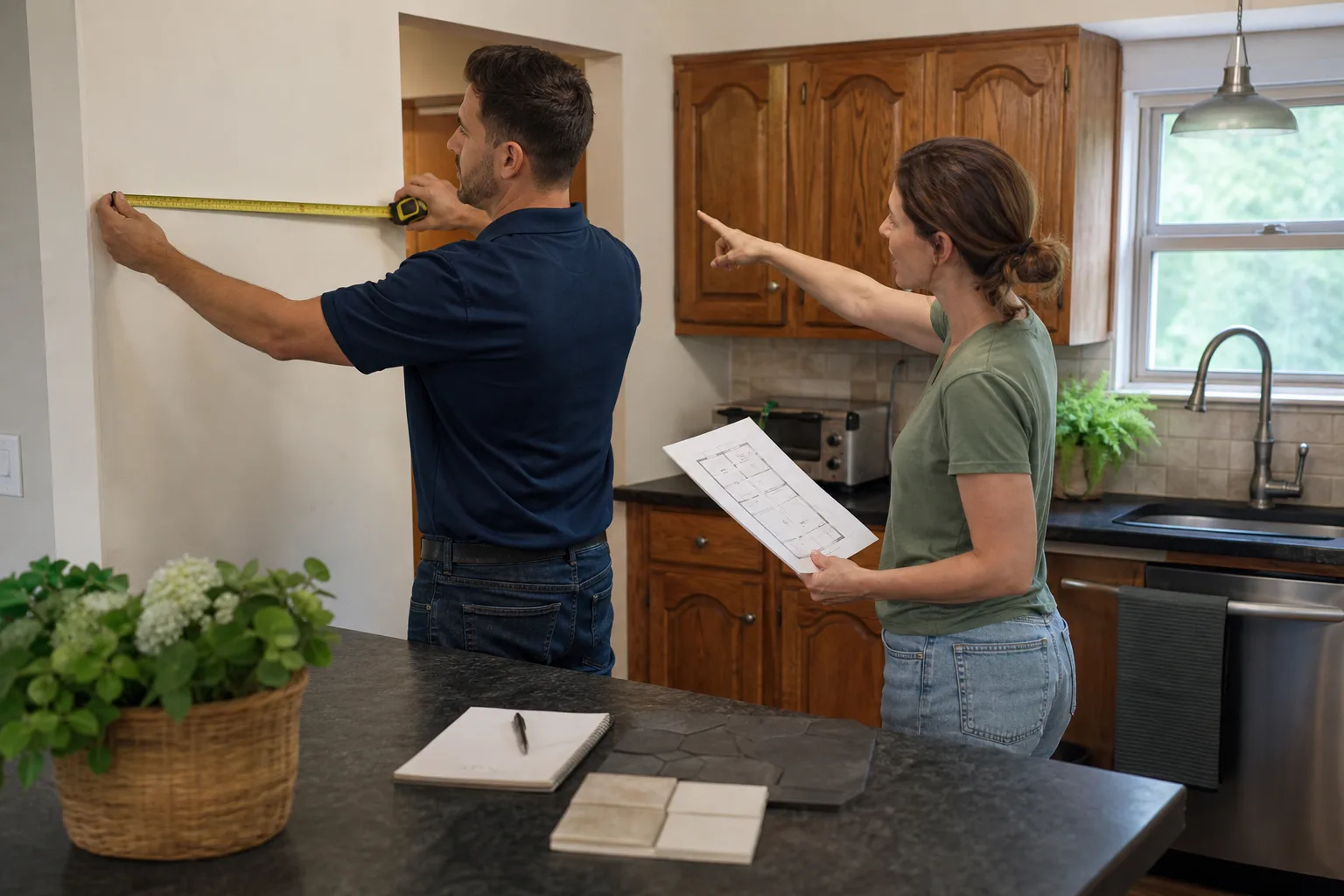
The trade has a word for the document that prevents this: a scope of work. It’s a written line-by-line description of what will be installed, where, at what specification, and by whom. It names the brand and the model number, not just “premium tile.” It states that a certain number of square feet of backsplash are included and what happens per square foot beyond that. It defines completion – a punch list signed off by both parties – so “unfinished” becomes a measurable fact instead of an argument.
The Garrison Standard exists because of exactly this pattern. Every Bradford Remodeling Co Summerlin project starts with a written price before any work begins, and the scope is documented with name-brand specifications – KraftMaid and Wellborn cabinetry, Cambria and Caesarstone surfaces, Kohler and Moen fixtures – so the standard is traceable. That matters in a dispute. “Installed to manufacturer specification” is a provable claim when the manufacturer’s spec sheet is in the file. It’s a debate when it isn’t.
Here’s the plain version: the contract is not a receipt for the sales pitch. It’s the only document that will matter if things go sideways. Read it like it’s going to be read out loud in a hearing, because in the worst case, it will be.
The Four Most Common Post-Remodel Complaints (and the Clause That Stops Each)
Across the disputes we hear about, the complaints cluster into four categories. Each maps to one clause that should have been in the contract. If you’re shopping for a contractor in Summerlin or anywhere in the valley, these are the four lines to look for before you sign.
1. The surprise final invoice
The complaint: the price at the door doesn’t match the bid. Extra charges appear for materials, disposal, permits, or “unforeseen conditions.”
The clause that prevents it: a fixed written price with a defined change-order process. Any addition requires a written change order signed by both parties before the work is performed. No signed change order, no charge. This is the single most effective clause in remodeling, and it’s why Bradford’s written price commitment is non-negotiable. If a contractor won’t put a fixed number in writing, the number will move.
2. Unfinished punch-list items
The complaint: the crew left with trim missing, outlets unplated, and a final payment already collected.
The clause that prevents it: a retainage or punch-list holdback. A defined percentage of the final payment stays with the homeowner until a written punch list is completed and signed off by both parties. Pair it with a target completion date and a stated remedy if the punch list sits past that date.
3. Subcontractor liens on a paid contract
The complaint: you paid the general contractor in full and a tile setter or framer files a mechanics lien against your home because the GC didn’t pay them.
The clause that prevents it: a conditional lien waiver requirement. Every payment to the GC is conditioned on that GC delivering conditional lien waivers from every subcontractor and supplier who worked on the project. More on this in the lien section below.
4. Quality that doesn’t hold after the crew leaves
The complaint: a shower starts leaking, grout fails, cabinet doors don’t close, or a door drags a month after final payment.
The clause that prevents it: a written workmanship warranty with a defined duration and remedy. Bradford’s 365-Day Done Right Promise puts that in writing: every completed project carries a full-year written guarantee, and if the work fails inside that window, we come back and correct it at no charge. Read every warranty line in any contract against that standard. “Warranted” with no term and no remedy is not a warranty.
Nevada’s Residential Construction Defect Law (NRS Chapter 40): The Notice Step Homeowners Skip
Nevada has a specific statute that governs construction defect claims on residential property: NRS Chapter 40. The critical part most homeowners miss is that you cannot file suit or arbitration over a construction defect without first giving the contractor written notice and a chance to respond. Skip the notice, and a court will likely dismiss the claim – or at least delay it while you restart the clock.
Here’s how the notice step works in practice:
- Send written notice to the contractor by a method you can prove. Certified mail with return receipt is the standard. Keep a copy of the letter and the receipt in your file. A text message is helpful evidence but it is not a substitute for the statutory notice.
- Describe the defect specifically. “The master shower pan is leaking into the ceiling below” is notice. “The bathroom is defective” is not. Include dates, photos, and the specific work you believe failed.
- State what you want. Repair, replacement, or monetary compensation – be clear about the remedy you’re asking for.
- Give the contractor the statutory response window. The contractor is entitled to inspect and to make a written offer to repair or settle. That offer window is what most homeowners don’t know exists, and it’s also the leverage point – a contractor who ignores the notice is in a worse position than one who responds.
We’re not attorneys, and this guide isn’t legal advice – consult a Nevada construction attorney for anything serious. But the pattern is clear: the homeowner who sends a specific, documented notice on day one has a statute working for them. The homeowner who texts “fix this” and waits has nothing.
Using the Nevada State Contractors Board Complaint Process as Leverage
The Nevada State Contractors Board (NSCB) licenses contractors and investigates complaints against them. Homeowners often treat the NSCB as a post-mortem filing – the last step after the money is gone. That’s the wrong way to use it. Pulled out early, the complaint process is leverage.
Here’s the practical sequence:
- Verify the license first. Check the contractor’s license status on the NSCB website before you sign anything. A license number on a business card means nothing until you’ve checked it. If the license is expired or the classification doesn’t cover the work (a residential license doing commercial work, for example), you have a much stronger case from day one.
- Document the dispute thoroughly before filing. The NSCB weighs evidence. Photos, written communications, payment receipts, inspection records, and any written warranty will carry the complaint. A word-against-word filing is weaker than a documented one.
- File the complaint while the work is still in progress if possible. The board can order the contractor to complete or correct work. Filing after the contractor has moved on to other jobs is harder to enforce.
- Reference the open complaint in your written communications. A contractor who knows an NSCB file is open has a real incentive to resolve. That’s leverage you don’t have from a stack of unanswered emails.
The NSCB complaint process is not a lawsuit, and it can’t recover every dollar. But it moves faster than court, it puts a regulatory file on the contractor’s record, and it changes the tone of every conversation that follows.
Mechanics Liens: How a Subcontractor Can File One Even After You Paid in Full
This is the part of remodeling that genuinely shocks homeowners. You paid the general contractor the full contract amount, the GC didn’t pay the framing sub, and the sub files a mechanics lien against your property. In Nevada, that is legal – the lien attaches to the improvement to your property, not to the contractor’s bank account. You can end up paying twice for the same work.
The defense is a lien waiver, and the waiver has to be built into the contract before work starts. Here’s what the contract should require:
- Conditional lien waivers with every payment. Before you release each progress payment, the GC delivers a conditional waiver from every sub and supplier who worked on the project to that point. “Conditional” means the waiver only takes effect when the check clears. That protects both sides.
- A final unconditional waiver at project close. When the last payment clears and the punch list is signed, you receive a final unconditional lien waiver from the GC and every sub and supplier. Keep those documents with your contract – they’re your permanent protection against a lien filing months later.
- A named list of subs and suppliers in the contract. You can’t collect waivers from subs you don’t know exist. The contract should name every subcontractor and material supplier expected on the job, and require written notice if that list changes.
- Nevada’s preliminary notice window. In Nevada, a subcontractor or supplier generally must give preliminary notice of a right to lien within a defined window after starting work. If you receive one of those notices, take it seriously – it’s the opening move in a lien claim, not junk mail.
Check the contract for the words “lien waiver” before you sign. If they aren’t there, ask for them in writing. A GC who won’t provide lien waivers is telling you something about how they pay their subs.
The Documentation Checklist That Makes a Defect Claim Actionable
A defect claim is only as strong as the file behind it. “The work is bad” loses to “here is the documentation.” Build the file from day one, not after the problem shows up. Below is the checklist we recommend to every homeowner – and the one we keep on our own projects.
- Photos with dates. Every phase of the work, especially before drywall closes over framing, plumbing rough-in, and electrical. A timestamped photo of the shower pan before tile is worth ten after-the-fact ones. Set your phone to save location and date data.
- Written communications. Email and text threads with the contractor, in chronological order. Keep the boring ones – the “confirmed, we’ll be there Tuesday” messages establish a pattern of performance or non-performance.
- The signed contract and every change order. All of them, signed and dated. If a change was verbal, write a follow-up email that confirms it in writing. “Just confirming we agreed to add the second vanity for $X on date Y” is a document now.
- Payment receipts. Every check, wire transfer, or card payment, with the date and the invoice number it cleared against. Canceled checks are stronger than screenshots.
- Inspection records. Permits pulled, inspections passed, and the inspection report cards. These prove the work was done to code at the time – or prove it wasn’t.
- Lien waivers and preliminary notices. Every conditional and final waiver you received, and every preliminary notice you were sent. This is your lien defense file.
- A running diary. A dated log of what happened, who said what, and when. The contractor will have a version of events; the homeowner with a diary will win that argument.
If you’re choosing a contractor right now, ask whether they’ll provide this level of documentation during the job. A contractor who documents their own work has nothing to hide. Call (844) 588-0072 and we’ll walk you through what our project files look like before you sign anything.
Step-by-Step: What to Do When a Remodel Goes Wrong
When a project starts to fail – delays, quality problems, a surprise invoice – the sequence you follow in the first week matters as much as the substance of the complaint. Here is the order that preserves your leverage.
- Stop paying. If a payment is due and the work is not done, don’t pay it. Your payment schedule is your primary leverage; once the money is gone, the contractor has no economic reason to return your calls. Document why the payment is being held and communicate it in writing.
- Write down your complaint in specifics. What failed, when, and what the standard was supposed to be. Reference the contract clause that applies. This becomes the basis for everything that follows.
- Send written notice to the contractor requesting a specific remedy and a date. Certified mail. This is also the first step of any NRS Chapter 40 defect claim, so you’re doing double duty.
- Request the contractor’s response in writing. Give them a defined window to reply with a plan. A contractor who responds with a written repair plan is one you can still work with. One who goes silent is telling you what’s next.
- Verify licensing and file an NSCB complaint if the response is inadequate. The board complaint moves the conversation. Reference the open file in every subsequent communication.
- Consult a Nevada construction attorney. For serious defects or large dollar amounts, this is the moment. An attorney can advise on the NRS Chapter 40 notice requirements and the mechanics lien rules, and can negotiate with the weight of a lawsuit behind them.
- If the contractor has abandoned the job, get a written assessment from another contractor. A licensed contractor’s written opinion of what’s wrong and what it will cost to fix is evidence a court or the NSCB will take seriously. Get the estimate in writing and keep it.
For a broader look at what a disciplined project process looks like – the one that keeps these problems from ever getting to step one – take a look at Bradford Remodeling Co Summerlin and how we structure scope, price, and warranty before work starts.
Summerlin-Specific Problems: Desert Climate, HOA Rules, and Punch-List Delays
Some of the problems we hear about are specific to Summerlin and the surrounding valley, and they’re worth flagging because they don’t show up in a generic remodeling guide.
Heat and moisture. Summerlin summers push past 110 degrees, and that swings into sudden winter cold. The expansion and contraction on exterior cladding, window frames, and stucco is real. A deck or fence that was fine in April can show gaps and checking by August. More important, desert homes run dry – shower pans and grout lines that would stay damp in a humid climate can crack here from thermal movement, and the failure shows up as a leak into the ceiling below a year after the bathroom was remodeled. That’s the kind of failure a written warranty line covers.
HOA rules. Summerlin has active architectural review rules in most villages. Exterior changes – roofs, hardscaping, exterior paint, window replacements, and additions – typically require HOA approval before the work starts. A contractor who doesn’t know the HOA process is a contractor who will get your project stopped mid-frame. The permit and HOA approval should be in writing as part of the scope before the first nail. If a contractor can’t tell you which Summerlin village rules apply to your project, that’s a warning sign.
Punch-list delays. The most common complaint we hear in Summerlin isn’t quality – it’s a punch list that sits for three months while the crew is on another job. The fix is structural: a defined punch-list holdback, a target completion date, and a written remedy if the list sits. A crew that’s already left your house has no incentive to return without one. See how we handle scope and close-out in our General Contractor in Sandy Valley work.
Our technicians have up to 22 years of experience on projects across Summerlin and the surrounding valley, and we’ve seen every version of this. It’s why we structure every project with a written scope and a written warranty from day one. Kitchen and bath projects are where most of the disputes we hear about land, which is why we write the scope line by line in our kitchen remodeling and bathroom remodeling work.
Common Mistakes to Avoid
- Signing a contract with an allowance and no cap. A cabinet allowance of “up to $X per linear foot” reads fine until the selections land at twice the number. Cap the allowance and define the change-order process in writing before you sign.
- Paying the final invoice before the punch list is signed. The final payment is your last piece of leverage. Hold it until the punch list is complete and signed by both parties. In Summerlin, we’ve seen homeowners release that final check to speed a stalled job and then wait months for trim and touch-up.
- Ignoring a preliminary notice from a sub or supplier. A preliminary notice is the first step in a mechanics lien filing. Read it, confirm the GC is paying the sub, and keep it in your file.
- Accepting verbal change orders. “We’ll add that, don’t worry about it” becomes a line item on the next invoice. If the change is real, confirm it in writing before the work starts.
- Skipping the permit because the contractor says it isn’t needed. Permits and inspections exist to protect you, the homeowner. In Summerlin, unpermitted work can also complicate HOA review and future resale. If a contractor wants to skip the permit, that’s a reason to walk.
- Not verifying the license number. Check the Nevada State Contractors Board website before you sign. A licensed contractor whose classification covers the work is the minimum standard, not a bonus.
- Texting instead of sending written notice. Texts are evidence, but they’re not the written notice a statutory defect claim requires. Send notice by a method you can prove.
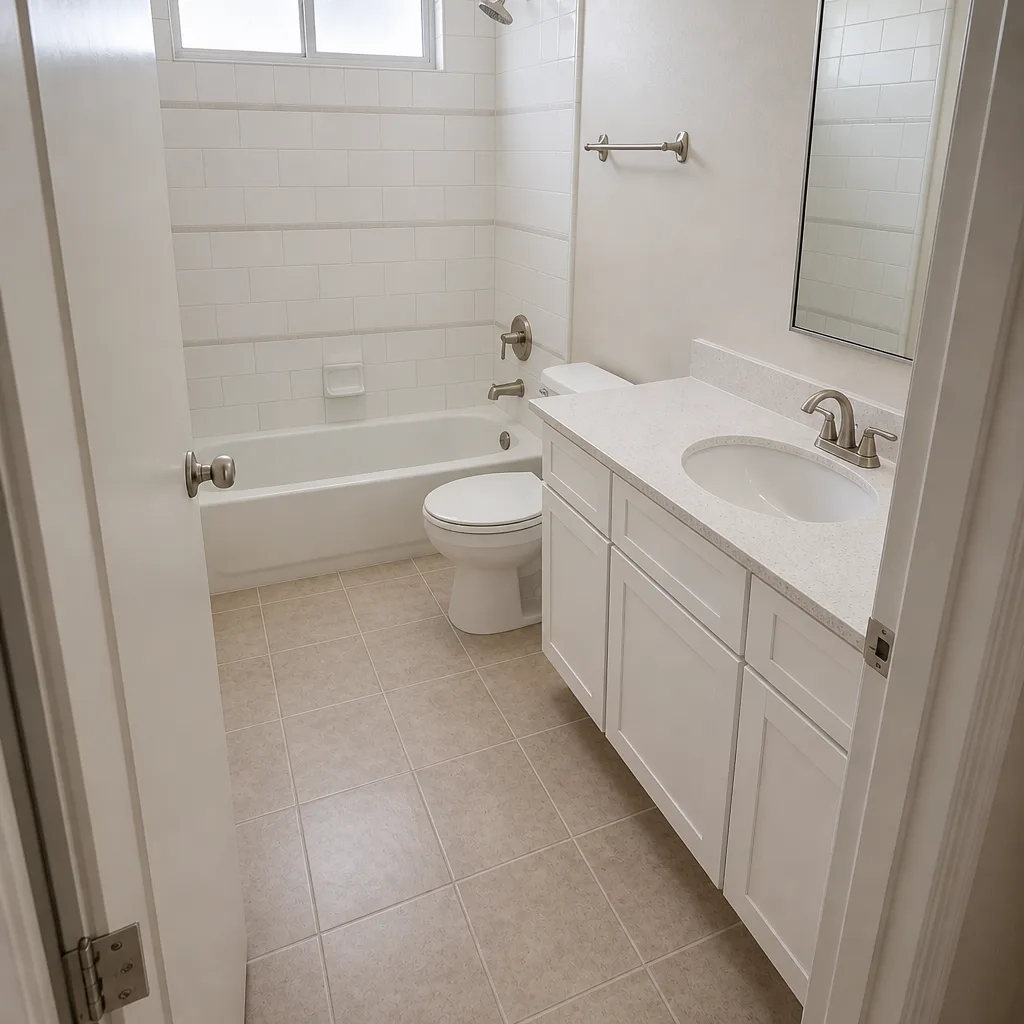
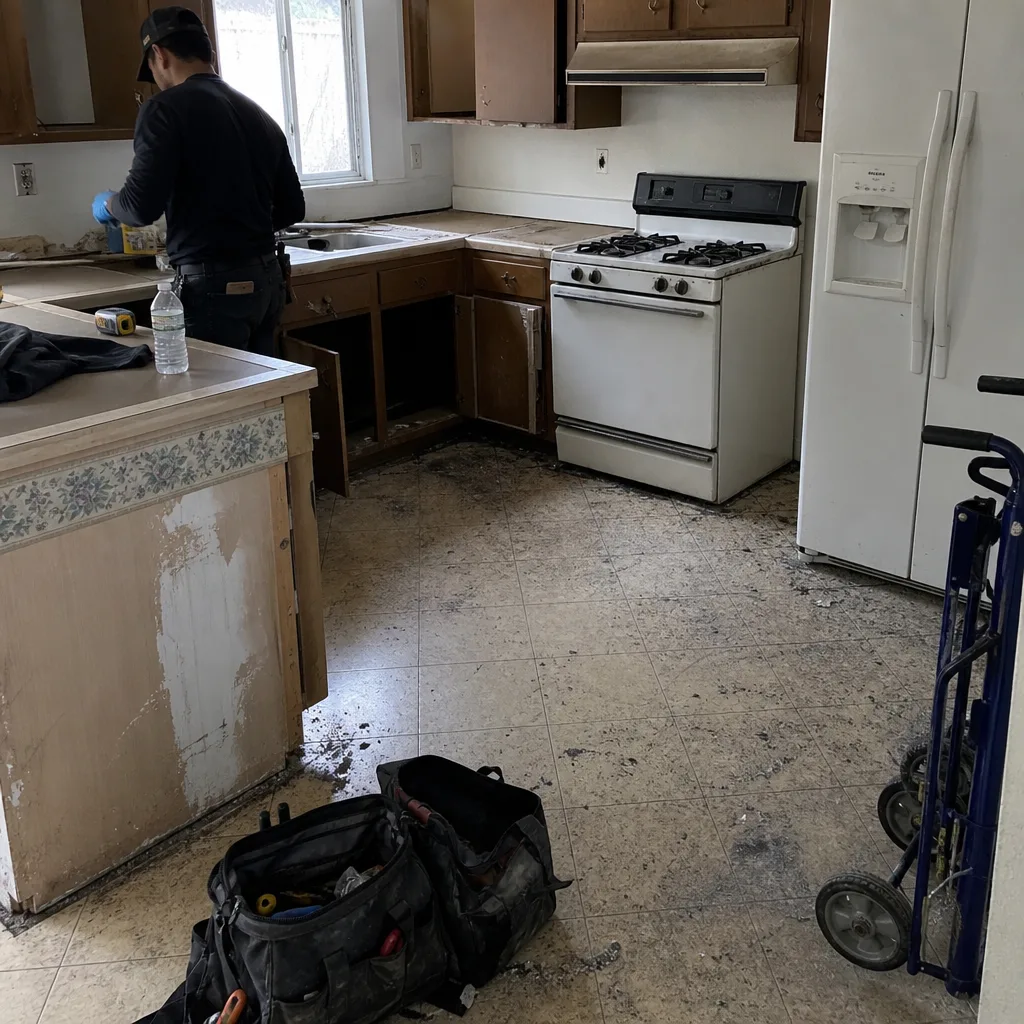
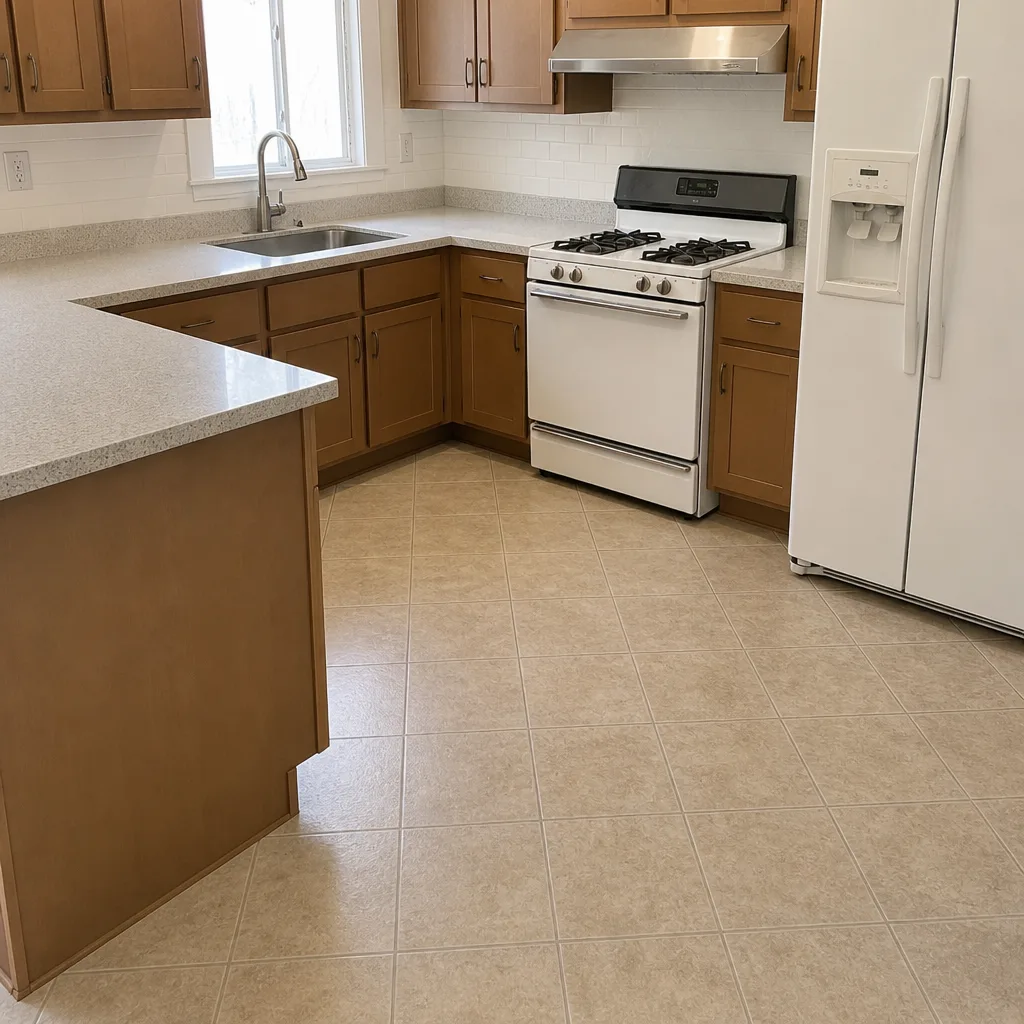
See the difference
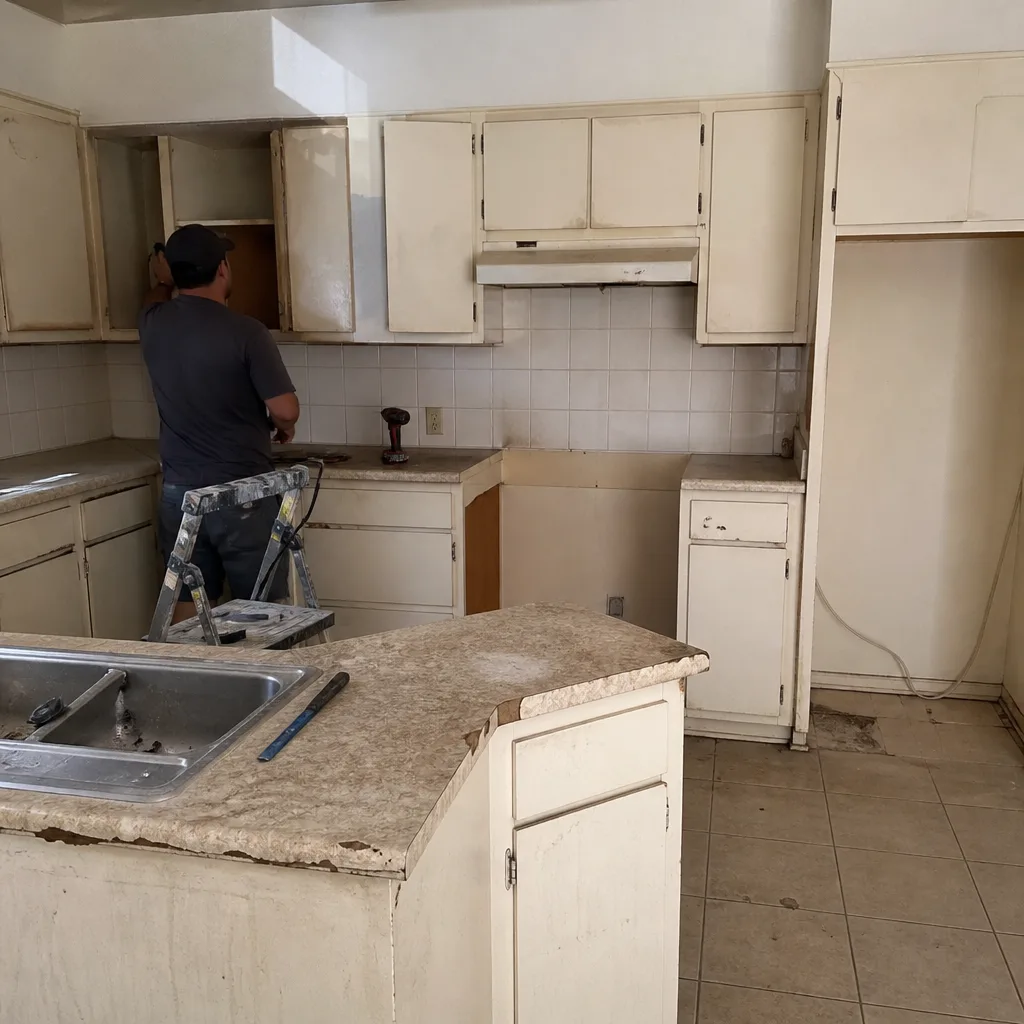 Before
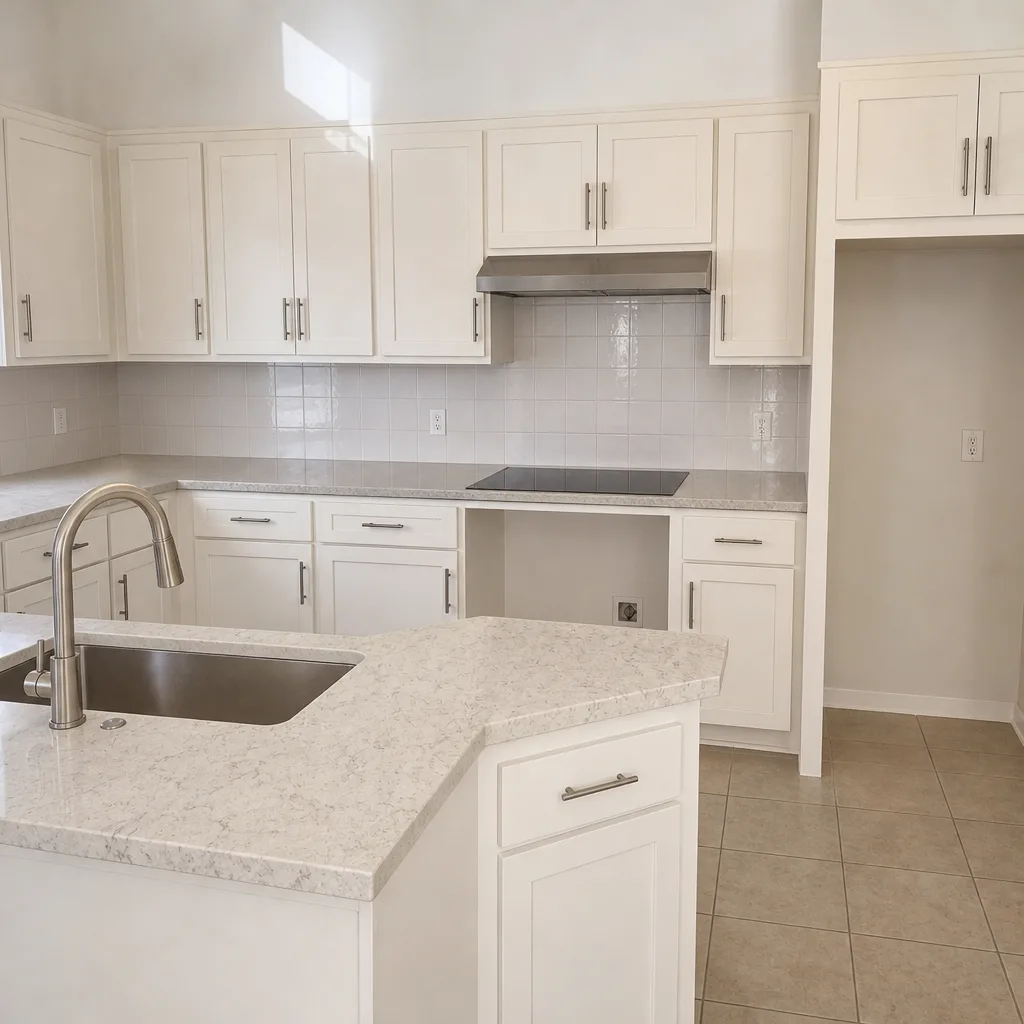 After
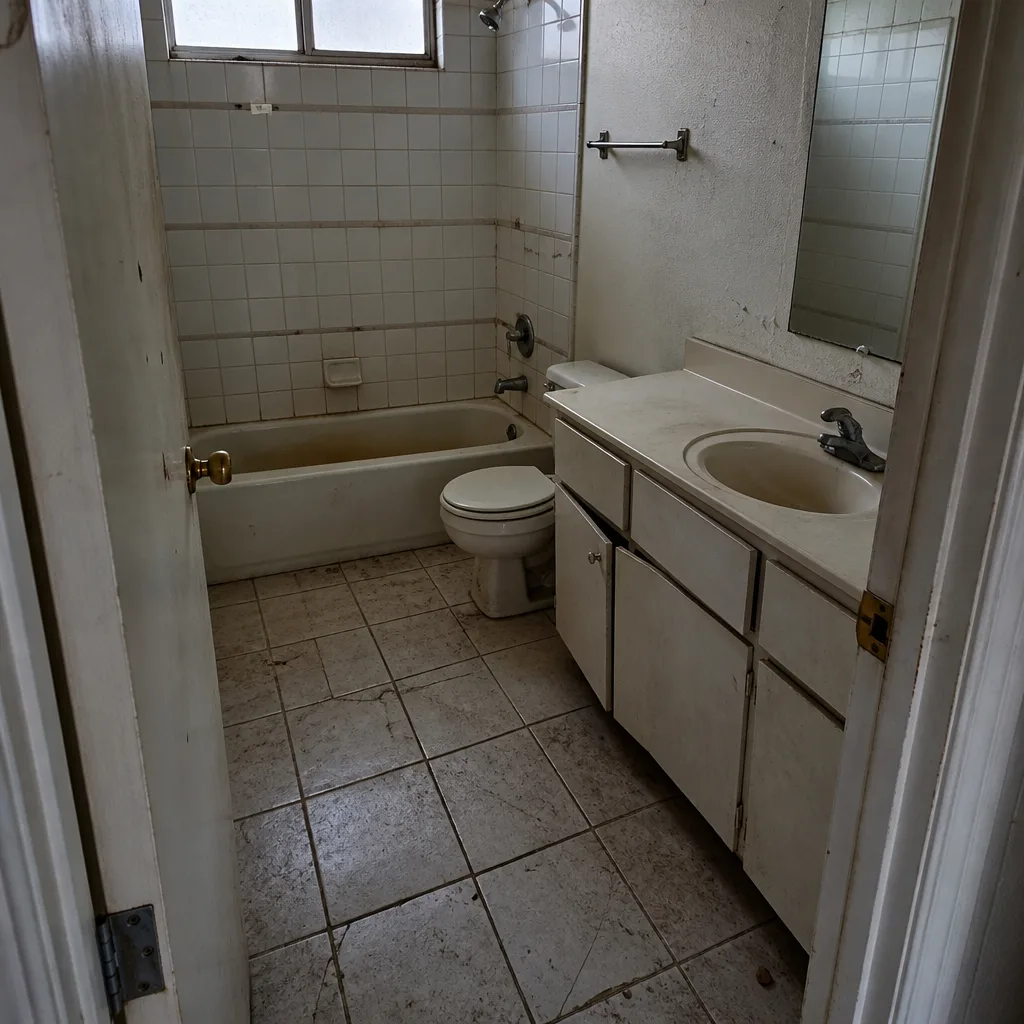 Before
 After
 Before
 After
When to Call a Professional
Some problems are worth a phone call the day they show up. A water stain spreading on a ceiling below a remodeled bathroom means a failed shower pan or plumbing rough-in – that repairs the ceiling, not the cause. A mechanics lien filed against your property by a subcontractor, a contractor who has stopped returning calls mid-project, or a surprise final invoice with no signed change order – all of those need professional guidance now. And if you’re planning work rather than fixing it, the right time to call is before the contract is signed, so the scope and price are in writing from the start. Bradford Remodeling Co Summerlin offers free estimates in Summerlin – call (844) 588-0072 to schedule yours.
Frequently Asked Questions

Repair costs in Summerlin typically run 15% to 40% of the original project cost, depending on how much has to be torn out – a failed shower pan with water damage behind the tile often runs into the thousands, while a paint or trim correction is far less. We can’t give you an exact number without seeing the work, and anyone who quotes one over the phone hasn’t seen it either. Call (844) 588-0072 for a free estimate with a written line-item scope.
Yes. Under NRS Chapter 40, Nevada’s residential construction defect statute, a homeowner generally must give the contractor written notice of the defect and an opportunity to respond before filing suit or arbitration. Skip that step and the case can be dismissed or delayed while the clock restarts. Send the notice by certified mail and keep the receipt.
Yes, in Nevada a subcontractor or material supplier who wasn’t paid by the general contractor can file a mechanics lien against your property, even if you paid the GC in full. The defense is a lien waiver clause in your contract that requires conditional waivers with every payment and a final unconditional waiver at close. If you receive a preliminary notice, take it seriously and call (844) 588-0072 if you need help understanding what it means.
Stop all further payment, send written notice requesting a written plan with a deadline, and document the current state of the work with dated photos. Then verify the contractor’s license with the Nevada State Contractors Board and file a complaint if they don’t respond. Get a written assessment from another licensed contractor so you have evidence of what’s unfinished and what it will cost to complete.
It should be, but it isn’t universal – many contracts carry a vague “warranted” line with no term and no remedy described. Ask for the warranty in writing with a defined duration and a defined remedy. Our 365-Day Done Right Promise puts it plainly: every completed project carries a full-year written guarantee, and if the work fails inside that window, we come back and correct it at no charge.
A well-run project closes the punch list within two to three weeks, and often faster. A list that sits for months is a sign the crew has moved on to another job and your retainage is gone. That’s why a punch-list holdback and a target completion date belong in the contract – they’re the clause that prevents the most common complaint we hear about in Summerlin.
The Bottom Line
Remodeling problems are contract problems, and contract problems are fixable if you catch them early. The four complaints that drive most disputes – surprise invoices, unfinished punch lists, subcontractor liens, and quality that fails in the first year – each trace to one missing clause, and each clause has a name you can ask for before you sign. If you’re already in a dispute, document everything, send written notice under NRS Chapter 40, and use the Nevada State Contractors Board complaint process and your lien waivers as leverage rather than as a post-mortem. A written price, a specific scope, and a written warranty are what keep a project squared away from first day to final walkthrough.
Bradford Remodeling Co Summerlin is a member of the Garrison Partners family and operates as an independently owned and operated business held to The Garrison Standard. Every project receives a written price before work begins and carries the 365-Day Done Right Promise – a full-year written guarantee, and we return to correct the work at no charge if it fails inside that window. Our technicians are background-checked and uniformed, and a live person answers the phone around the clock. Call (844) 588-0072 for a free estimate and a written scope, and let’s get your project squared away.
Written by the team at Bradford Remodeling Co Summerlin.