Last updated November 17, 2026







Free written scope consultation - allowances, timeline, and change-order rules on paper before a single trade is scheduled
General Contractor Maintenance Schedule: What to Do and When
A remodel that produces zero callbacks in its first year can still fail in year three. Not because the work was bad, but because nobody handed you a written schedule at closeout telling you that the expansion joint behind the tile needs resealing before the second summer heat cycle. In Summerlin, where summer surface temperatures on west-facing walls regularly climb past 160°F and winter nights still drop toward freezing, materials expand and contract harder than in almost any climate in the country. Every caulk joint, grout line, and flashing lap is working through a cycle. This guide builds the maintenance schedule from the finished work backward, trade by trade, so the remodel you paid for holds up the way it was specified.
Quick Answer
After a renovation, most homeowners need to inspect caulk joints, grout, and exterior sealants at 90 days, then reseal exterior caulk and check flashing every 12 months in a Nevada climate. Interior wet-area caulk lasts 3 to 5 years, exterior caulk on sun-facing walls lasts 2 to 3 years, and roof flashing and expansion joints should be checked annually before summer and again before winter. Buried plumbing rough-ins, electrical panels, and HVAC systems installed by a general contractor need licensed-trade servicing on their own intervals, not homeowner maintenance.
Styles & brands we work with
- Kitchen remodeling
- Bathroom remodeling
- Home additions & ADU
- Roofing
- Windows & doors
- Driveway & pavers
- Fence
Table of Contents
- What the Nevada Heat Cycle Does to Caulk, Grout, Paint, and Flashing
- The 90-Day Post-Completion Walkthrough: Six Items to Check
- Manufacturer Warranty vs. Contractor Labor Warranty
- Which Systems Need Licensed-Trade Servicing vs. Homeowner Inspection
- The 12-Month Maintenance Calendar for a Renovated Summerlin Home
- What to Watch at Year Three and Year Five
- How to Document Maintenance for Resale and Warranty Claims
- Common Mistakes to Avoid
What the Nevada Heat Cycle Does to Caulk, Grout, Paint, and Flashing
Summerlin sits on the western edge of the Las Vegas Valley, hard against the Spring Mountains. That geography creates a daily thermal swing that flat-country contractors don’t design for. West-facing walls bake in the afternoon and cool hard overnight, and the materials move with it. Here’s what each one does over time and how often it needs service in our climate.
- Exterior caulk (sun-facing walls): Reservice every 2 to 3 years. UV exposure breaks down the polymer chain, and the caulk shrinks back from the joint before it visibly cracks. If you can slip a fingernail under the bead, it’s already failed.
- Exterior caulk (shaded or north-facing): Reservice every 3 to 5 years. It still dries out, just slower.
- Interior wet-area caulk (tubs, showers, backsplashes): Reservice every 3 to 5 years. In Summerlin, shower caulk often fails faster because of low ambient humidity combined with daily hot-water cycles.
- Grout and tile expansion joints: Inspect annually, reseal grout every 2 years. The expansion joint at the perimeter of a tiled floor is there because tile moves; when the sealant in that gap dries out, the tile has nowhere to move and starts to tent or crack.
- Exterior paint: Expect 7 to 10 years on James Hardie fiber cement with quality paint, 5 to 7 years on stucco in direct summer sun. South- and west-facing walls age roughly twice as fast as shaded sides.
- Flashings and roof penetrations: Check at the 12-month mark and yearly after. Thermal pumping – the daily expansion and contraction of the roof deck – works sealant loose at vent boots and step flashing long before a leak shows up inside. Roof pitch and the material matter; a low-slope section over a valley addition takes far more stress than a steep field.
We’ve seen a 2021 kitchen remodel in Summerlin sit untouched for three years and come back with failing backerboard at the sink because the interior caulk line at the counter-to-wall joint was never serviced. Nothing was installed wrong. The schedule was just never handed over. A by-the-book contractor should walk you through this at closeout, and if you’re planning a remodel now, start with the team at Bradford Remodeling Co Summerlin home to get the scope and the maintenance expectations in writing before work begins.
The 90-Day Post-Completion Walkthrough: Six Items to Check
The 90-day mark is when most genuine workmanship problems show up – after the materials have moved through one full season but before the contractor’s warranty window narrows. It’s also the single best defense against discovering a failure at month ten and losing the free correction. Do this walkthrough yourself and photograph every item, then send the list to your contractor if anything is off.
- Check every caulk joint in wet areas. Press a thumb into the bead at tub corners, shower niches, and the sink-to-backsplash line. It should feel slightly pliable, not hard or crumbly. A joint that’s already pulling away at 90 days is a substrate problem, not a caulk problem.
- Tap-test new tile. Run a plastic-handled screwdriver lightly across floor and wall tile. A hollow ring means the thinset didn’t bond. Any hollow spot larger than a business card gets corrected, not patched.
- Open and close every door and window. In a Nevada dry season, wood frames shrink slightly and doors that stuck in the spring may swing free by August. Note any that bind, then wait a month and note them again – the pattern tells you whether the issue is seasonal or a bad install.
- Run every fixture and watch the cabinet base. Fill and drain sinks, run the dishwasher, check under the cabinet floors for dampness. A slow drain slip at the P-trap shows up as discolored cabinet substrate before it ever shows up on the ceiling below.
- Inspect grout lines at transitions. Grout cracking where a tiled floor meets a wall or a different flooring material is expected – that’s where the movement joint belongs. Grout cracking in the middle of a field is not.
- Check exterior penetrations and flashing. Look at where the siding meets the roof, where hose bibs come through the wall, and around any new vent or exhaust. Sealant there takes the most stress. If you see a gap, document it with a photo and the date.
Write the results down. A dated list with photos is the difference between “I think something’s wrong” and a warranty claim a contractor can act on immediately. Most workmanship warranties, including our 365-Day Done Right Promise, cover failures that appear within the first year – and any full-year written guarantee is only useful if you have the record of when you first noticed the problem.
Manufacturer Warranty vs. Contractor Labor Warranty
These are two different contracts, and homeowners confuse them constantly. A manufacturer’s warranty covers the product – the KraftMaid cabinet box, the Therma-Tru door slab, the James Hardie siding panel – against defects in the material itself. A contractor’s labor warranty covers the installation: how it was fit, fastened, sealed, and flashed. Both have maintenance conditions, and both can be voided by skipping the schedule in this guide.
- Manufacturer warranties commonly run 10 to 25 years on windows and doors, 30 to 50 years on fiber cement siding, and lifetime on many cabinet lines – but they almost universally require that the product be installed per the manufacturer’s written spec and maintained per its published instructions. A GAF roof warranty can be reduced or voided if roof penetration flashing isn’t checked and resealed. A door slab warranty won’t cover rot from an unsealed bottom rail.
- Contractor labor warranties typically run 1 to 2 years on installation workmanship. Our own is a full 365 days: if the work fails inside that window, we come back and correct it at no charge. That’s the guarantee. It covers our installation, not abuse, not skipped maintenance, and not damage from a separate trade’s work – and it’s written down before the project starts, not promised verbally.
If you’re remodeling in Summerlin and comparing contractors, ask two questions: what does your written labor warranty cover and for how long, and can I see it before I sign the contract? A contractor who can’t answer both isn’t running a documented process. If you’re remodeling a kitchen and matching cabinet specs to a long-term warranty, our Kitchen Remodeling in Sandy Valley page walks through how we specify KraftMaid and Wellborn cabinetry against manufacturer warranties so the paper chain holds.
Which Systems Need Licensed-Trade Servicing vs. Homeowner Inspection
A general contractor coordinates the systems in your home, but not every system is his to maintain. Knowing which is which saves you money and keeps your warranties intact. In Nevada, electrical, plumbing, and HVAC work each require a licensed trade – a GC cannot service them, and neither should a homeowner past the visual check stage.
- Electrical panel and wiring: Visual homeowner inspection only – check for scorch marks, a warm panel cover, or breakers that trip repeatedly. Anything else goes to a licensed electrician. Opening a panel is dangerous and illegal for an unlicensed person. An annual electrician inspection is reasonable; a homeowner should never open the dead front.
- Plumbing (beyond fixtures): Homeowner can watch for leaks, run fixtures, and check the water heater anode rod. Anything inside a wall, in the rough-in, or at the main shutoff belongs to a licensed plumber. Flush the water heater annually to control mineral scale – Las Vegas Valley water runs hard, and scale is the number one cause of early water heater failure here.
- HVAC: Licensed HVAC technician, twice a year. The filter is the homeowner’s job – change it every 1 to 3 months depending on dust. The outdoor condenser coil should be cleaned annually by a technician, especially in Summerlin where spring dust storms load the fins. Skip the service and the compressor works harder through July.
- Gas lines and appliances: Licensed plumber or gas fitter only. Homeowner can check for the smell of gas and know where the shutoff is. Nothing else.
- Roof and envelope: Homeowner can inspect from the ground with binoculars and check the attic for staining after a rain. Actual roof access and flashing repairs belong to a licensed roofer.
During a whole-home remodel, expect the trades to overlap and leave a documented paper trail. Our guide to General Contractor in Sandy Valley explains how we sequence licensed trades on a project so the inspections pass and the warranties are all assigned to the homeowner at closeout. If you’re remodeling a wet area, the Bathroom Remodeling in Sandy Valley page covers the rough-in inspections and moisture barriers that need to be serviced on a schedule afterward.
The 12-Month Maintenance Calendar for a Renovated Summerlin Home
Here’s the annual rhythm we recommend to every homeowner we finish a project for. It’s built around the Nevada seasons: a spring check before the heat arrives, a fall check before the first freeze, and two smaller tasks mid-season.
- March (before the heat): Inspect all exterior caulk for shrinkage and reseal anything that fails the fingernail test. Check roof flashings and vent boots. Clean AC coils and change the filter. Oil exterior door hinges and check threshold seals on Therma-Tru doors.
- April: Inspect interior wet-area caulk and grout. Reseal grout if it’s been two years. Test GFCI outlets by pressing the test button. Check hose bibs for leaks.
- June: Watch for signs of thermal movement – sticking doors, hairline drywall cracks at corners, grout lines opening at floor-to-wall transitions. Note any that appear; most are cosmetic, but a crack that widens over two weeks is worth a call.
- September (before winter): Reinspect roof and exterior flashing. Clean gutters and downspouts. Check exterior door sweeps. Drain and flush the water heater. Have the HVAC technician run the furnace check.
- November: Run the furnace for the first time and check for odd smells. Check exterior shutoff valves before the first hard freeze (Summerlin’s overnight lows matter more than most people think for hose bibs and irrigation).
- January: Interior walkthrough – caulk, grout, cabinet hinges, drawer slides. Adjust cabinet doors if they’ve settled. Re-torque any loose deck or paver edging if you have a Belgard or Techo-Bloc hardscape.
Two checks a year on the envelope and monthly on filters covers roughly 80% of the failures we see on projects after year one. A disciplined schedule beats a big repair every time – and it’s how a Summerlin home holds its value through the resale inspection.
What to Watch at Year Three and Year Five
Materials move, and the failures that show up at year three aren’t the ones that show up at year one. They’re not the contractor’s fault and they’re not defects – they’re just the aging of a properly installed system. Knowing the schedule means you treat them as maintenance rather than a call to the contractor.
- Year three: Exterior caulk on full-sun walls will typically need its first full redo. Grout in wet areas may need resealing again. Exterior door seals and window weatherstripping start to compress and lose their spring. Cabinet drawer slides in heavy-use kitchens (the drawer under the cooktop, the silverware drawer) may need adjustment or replacement – most are simple owner-serviceable swaps.
- Year three to five: Deck or patio sealers on Belgard and Techo-Bloc surfaces need reapplication on a 3 to 5 year cycle depending on finish and traffic. Stucco hairline cracks are normal in a Nevada climate and should be patched and painted before water gets in. Sink and tub caulk will have been redone at least once by now.
- Year five: Roof and flashing get a professional inspection. HVAC refrigerant charge and coils get checked. Water heater in hard-water areas is a candidate for replacement or anode rod renewal. The whole-home walkthrough from year one gets redone photograph by photograph, and you compare.
If your project is still within our 365-Day Done Right Promise window and you find a problem at year one, that’s our call, not yours. Past that window, this is exactly the kind of work we handle on a scheduled maintenance or general contracting basis. If you’re remodeling now and want a written schedule handed to you at closeout – not a verbal conversation on the last day – get the free estimate first: General Contractor in Sandy Valley has the scope of a full-project maintenance conversation.
How to Document Maintenance for Resale and Warranty Claims
Documented maintenance changes what a home is worth at resale and what a warranty is worth in a dispute. A buyer’s inspector will note a resealed roof flashing and move on. A resealed flashing with a dated photo and receipt in the maintenance file is a data point the buyer’s agent will cite in the negotiation. Same for a warranty claim – a manufacturer’s warranty rep asking “was the flashing checked annually” is far more likely to approve a claim when you have a dated record.
- Keep a single digital folder named “Home Maintenance” with subfolders by year.
- Name every photo with the date and the item: “2026-03-15-exterior-caulk-north-wall.jpg”. A photo without a date is nearly worthless as a record.
- Keep every receipt for materials (caulk, grout, sealant, filters). It proves what product was used, which matters for warranty compatibility.
- Keep every contractor service invoice. Manufacturer warranties often specify that installation and service must be performed by a licensed trade.
- Keep the original closeout packet from your contractor – the written scope, the material list with brand names (KraftMaid, Wellborn, Cambria, Kohler, Moen, GAF, James Hardie, Therma-Tru, and the rest), the warranty documents, and the maintenance schedule. If you weren’t handed one, ask for it.
- Log the date of every HVAC service, water heater flush, and roof inspection in a simple spreadsheet. It’s the difference between “I think we did that” and a warranty claim that clears.
Squared away at closeout means: clean site, documented scope, signed written guarantee in the homeowner’s hand, and a maintenance schedule they can actually follow. That’s the standard we hold ourselves to in Summerlin, and it’s the reason we keep everything in writing.
Common Mistakes to Avoid
- Treating the closeout packet as optional. Homeowners who never ask for a written schedule are the ones who discover a failed expansion joint at year two instead of year one. Ask for it before final payment, and don’t accept a verbal walkthrough in place of paper.
- Resealing exterior caulk with the wrong product. Summerlin’s UV load is brutal; we regularly see silicone caulk applied over a failed bead of paintable acrylic on stucco because it was on the shelf. Use the manufacturer’s specified product for the joint, not the cheapest tube at the hardware store.
- Skipping the pre-summer roof check. A loose vent boot in April is a $150 fix. In August after a monsoon dump, it’s a ceiling repair, a drywall tear-out, and a mold remediation. The 12-month interval is not negotiable in a Nevada climate.
- Forgetting the expansion joint behind tile. Grouting over an expansion joint defeats its entire purpose, and it’s a common move-in-ready shortcut. If you see grout where there should be sealant at a floor-to-wall transition, that joint will tent or crack within a few years.
- Assuming the manufacturer’s warranty is automatic. Most material warranties require registration within a set window after install. If the contractor didn’t hand you the registration paperwork, it may never have been done. Verify it.
- Assuming the contractor’s warranty covers maintenance. A labor warranty covers workmanship failure, not a skipped reseal. If a caulk joint was never serviced and water got in, the labor warranty likely won’t cover the resulting damage – and no contractor should have led you to believe it would.
- Leaving the HVAC filter in past 90 days. Spring dust storms in Summerlin load filters fast. A clogged filter is the single most common reason a system installed by a good GC runs hot and fails early. Change it at the manufacturer’s interval, not your convenience.
See the difference
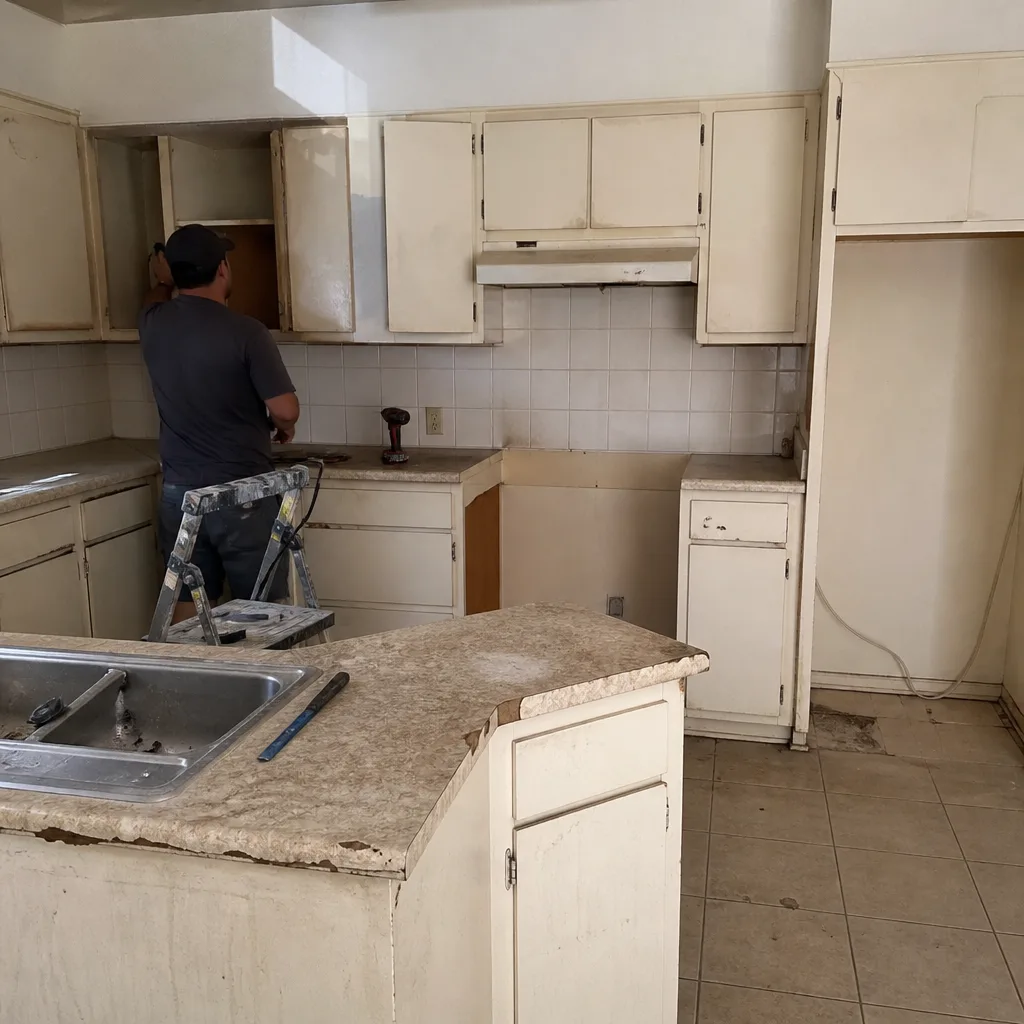 Before
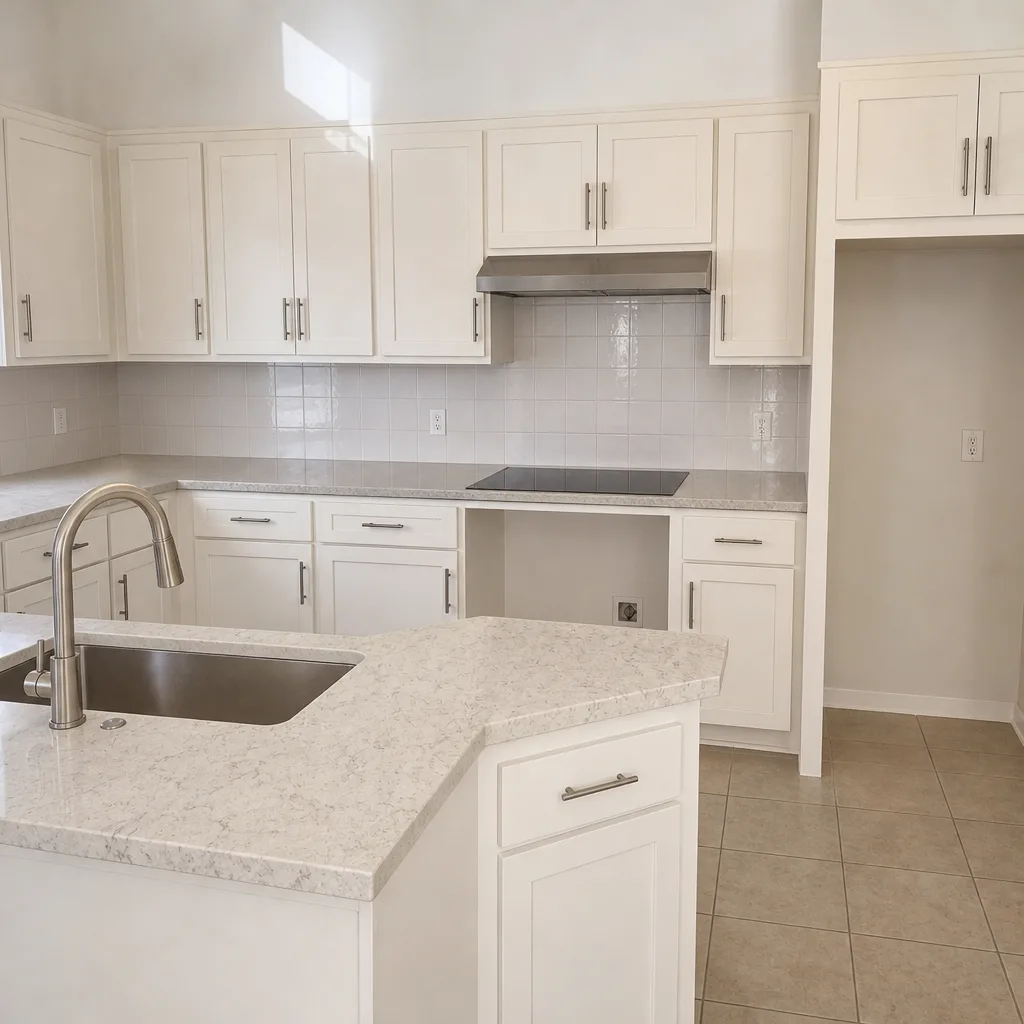 After
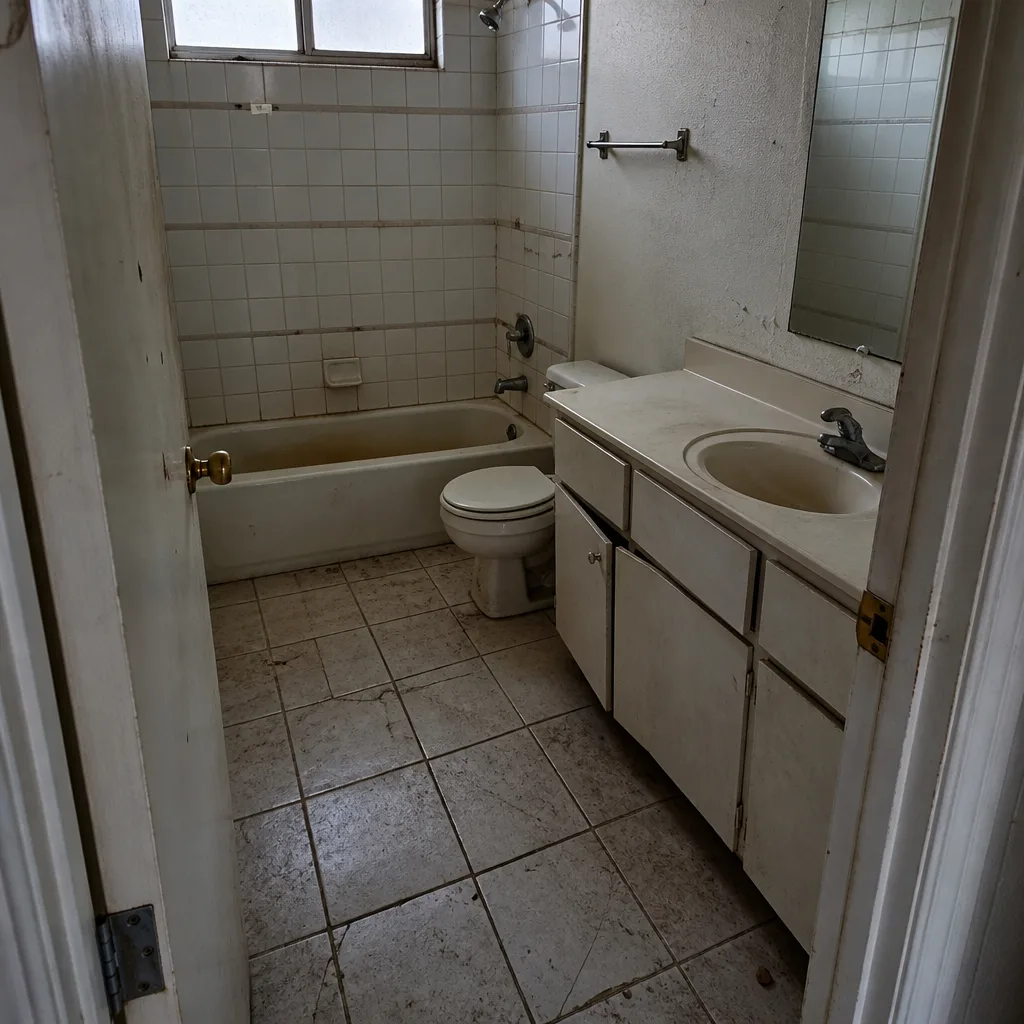 Before
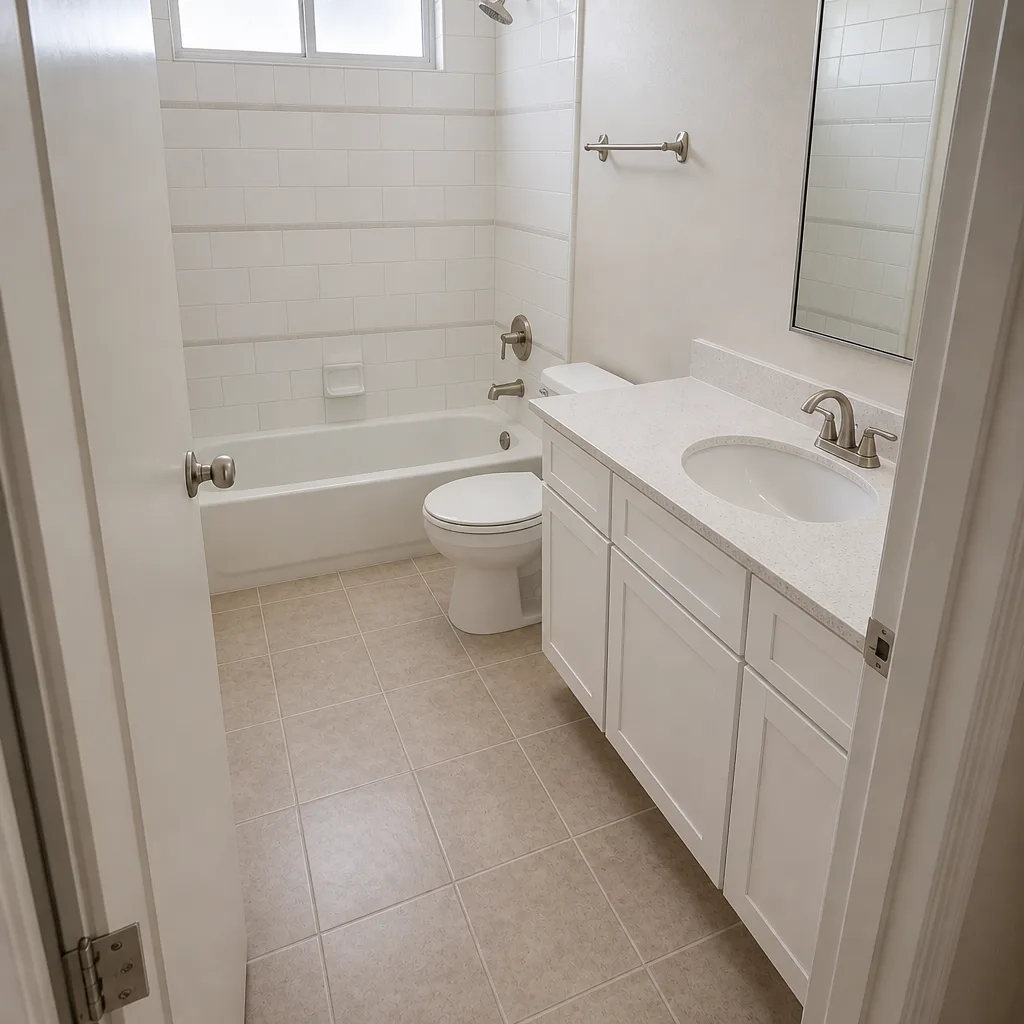 After
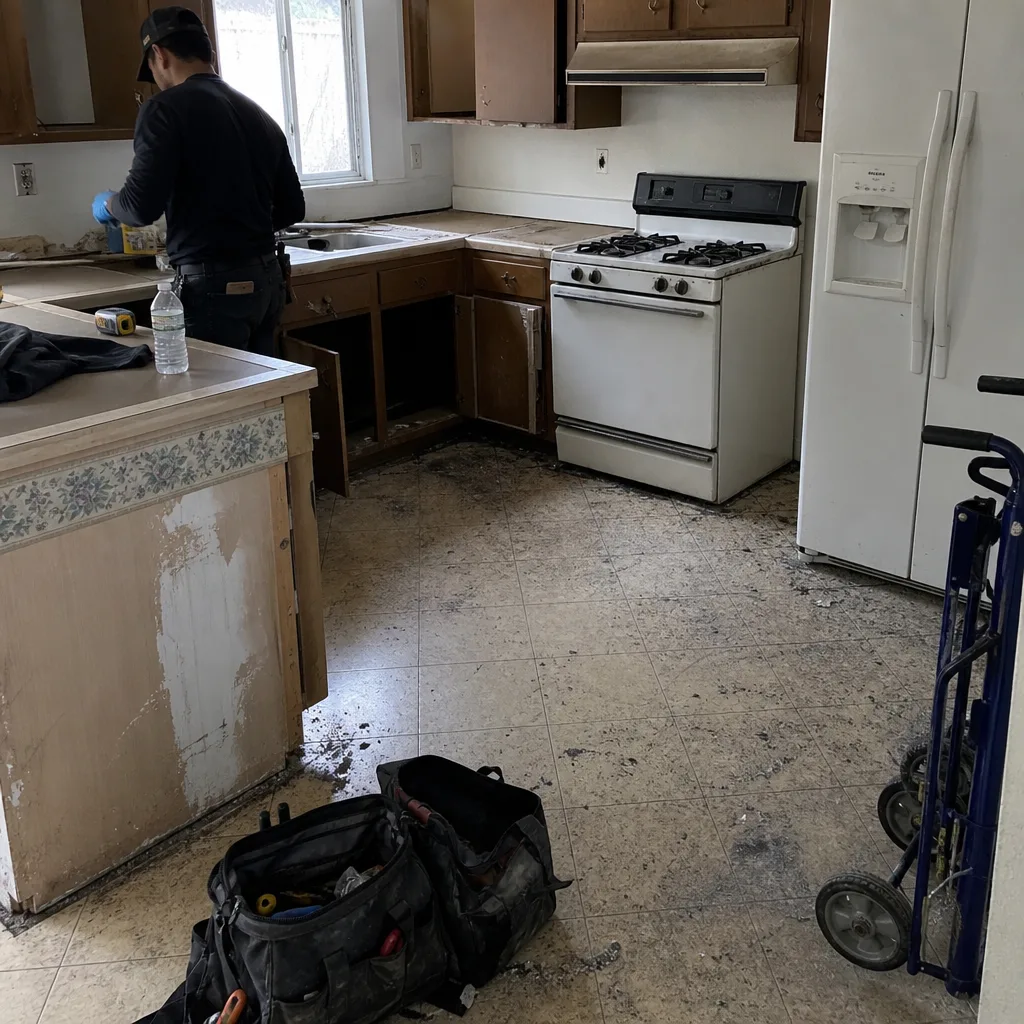 Before
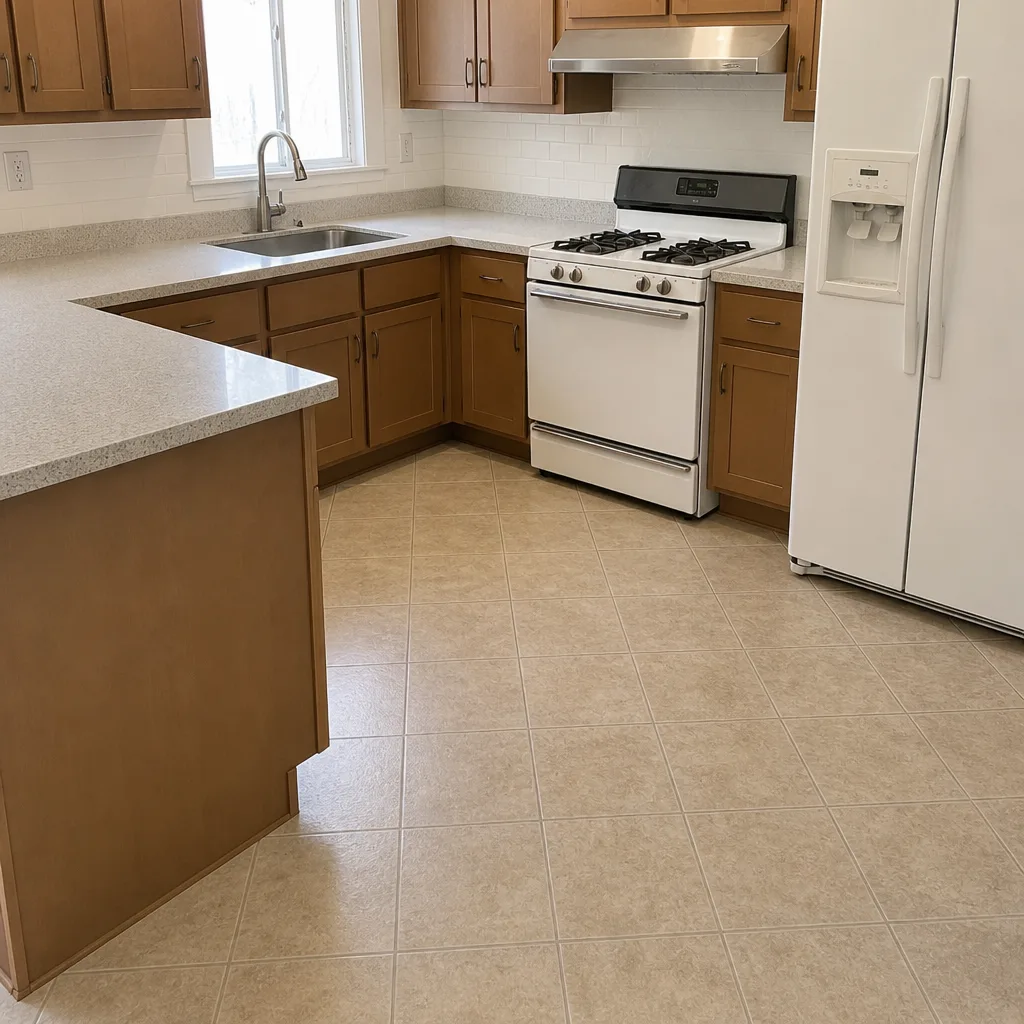 After
When to Call a Professional
Some of this guide is homeowner work – caulk, grout, filters, filter changes, photo documentation. Some of it isn’t. Call a professional if you see hollow tile that’s growing, a gypsum board crack that widens over a week, water staining on any ceiling, a bead of caulk that pulls away at 90 days, a door that has stopped latching, or a shower niche that stays damp hours after use. Same for anything involving the electrical panel, the gas line, the HVAC compressor, or roof access above a single-story ladder. These are the failures where early correction is cheap and delayed correction is a full remodel. If a project is still within the 365-Day Done Right Promise window and it’s our installation that’s failing, that’s our free return visit. Bradford Remodeling Co Summerlin offers free estimates in Summerlin – call (844) 588-0072 and a live person will pick up.
Frequently Asked Questions
Every 2 to 3 years on sun-facing walls and every 3 to 5 years on shaded sides. Summerlin’s UV load and daily thermal swing age caulk faster than in most of the country, and the failure usually shows as shrinkage back from the joint rather than a visible crack. Call (844) 588-0072 for an exact quote on a reseal project – estimates are free.
Check six items: wet-area caulk joints, hollow tile, door and window swing, fixture and cabinet-base leaks, floor-to-wall grout transitions, and exterior penetrations and flashing. Photograph every item with a date and send the list to your contractor if anything is off. The 90-day point is when workmanship problems show up but before the warranty window gets tight.
No. The 365-Day Done Right Promise covers workmanship failure on our installation for a full year – if the work fails inside that window, we come back and correct it at no charge. It does not cover skipped maintenance, abuse, or damage from another trade. The distinction matters, and it’s written into the guarantee before the project starts.
A manufacturer warranty covers the product against defects in the material itself; a contractor labor warranty covers the installation. Both have maintenance conditions that can void them – a GAF roof warranty can be reduced if roof penetration flashing isn’t checked, and a labor warranty won’t cover damage from a skipped reseal. Read both before you sign, and keep them in your maintenance file.
HVAC twice a year by a licensed technician, plus homeowner filter changes every 1 to 3 months; water heater flush annually to control mineral scale from hard Las Vegas Valley water. Anything inside the wall or at the electrical panel belongs to a licensed trade, not a homeowner. Call (844) 588-0072 for a general contracting walkthrough of what needs professional servicing on your project.
Not with us. Every project gets a written price before any work starts – that’s The Garrison Standard. No numbers that move at the door, no change orders for scope that was already in the written scope. Call (844) 588-0072 for an exact quote – estimates are free.
The Bottom Line

The work a general contractor leaves behind doesn’t maintain itself. Exterior caulk needs resealing every 2 to 3 years on sun-facing walls, grout and expansion joints every 2 years, roof and flashing once a year, and HVAC twice a year with filters changed monthly. Do the 90-day walkthrough yourself and photograph everything. Keep the manufacturer warranty and the contractor labor warranty separate in your head, and keep both in your maintenance file. Documented maintenance protects your home at resale, protects your warranties during a claim, and protects the remodel you paid for. Bradford Remodeling Co Summerlin runs on written prices, background-checked and uniformed technicians, and a live person answering the phone 24/7 – call (844) 588-0072 for a free estimate and take the first step toward a project that’s squared away from day one.
Written by the team at Bradford Remodeling Co Summerlin.