Last updated November 17, 2026





Free written scope consultation - allowances, timeline, and change-order rules on paper before a single trade is scheduled
General Contractor Maintenance Checklist for Summerlin Homeowners
Caliche is the calcium-rich hardpan that sits under most of Summerlin, and it expands as it absorbs water. When it swells against a foundation, the movement shows up as stair-step cracks in stucco and interior drywall, and almost every homeowner who calls us about “settling” is actually looking at a drainage problem. Summerlin’s 110°F summers, alkaline water, and clay-heavy soil wear a house differently than temperate climates do, which is why the generic maintenance lists you find online keep sending people to fix the wrong thing. What follows is the checklist we’d hand a neighbor: what to inspect, how often, what it costs, and when to put a contractor on retainer in writing.
Quick Answer
Summerlin homeowners should inspect foundations and drainage for caliche saturation twice a year, check roof membranes and rooftop HVAC penetrations every spring before the heat peaks, and descale hard-water buildup on stucco, tile grout, and fixtures annually or whenever chalky mineral crust appears. Most failures we see are $50-to-$400 inspection and sealing jobs that became five-figure repairs because nobody looked.
Styles & brands we work with
- Kitchen remodeling
- Bathroom remodeling
- Home additions & ADU
- Roofing
- Windows & doors
- Driveway & pavers
- Fence
Table of Contents
- Why Caliche Changes Your Maintenance Calendar
- Drainage and Foundation Inspection: The Caliche Rule
- Roof Membrane and UV Exposure Checks
- HVAC Platforms and Rooftop Penetration Checks
- Hard Water: Stucco, Grout, and Fixture Scale
- The Summerlin Seasonal Maintenance Calendar
- What to Put in Writing When You Retain a GC
- What Maintenance and Repair Costs in Summerlin
Why Caliche Changes Your Maintenance Calendar
Caliche is a natural cement-like layer of calcium carbonate that forms in arid soil, and it’s present under much of Summerlin, from The Ridges down through Red Rock Country Club and Summerlin West. The problem isn’t the caliche itself; it’s how it behaves when water reaches it. Caliche drains poorly, so irrigation overspray, monsoon runoff, and a misgraded yard can saturate the hardpan, and saturated caliche swells. The swelling soil pushes against a foundation slab or stem wall, and the stress shows up as diagonal cracks at window and door corners, sticking doors, and gaps in exterior caulk lines.
Generic maintenance calendars assume soil that drains. Summerlin doesn’t. That single fact should reshape when and how often you inspect, because the failure mode isn’t frost heave or freeze-thaw, it’s moisture trapped against a reactive layer. In our experience, the homes that crack are rarely the oldest; they’re the ones where a sprinkler head sprays the foundation line or where a patio was poured without positive slope away from the house.
Two adjustments matter:
- Inspect drainage before and after monsoon season, not once a year in spring. The June-through-September window is when caliche does its damage.
- Watch for moisture, not age. A ten-year-old Summerlin house with bad grading cracks faster than a thirty-year-old house that sheds water correctly.
Bradford Remodeling Co Summerlin handles repairs that come out of these inspections, from foundation-adjacent concrete work to full Bradford Remodeling Co Summerlin home renovations when the damage has run past cosmetic.
Drainage and Foundation Inspection: The Caliche Rule
The single most valuable thing you can do for a Summerlin home is confirm that water leaves the lot. Caliche saturates and swells, and once it does, foundation cracks follow the water, not the calendar. Here’s the inspection sequence we recommend, and what a contractor should document:
- Walk the perimeter after a rain. Any ponding that sits more than a few hours is a red flag. Standing water means caliche is holding moisture against the foundation.
- Check the soil grade. The ground should slope away from the house at roughly six inches over the first ten feet. If it slopes back toward the wall, that’s your first fix.
- Look at the irrigation. Sprinkler heads within a few feet of the foundation are the most common cause of chronic saturation. Redirect or cap them.
- Inspect the slab edge and stem wall. Hairline cracks that run diagonally from window corners are stress indicators. Note their width with a pencil mark and a date; if they widen, call a professional.
- Check downspouts and grading under patios. A patio poured flat against the house traps runoff against the hardpan.
What remediation looks like when a contractor finds a problem: regrading, a swale or French drain to move water off the lot, downspout extensions, or in serious cases a foundation assessment. A surface crack under 1/16 inch is usually cosmetic, sealed and monitored. A crack that’s grown past a quarter inch, or one with vertical displacement, gets a structural look. This is not a DIY area; a foundation repair done wrong on reactive soil fails again within a season, which is exactly the kind of failure the 365-Day Done Right Promise is written for.
Roof Membrane and UV Exposure Checks
Summerlin’s flat and low-slope roofs, common on many of the community’s contemporary builds, live under intense UV. The sun here degrades roofing membrane and sealant faster than it degrades shingles, and a membrane that looks fine from the ground can be chalky and checkered up close. The inspection schedule should be driven by UV exposure, not roof age. A five-year-old membrane on a west-facing roof may need more attention than a fifteen-year-old one on the shaded north.
Here’s what a proper roof inspection should document per visit:
- Membrane condition: color fading, surface chalking, and any alligatoring (cracking that looks like reptile skin) on the walking surface.
- Seams and flashings: lifted edges, separated lap seams, and the sealant condition at every wall and penetration.
- Drains and scuppers: clear and correctly sloped so water doesn’t pool and bake.
- Photos with dates. A written inspection should include photos so you can compare year over year.
On pitched roofs we recommend GAF and James Hardie exterior products because the manufacturer specs and warranties are traceable; a membrane repair calls for matching the existing system. If your roof inspection turns into a repair or replacement, the same written-price discipline applies: you get the number before work starts.
HVAC Platforms and Rooftop Penetration Checks
Flat-roof Summerlin homes often carry HVAC equipment on a curb or platform on the roof, and every penetration in that roof is a potential leak. The platform itself, the curbs, the refrigerant and condensate line penetrations, and the flashing around each one all need a look twice a year. UV degrades the sealant around penetrations faster here, and a small gap that lets in an inch of monsoon rain is a ceiling stain by August.
Check these points each visit:
- Platform and curb condition: rust, rot, or loose mounts on rooftop platforms.
- Penetration flashing: sealant around every line, all still flexible and bonded.
- Condensate drainage: the line must run clear and slope correctly, or water backs up against the roof.
- Equipment clearances: debris and shade vegetation interfering with airflow.
If the inspection flags a problem, our technicians have up to 22 years of experience with rooftop HVAC surrounds and can correct the flashing and platform detail without disturbing the equipment. This is where the General Contractor in Sandy Valley team’s approach carries over: document first, price second, cut once.
Hard Water: Stucco, Grout, and Fixture Scale
Summerlin’s water is hard, and the scale shows up on stucco walls below hose bibs, on tile grout in showers and floors, and on every exterior fixture. Hard-water deposits look like a chalky white crust, and left alone they pit grout, stain stucco, and shorten the life of faucets and showerheads. The fix is regular, and the threshold for calling someone in is clear.
- Stucco: white efflorescence and scale below spigots and along the lower wall. Inspect every six months; a dilute acid wash restores the surface, but the drainage and irrigation source that’s throwing the water belongs in the same conversation.
- Tile grout: scale buildup on shower floors and walls. Inspect annually. When grout starts cracking behind the scale, that’s a re-grout and often a Schluter waterproofing check, not a scrub.
- Fixtures: chalky deposits on faucets and showerheads. Inspect every quarter; replace at the first sign of pitting or a dripping valve. We install Toto and American Standard fixtures because the finishes hold up to this water.
Remediation thresholds: light scale is a homeowner cleaning job with a mild descaler; scale that’s hardened into grout lines or pitted a finish is a contractor call. In our experience, Summerlin homes that don’t descale exterior fixtures at least once a year replace them twice as often.
The Summerlin Seasonal Maintenance Calendar
Because the failure points here are heat and water, not winter, the calendar runs on the desert’s clock. Here’s the schedule we recommend, with the reasoning behind each window:
- Late winter (February): roof membrane and flashing inspection before the UV season; HVAC platform check; document any winter changes.
- Spring (April): full drainage and foundation walk; redirect irrigation; check grade and downspouts before the heat arrives.
- Pre-monsoon (June): clear roof drains, confirm scuppers, re-seal flashings, review all penetrations.
- Post-monsoon (October): the most important foundation and drainage inspection of the year, when caliche has had a full season of moisture to move; note any new cracks.
- Year-round, quarterly: descale fixtures, clean grout, spot-check stucco below hose bibs.
One calendar, and it’s built around Summerlin’s actual weather. A homeowner in Red Rock Country Club or The Ridges can run the same list and get ahead of the failures that generic checklists miss.
What to Put in Writing When You Retain a GC
An “inspection” is a vague word, and what it legally covers depends entirely on what’s written down. When you hire a general contractor for annual maintenance or a one-time assessment, the document should spell out the following, and if it doesn’t, ask for it in writing before anyone walks the property.
- Scope: exactly what’s inspected, point by point. Roof membrane, flashings, platform, drainage, foundation cracks, stucco, grout. Vague “full inspection” language protects no one.
- Deliverable: a written report with photos and dates, not a verbal walk-through.
- Liability and limitations: what the inspection does not cover. An inspection is not a structural engineering evaluation; if a foundation concern is found, the contract should say who assesses it next.
- Pricing: a written price for the inspection and a written, itemized price for any repair before work starts. No numbers that move at the door.
- Guarantee: what’s covered and for how long. Every Bradford Remodeling Co Summerlin project carries the 365-Day Done Right Promise: if the work fails within a full year, we return and correct it at no charge, and it’s in writing when you sign.
Open a Kitchen Remodeling in Sandy Valley project mid-maintenance and the same discipline applies: written price, documented scope, signed guarantee at close. That’s The Garrison Standard, and it’s the same set of rules whether the job is a $300 repair or a whole-home remodel.
What Maintenance and Repair Costs in Summerlin
Here’s the rough range we see for the work these inspections generate. Every number is a written estimate before any work starts; these are typical Summerlin market figures, not a quote.
- Drainage inspection and regrading: $300 to $900 for a residential lot, more with drainage lines or a French drain.
- Foundation crack assessment and cosmetic sealing: $400 to $1,200, depending on extent; structural evaluation is separate.
- Roof membrane inspection and minor flashing repair: $250 to $700; a re-roof is a separate, larger number.
- HVAC platform and penetration re-flash: $200 to $600.
- Stucco scale wash and grout re-seal: $150 to $500 per area.
- Exterior fixture replacement (Toto, American Standard): $120 to $400 each, installed.
Those are inspection-and-correction ranges, not remodel numbers. A full Bathroom Remodeling in Sandy Valley or kitchen project gets its own written, itemized estimate, and no price moves once it’s signed.
Common Mistakes to Avoid
- Treating foundation cracks as normal settling. In Summerlin, diagonal cracks at window corners are usually caliche saturation, and a cosmetic patch hides the cause while it gets worse.
- Skipping the post-monsoon inspection. October is the most important check in Summerlin; the caliche has had a season to swell, and that’s when new movement shows.
- Judging a flat roof by age. UV exposure on a west-facing membrane is the real variable. An age-based schedule misses roof failures.
- Letting sprinklers hit the foundation. The most common cause of saturation we find. Redirect the heads and save the slab.
- Scrubbing hard-water scale into grout. Abrasive cleaning pits grout and stucco. Descale chemically, and call someone when scale hardens into the lines.
- Hiring a GC for “maintenance” without a written scope. If the contract doesn’t define what’s inspected, it doesn’t protect you.
- Ignoring rooftop HVAC penetrations. The cheapest leak to fix is the one caught before a monsoon.
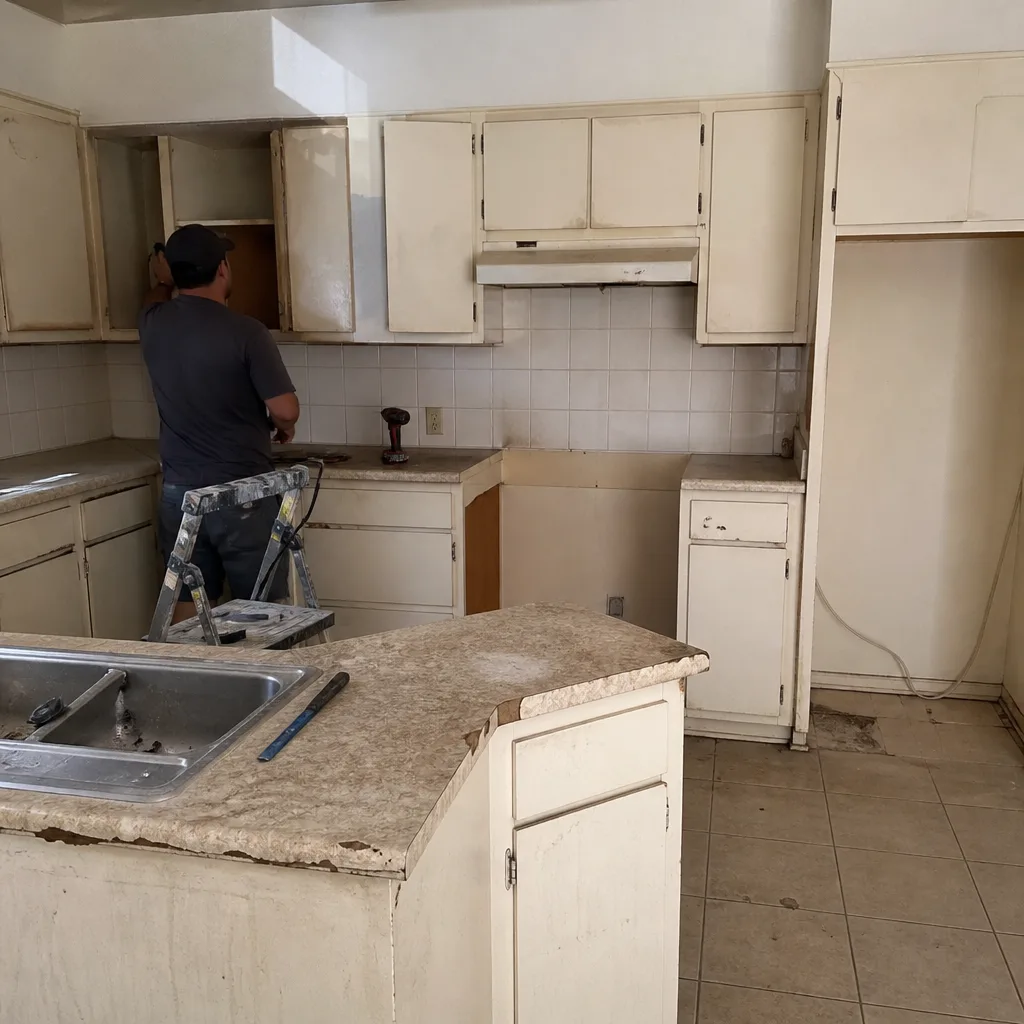
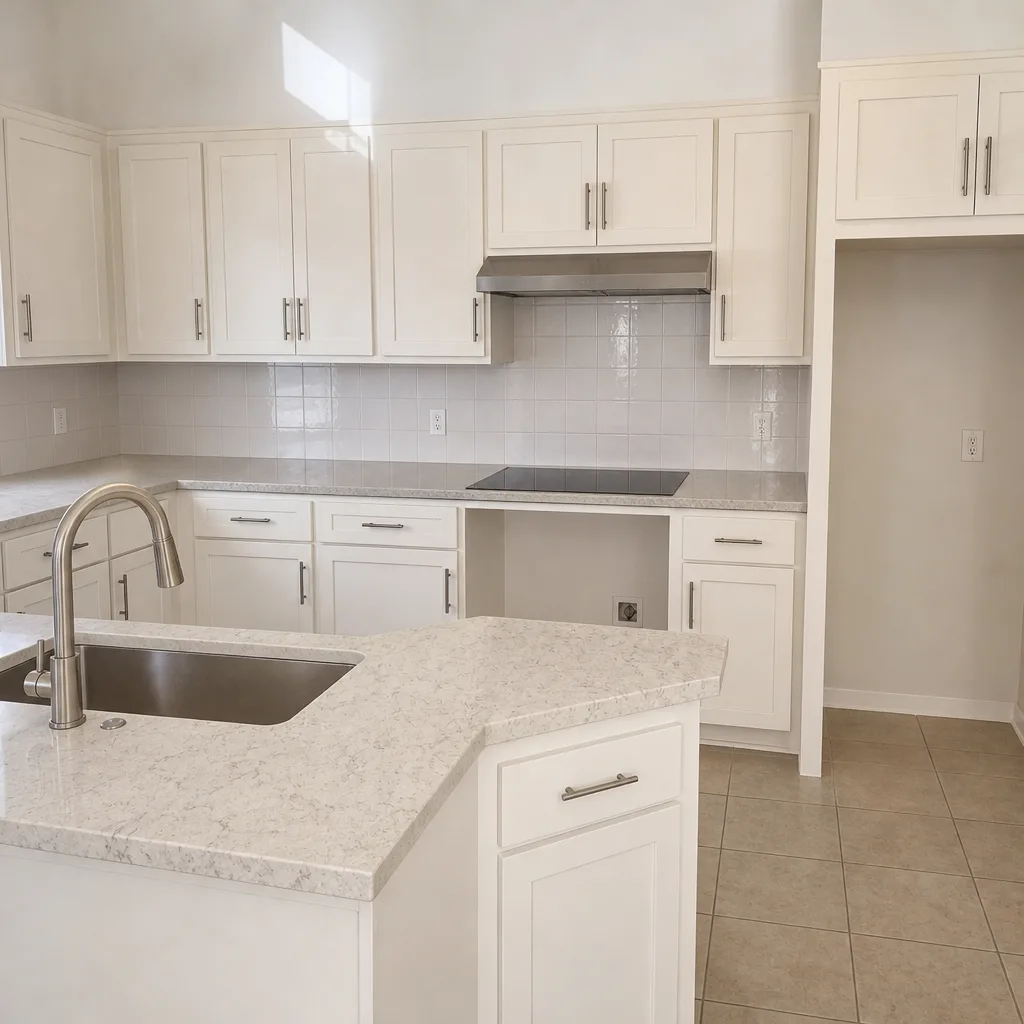
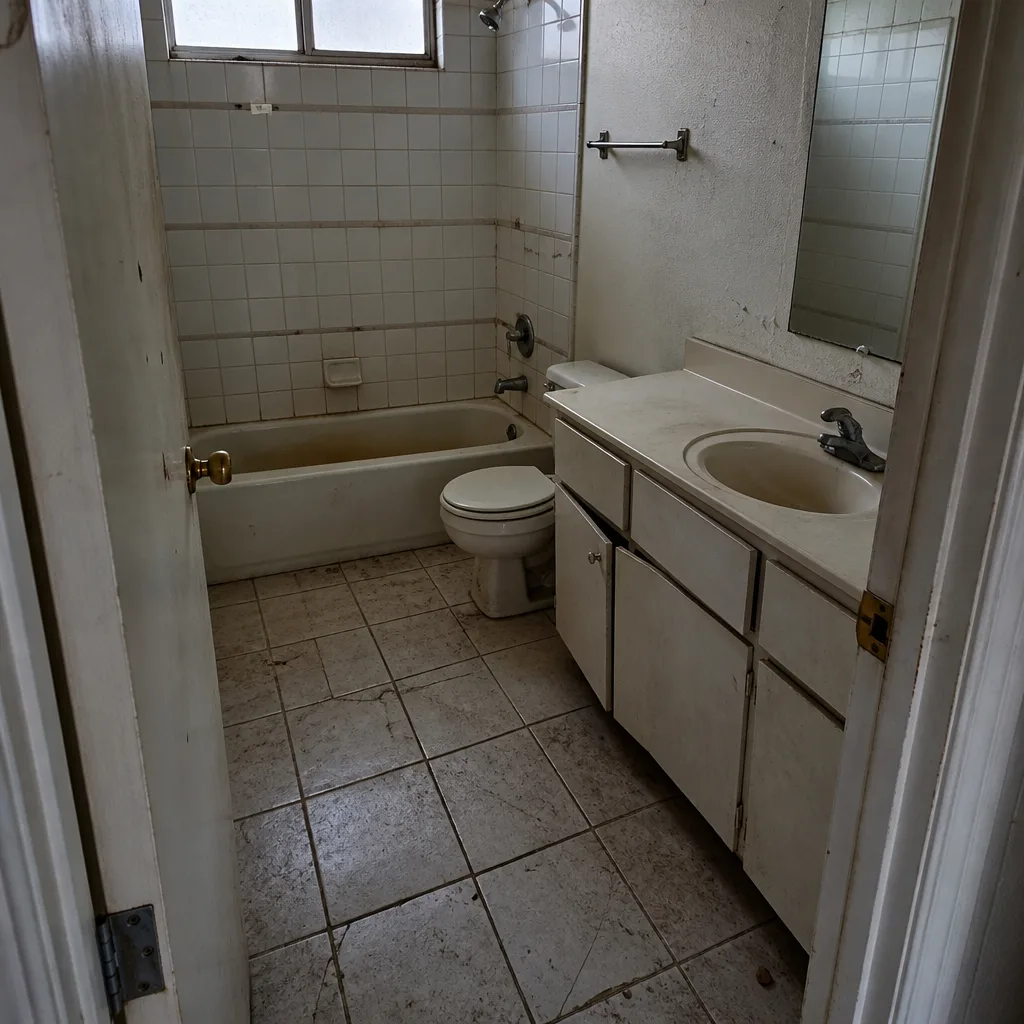
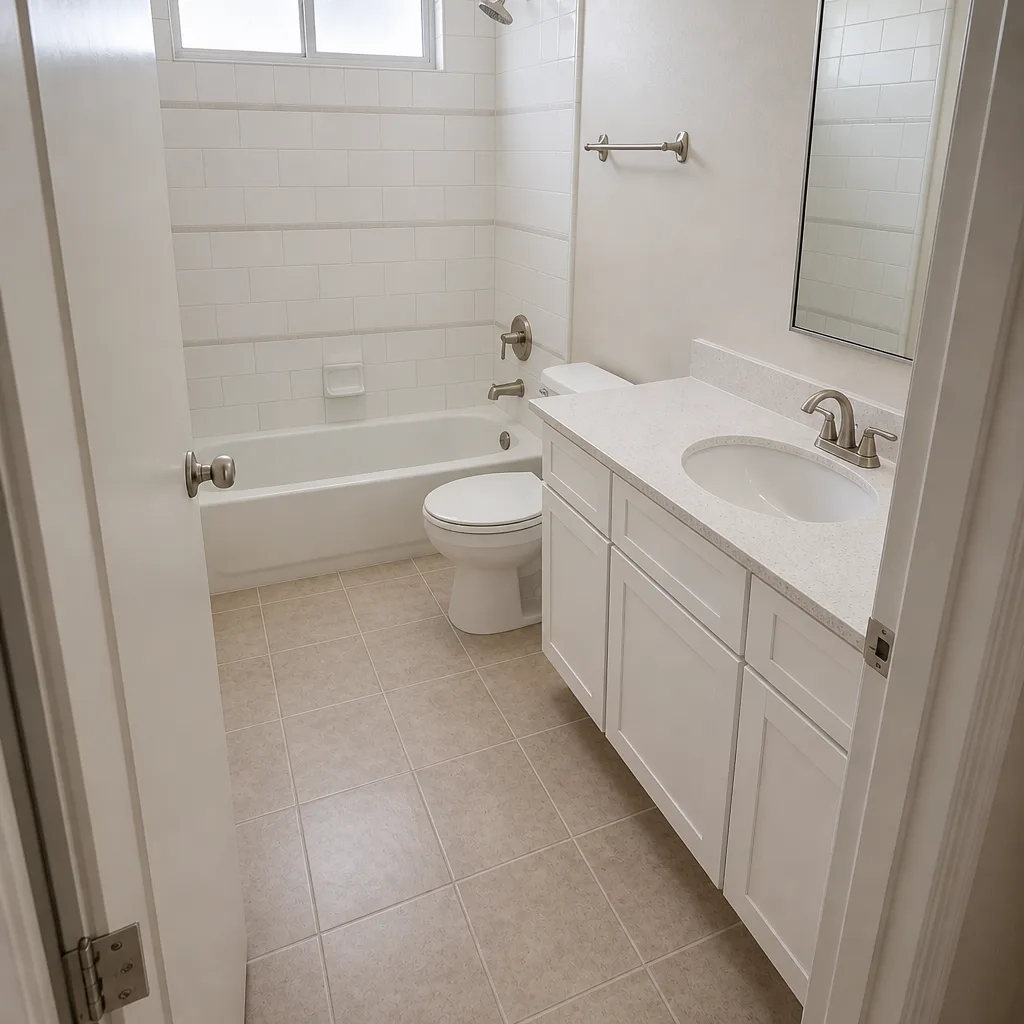
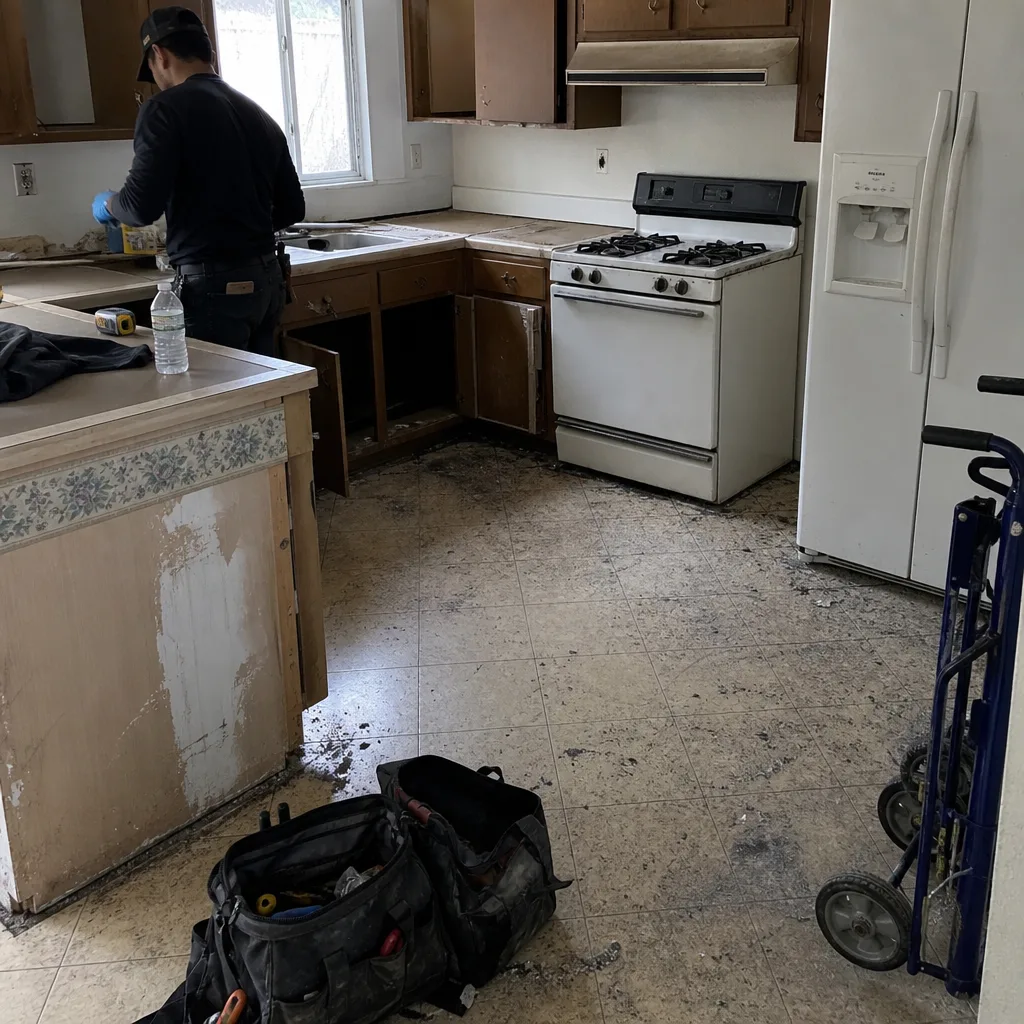
See the difference
 Before
 After
 Before
 After
 Before
 After
When to Call a Professional
Call for a professional inspection when you see foundation cracks widening, water pooling near the house after rain, a roof seam that’s lifting, or scale that won’t come off grout. Call immediately if a roof penetration is dripping or a crack has vertical displacement; those are the cases where a small repair today prevents a five-figure fix. Bradford Remodeling Co Summerlin offers free estimates in Summerlin. Call (844) 588-0072 to schedule a written inspection and price. If you’re planning a larger project, the same estimate covers a full whole-home assessment before work starts.
Frequently Asked Questions

A general contractor’s maintenance inspection in Summerlin typically runs $200 to $500, depending on scope, and it should produce a written report with photos and dated findings. Call (844) 588-0072 for an exact quote; estimates are free.
Twice a year – before summer heat and after monsoon season – because caliche saturates and swells with moisture, so the post-monsoon window is when movement shows. If you see pooling water or cracks widening, don’t wait for the calendar.
In most Summerlin homes we inspect, yes. Caliche is calcium-rich hardpan that expands when it absorbs water, and the resulting stress shows up as diagonal cracks at corners and windows. Cracks that grow or displace need a structural look, not a patch.
Yes, at least annually, and exterior fixtures quarterly. Summerlin’s hard water leaves mineral scale that pits grout and stains stucco if left, and hardened scale means a re-grout or a resurfacing job. Call (844) 588-0072 for a free estimate.
No. Every Bradford Remodeling Co Summerlin project gets a written price before any work begins, and it doesn’t move at the door. All completed work is covered by the 365-Day Done Right Promise: if it fails within a full year, we return and correct it at no charge.
A point-by-point scope, a written photo-and-date report as the deliverable, liability limits (an inspection is not a structural engineering study), an itemized written price for any repair, and the guarantee term. If the scope isn’t written, the coverage is unclear.
The Bottom Line
The failure points in Summerlin are heat, caliche, and hard water, and a maintenance schedule built for a temperate climate gets all three wrong. Inspect drainage before and after monsoon season, treat roof membranes as UV-exposed rather than age-based, check rooftop HVAC penetrations twice a year, and descale stucco, grout, and fixtures on a regular interval. Get every inspection and repair in writing, with a written price before work starts. Most of what we see fail started as a $50-to-$400 item someone skipped. A written checklist and a disciplined contractor keep it that way.
Written by the team at Bradford Remodeling Co Summerlin.
Get a Free Written Estimate in Summerlin
If your inspection turns up something that needs more than a sealant, Bradford Remodeling Co Summerlin brings The Garrison Standard to every job: a written price before work starts, background-checked technicians on every site, the documented brand roster (KraftMaid, Cambria, Kohler, GAF, James Hardie, Therma-Tru, and more), and the 365-Day Done Right Promise signed at close. A live person answers the phone 24/7. Call (844) 588-0072 for a free estimate in Summerlin, and you’ll know exactly what’s squared away and exactly what it costs before anyone picks up a tool.