
Unilock General Contractor in Summerlin: A Homeowner’s Guide
Unilock pavers were engineered for freeze-thaw climates, which means a Summerlin installation runs into a completely different set of failure risks than the manufacturer’s test data assumes. The adjustments most contractors skip – moisture-conditioned caliche prep, UV-stable polymeric sand, load-class matching – are exactly the ones that decide whether your patio looks the same in five summers. This guide covers what desert-specific Unilock work actually requires. If you’d rather have a written price than a pile of research, call (844) 588-0072.
Key Takeaways
- Unilock’s freeze-thaw engineering is largely irrelevant in Summerlin, but their base-prep and load-rating specs still apply – and caliche makes them harder to meet.
- Surface temperatures on exposed pavers in the Mojave routinely run far above air temperature, which shortens the life of the wrong joint sand and the wrong sealer.
- Load class matters: a pedestrian patio and a driveway should not get the same product SKU.
- Warranty registration through an authorized contractor is a paperwork step, and if it’s missed you own the problem.
How Do Unilock Pavers Hold Up Under Summerlin’s Heat?
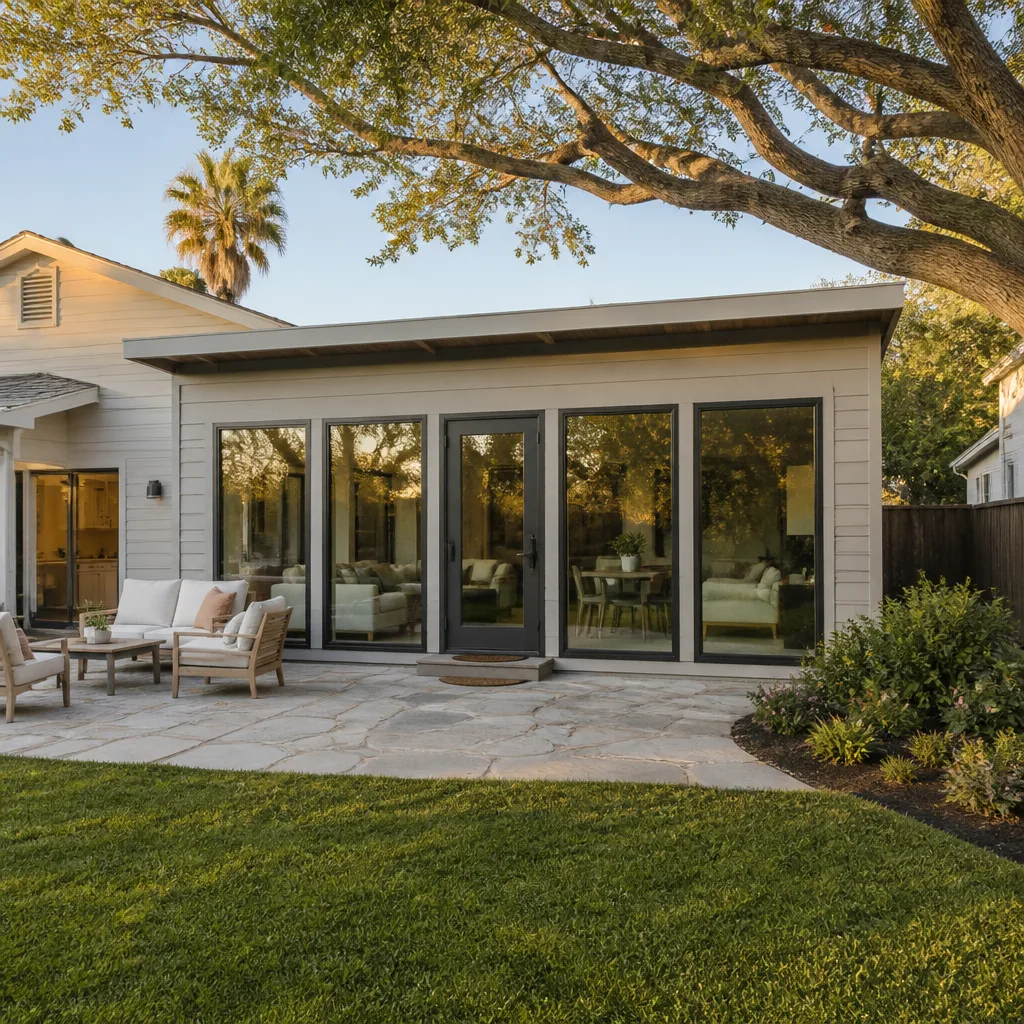
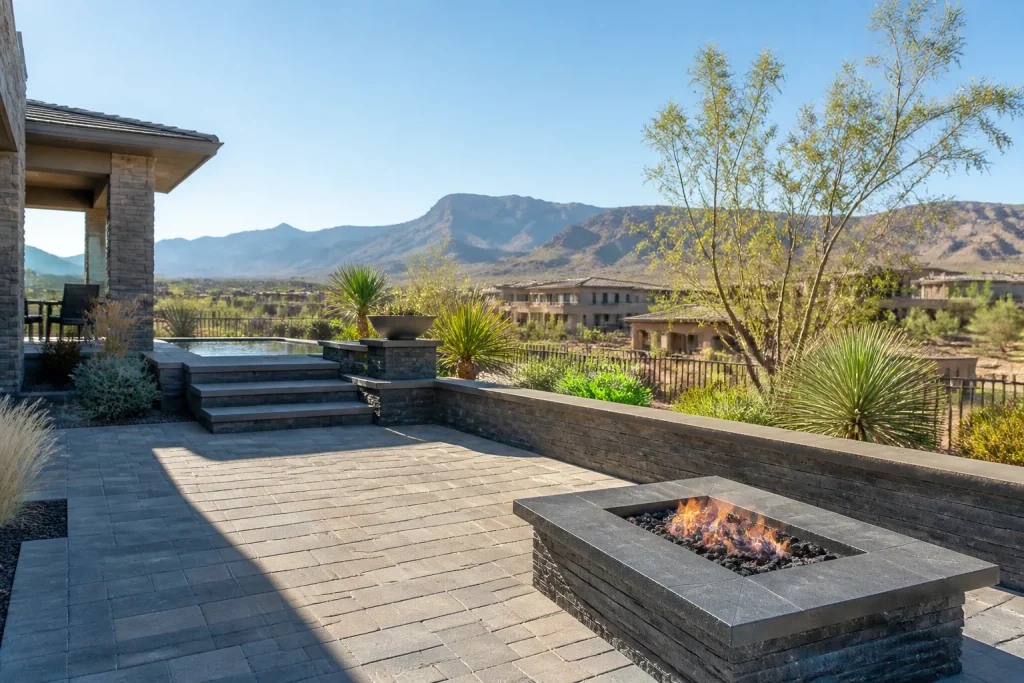
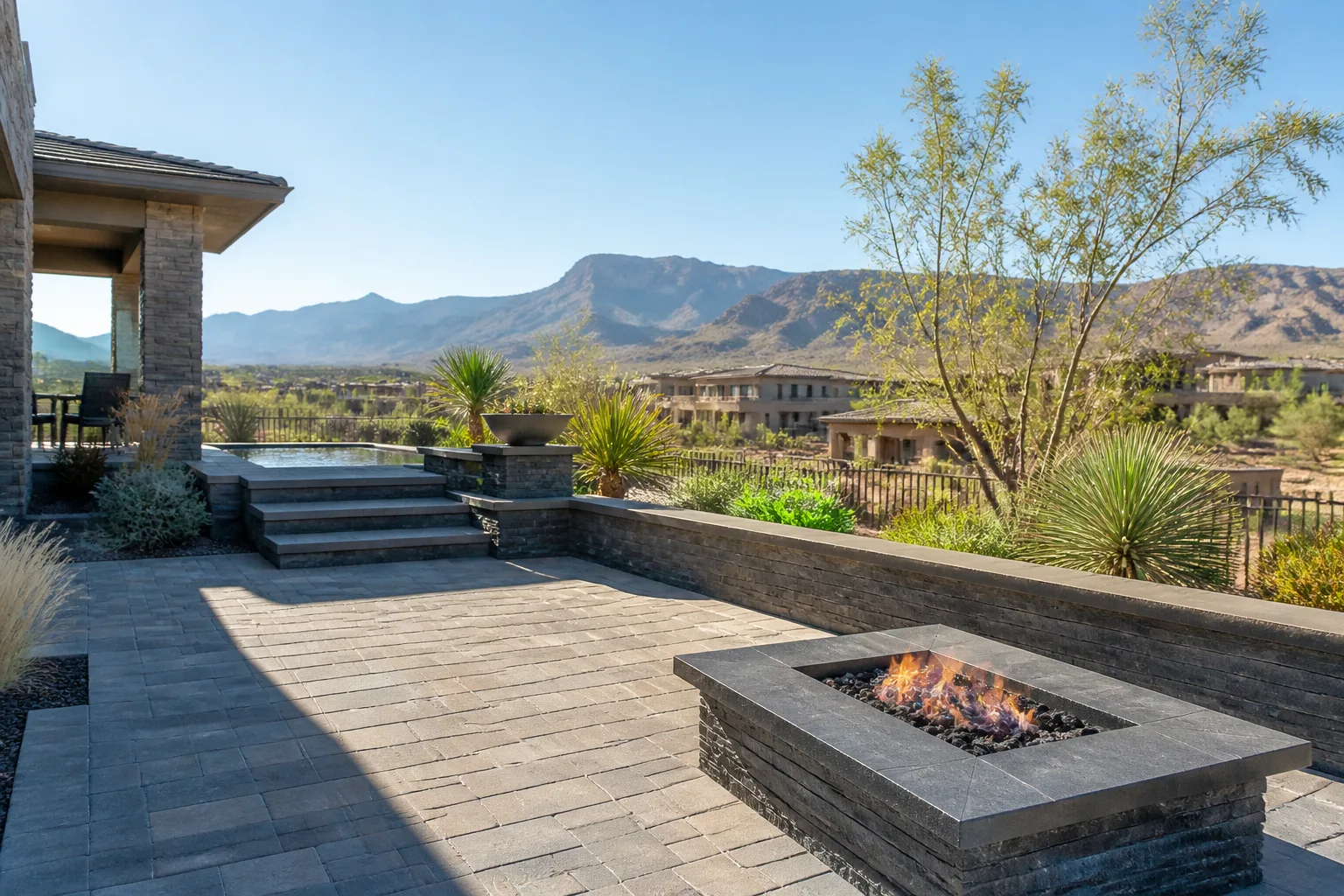
They hold up well, with one caveat: the concrete itself is fine, but everything around it has to be specified for sustained heat. Unilock’s formulation is dense, low-absorption concrete designed to survive water freezing inside the paver and splitting it. Summerlin doesn’t freeze. What Summerlin does is bake an exposed surface through months of 100°F-plus air temperatures, and a paver in direct sun on a west-facing patio in The Ridges will read considerably hotter than the air around it. That heat load transfers down into the joint sand and up into any sealer, and those are the two components that fail first.
What that means in practice:
- Joint sand: standard polymeric sand can soften and wash out under repeated heat cycling. Specify a heat-rated polymeric or a properly installed stabilized joint sand, and expect the joint to need top-off sooner than a Midwest install would.
- Sealer: solvent-based sealers can yellow and chalk under intense UV. A UV-stable water-based sealer, applied thin, is the safer call in Summerlin.
- Color: lighter tones run cooler underfoot. If the patio gets afternoon sun, this is a real comfort decision, not just aesthetics.
We’ve watched a pool deck in Summerlin lose its joint sand in two seasons because someone used a product rated for a milder climate. The pavers were perfect. The joints weren’t.
Why Does Caliche Change Base Prep for Unilock in Summerlin?
Caliche is a cemented layer of calcium carbonate that forms in desert soils, and it does two things that break standard paver base prep: it refuses to drain, and it expands and contracts with moisture. Unilock’s installation guidance assumes a base that compacts predictably and sheds water. Caliche does neither on its own, so the base course has to be built around it.
The steps that matter here, in order:
- Excavate past the caliche layer or break it up. You can’t compact aggregate over an intact caliche shelf and expect it to stay put. If the caliche is shallow, it gets scarified; if it’s deep, the base design changes.
- Moisture-condition the subgrade before compaction. Dry desert subgrade won’t compact to spec. It needs water worked in, then compacted in lifts, not one deep pass.
- Compact the aggregate base in lifts. Unilock’s spec calls for a compacted aggregate base; in caliche country we run more passes and check density, because a base that looks flat can still be loose underneath.
- Verify drainage slope away from the house. Caliche won’t absorb runoff, so the slope has to move water, not the soil.
This is the part of a Summerlin job that’s invisible when it’s done and expensive when it’s skipped. A paver patio that settles or heaves within a year almost always traces back to base prep, not to the paver.
Which Unilock Product Matches Your Actual Use Case?
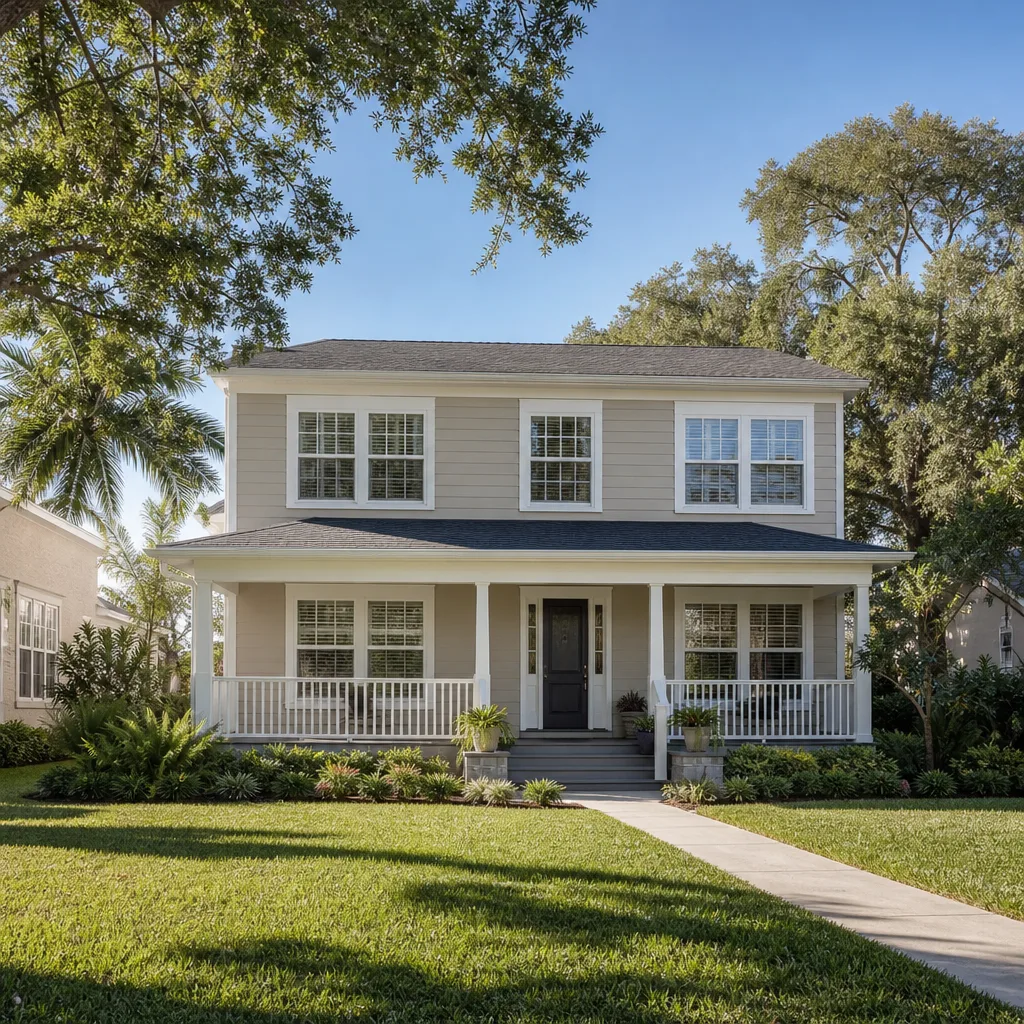
Unilock classifies its products by load rating, and matching the SKU to the real use case is where a lot of Summerlin projects go wrong. A homeowner picks a paver they like the look of, and it turns out to be rated for pedestrian traffic when the plan calls for a driveway.
A simple way to think about it:
- Pedestrian patio or walkway: pedestrian-rated products are appropriate. This is the largest share of residential work.
- Driveway or any vehicle surface: you need a product rated for vehicular load, plus a base built for it. A driveway is not a patio with a car on it.
- Pool deck: look for a product with a textured or slip-resistant finish, and factor in how it handles bare feet at high surface temperature.
- Steps and caps: match the tread and cap products to the field product so the whole assembly meets the same rating.
Ask your contractor to put the product name and load class in the written scope. If it isn’t written down, it isn’t specified – it’s a guess. A driveway in Summerlin built on pedestrian-rated material is a callback waiting on the first delivery truck.
What Does Unilock’s Warranty Require From Your Contractor?
Unilock’s product warranty runs through authorized contractors, and the registration step is easy to miss. The product warranty covers the paver itself; the installation is covered by the contractor’s own workmanship guarantee. Those are two separate things, and homeowners often assume one covers the other.
What to verify before work starts:
- Authorization: confirm with Unilock directly that the contractor is an authorized installer for the product specified. This is a phone call or a lookup, not a handshake.
- Registration: ask who files the warranty registration and get confirmation in writing that it was filed.
- Workmanship terms: the product warranty won’t cover a bad base. Get the contractor’s workmanship guarantee in writing, with its term and what it covers.
- Documentation: keep the product spec sheet and the signed scope. If something fails, that paperwork is your case.
Our own jobs are covered by the 365-Day Done Right Promise: if the work fails inside that window, we come back and correct it at no charge. That’s in writing, on every project, and it sits alongside – not instead of – the manufacturer’s product warranty. If you’re comparing installers, ask each one to show you their workmanship guarantee and their warranty registration process side by side. The difference is usually obvious.
If your project grows into a larger renovation, we also handle general contracting in Sandy Valley and full kitchen remodeling in Sandy Valley, where the same written-price discipline applies.
The Warranty-Compliance Checklist We Use Before the Final Joint Sand Set
Before the last joint sand goes down on a Summerlin Unilock job, we run a written checklist. It’s not glamorous, but it’s how the warranty stays valid and how the site ends up squared away instead of “close enough.”
- Base density confirmed. Compaction verified in lifts, with moisture conditioning documented.
- Drainage slope checked. Water moves away from the house and off the pavers.
- Product SKU and load class match the scope. What’s on site matches what’s on the signed paperwork.
- Edge restraint installed and anchored. This is what keeps the field from spreading.
- Cut pattern and layout meet spec. No creeping joints, no inconsistent bond.
- Joint sand is the correct heat-rated product. Sand goes in dry, and the surface is clean before it’s set.
- Warranty registration filed and confirmed. Product registration, plus our own written workmanship guarantee handed over.
- Site cleaned and walkthrough done. Signed scope, signed guarantee, no loose ends.
We pulled a patio job over in The Trails last summer where the caliche had been left intact under the base. Everything on top looked right. Two winters of monsoon and it was shoving. Repouring the base cost more than the original install – which is exactly why the checklist exists.
When to Call a Pro
Some of this you can check yourself: look at the joint sand, watch where water pools after rain, and see whether the edges are creeping. The rest – caliche excavation, moisture conditioning, compaction verification, load-class matching, warranty registration – is work that fails quietly and expensively if it’s done wrong. If your base is questionable, or a contractor can’t show you a written workmanship guarantee, it’s time to call. We’ll give you a written price before anything starts, and a live person answers the phone whenever you call.
Related services in Summerlin: bathroom remodeling in Sandy Valley and our Summerlin home remodeling services.
The Bottom Line
Unilock makes a solid paver, but in Summerlin the product is only half the job. The other half is desert-specific base prep over caliche, a heat-rated joint sand and UV-stable sealer, a product SKU that matches your actual load, and warranty registration that gets filed rather than forgotten. Get those right and a Unilock patio or driveway in Summerlin will hold up for the long haul. Get them wrong and the failures show up in two summers, not twenty. Bradford Remodeling Co Summerlin writes the price down before work starts, answers the phone with a real person, and stands behind every project with the 365-Day Done Right Promise – we return and correct the work at no charge if it fails within the guarantee period. If you’re in Summerlin and need help, Bradford Remodeling Co Summerlin offers free estimates – call (844) 588-0072.
Frequently Asked Questions
Most residential Unilock patio projects in Summerlin land in the range of roughly $18 to $38 per square foot installed, with caliche excavation, base prep, and heat-rated joint sand pushing toward the upper end. Driveways and pool decks run higher because of load rating and material selection. Call (844) 588-0072 for an exact written quote – estimates are free.
Not when the price is written down before work begins. Bradford gives a written price before any tool comes out, and the scope documents the product SKU, base prep, and warranty terms so there are no numbers that move at the door. If caliche conditions turn out differently than the site visit showed, that gets discussed before work continues, not after.
When a project requires a permit – typically anything touching structural grade, drainage changes, or certain hardscape scope – we handle the permitting as part of the job and make sure the work passes inspection. What’s covered is stated in the written scope. Call (844) 588-0072 and we’ll tell you what your specific project needs.
A typical patio runs several working days once materials are on site; driveway and pool deck projects take longer because of base work and load-rated product. Caliche excavation is the biggest variable – shallow caliche moves fast, deep caliche adds days. The written scope includes a schedule, and we’d rather give you an honest timeline than a fast one. Call (844) 588-0072 for a free estimate.
Written by the team at Bradford Remodeling Co Summerlin.
Need Construction Help?
Call Bradford Remodeling Co Summerlin - licensed & insured, here with fast after-hours help in Summerlin.
(844) 588-0072