Last updated November 17, 2026





Free written scope consultation - allowances, timeline, and change-order rules on paper before a single trade is scheduled
Construction Emergency Preparedness Guide for Summerlin Homes
The homeowners who recover fastest from a construction emergency aren’t the ones who spend the most or call first. They’re the ones who had documentation and a contractor relationship in place before anything broke. FEMA’s post-disaster assistance data shows that homeowners without pre-existing records of their home’s condition – photos, inspection reports, permitted work receipts – receive substantially lower claim settlements than those who can prove pre-loss state. Summerlin sits in a landscape that throws flash floods, triple-digit heat, and post-monsoon roof breaches at homes in a predictable seasonal rhythm. This guide walks through each scenario by season, what to document now, how to spot a real contractor from a storm chaser, what mitigation you can legally do yourself, and what a written emergency contract must contain.
Quick Answer
Construction emergency preparedness in Summerlin means documenting your home’s pre-loss condition (permitted work records, material specs, dated photos), understanding the three seasonal threats that hit this area – monsoon flood intrusion, summer HVAC platform failure, and winter pipe exposure in poorly insulated exterior walls – and having a licensed local contractor relationship established before you need one. The fastest recovery comes from paperwork and phone numbers you already have, not from scrambling after the damage.
Styles & brands we work with
- Kitchen remodeling
- Bathroom remodeling
- Home additions & ADU
- Roofing
- Windows & doors
- Driveway & pavers
- Fence
Table of Contents
- Summerlin’s Three Seasonal Construction Threats
- Monsoon Flood Intrusion: What Happens to Foundations
- Summer HVAC Platform Failure in Triple-Digit Heat
- Winter Cold Snaps and Exposed Exterior Pipe Runs
- What to Document Now and in What Format
- Licensed Contractor vs. Out-of-State Storm Chaser
- Temporary Mitigation You Can Legally Do Before Help Arrives
- What a Written Emergency Services Contract Must Include
Summerlin’s Three Seasonal Construction Threats
Summerlin’s construction emergencies cluster into a seasonal calendar that repeats with uncanny consistency. Understanding which threat belongs to which month lets you prepare in advance rather than react. The desert climate here isn’t the threat itself; it’s the swing between extremes that does the damage.
Monsoon season (July through September). The North American Monsoon dumps weeks of rainfall in concentrated bursts. Summerlin’s elevation, its network of washes and arroyos, and the thin desert soils that don’t absorb water quickly all funnel runoff toward foundations, garage slabs, and low-lying patio doors. Water intrusion that looks minor can undermine a stem wall or saturate a slab in a single storm.
Peak heat (late June through August). When the thermometer holds above 110°F for days, the platform your HVAC condenser sits on can degrade. Older Summerlin homes with wood-framed or lightly anchored equipment pads see vibration loosening, pad cracking, and condensate lines baking brittle. A failed condenser platform isn’t just an inconvenience – it’s a refrigerant leak risk and a fall hazard on a raised pad.
Winter cold snaps (December through February). Summerlin winters are mild on average, but a hard freeze still drops the overnight low into the low 20s every few seasons. Exterior walls on homes built to older insulation standards – particularly in the older sections of Bradford Remodeling Co Summerlin home territory – run water supply lines close to the exterior plane. Those pipes are the ones that burst when a cold snap outlasts the typical two-night event.
Each threat has a preparation window. Handle the paperwork side in spring, and the seasonal scenarios stop being emergencies and become manageable events.
Monsoon Flood Intrusion: What Happens to Foundations
Monsoon flooding damages Summerlin foundations in a predictable sequence that most homeowners don’t recognize until they see interior symptoms. Understanding the sequence tells you what to inspect and when to call.
- Sheet flow and pooling. Fast runoff crosses impervious surfaces and collects against foundation walls. In Summerlin neighborhoods near open desert corridors, sheet flow can deliver thousands of gallons in under an hour.
- Hydrostatic pressure. Saturated soil pushes against foundation walls and stem walls. Older block foundations are vulnerable to cracking at the mortar joints; poured concrete tends to crack at control joints or corners.
- Capillary wicking. Moisture migrates upward through the concrete itself. You’ll see efflorescence – the white powdery salt deposits – on the foundation’s interior face before you see standing water.
- Interior symptoms. Slab moisture wicks into flooring adhesives. Wood baseboards swell. Drywall wicks moisture up from the bottom, and you’ll smell it before you see it.
In our experience, the Summerlin homeowners who catch this early are the ones who walked the perimeter after a storm and looked for soil erosion against the foundation. A 2-inch scour line along the wall is a signal that water concentrated there. Take a photo, note the date, and call for an inspection.
This is where a pre-existing relationship matters. A contractor who has walked your property before a storm knows what normal looks like and can compare. If you’re rebuilding a flooded kitchen or lower level, our Kitchen Remodeling in Sandy Valley page outlines how we sequence wall drying, substrate removal, and rebuild – because flood restoration is a remodel, not a patch.
Summer HVAC Platform Failure in Triple-Digit Heat
When Summerlin temps hold above 110°F, an HVAC platform failure escalates fast. The platform is the concrete or composite pad your condenser sits on, usually with a bracket system or vibration isolators. Here’s what fails and when.
- Wood-framed pads. Older Summerlin homes near the original village centers may still have wood-framed platforms that have soaked, dried, and warped over multiple seasons. Warping loosens hold-downs, and the compressor’s vibration accelerates the loosening.
- Condensate line degradation. PVC or vinyl condensate drain lines crack and turn brittle in high UV and heat. A cracked line dumps water against siding and foundation – turning a minor AC issue into a water intrusion problem.
- Refrigerant line insulation. Line-set insulation that has baked to dust lets heat infiltrate the suction line, dropping your AC’s efficiency right when you can’t afford it.
- Electrical disconnect corrosion. The service disconnect at the condenser is exposed to desert dust and heat. Loose lugs and corroded contacts cause intermittent failures that look like compressor problems.
The professional inspection you want isn’t just “check the AC.” Ask for the platform itself, the hold-downs, the condensate routing, and the disconnect. If you’re facing a full exterior redesign after equipment relocation, our General Contractor in Sandy Valley page covers the structural side.
Never re-seat or re-anchor a condenser platform yourself. Refrigerant lines are under pressure, and the electrical disconnect carries live current. That’s work for a licensed HVAC contractor, not a homeowner with a pry bar.
Winter Cold Snaps and Exposed Exterior Pipe Runs
Winter pipe failures in Summerlin almost always trace back to a design issue that’s sat dormant for years. Here’s the pattern we see most often.
Homes built in the 1990s and early 2000s in certain Summerlin tracts run water supply lines through exterior wall cavities that were insulated to the standard of the day – which in Las Vegas-adjacent construction sometimes meant minimal insulation behind the drywall. In most winters, this never causes a problem, because overnight lows rarely drop below freezing for long. But every few seasons, a cold snap holds the low 20s for two or three nights running, and those wall cavities drop below freezing.
What homeowners notice first: a faucet that runs slowly, then a sudden spike in the water bill, then a wet patch on the wall or floor. By then, the pipe has burst and the damage is done. The professional mitigation is a pipe insulation upgrade during any wall renovation – which is often how we recommend homeowners handle it while other work is happening. Insulating an exterior wall properly means opening it once and doing the job right, not opening it twice.
The pipe-freeze checklist worth practicing each December:
- Disconnect exterior hoses and shut off hose bibs at their interior shutoff valves, if so equipped.
- Know where your main water shutoff is, and verify it actually moves freely.
- Open cabinet doors under sinks that sit on exterior walls during hard freezes, so warm interior air reaches the pipes.
- Photograph every exterior water line and shutoff location now, so you can document and identify them if you ever need to.
If a pipe bursts, the water shutoff is the first action – not the phone call. Once water is stopped, call for the repair.
What to Document Now and in What Format
This is the single highest-return preparedness task you’ll do. It costs a weekend and it changes the outcome of any emergency. Here’s what to gather and how to organize it.
Permits and inspection records. Pull copies of every permit ever issued on your property from Clark County’s online permit portal. Your home’s permit history tells an insurer and a contractor what work was approved, when, and by whom. That record prevents arguments about what was unauthorized and what wasn’t.
Material specifications. Keep a spreadsheet listing what products were used in your home: kitchen cabinet lines (KraftMaid and Wellborn are common in Summerlin remodels), countertop materials (Cambria and Silestone are documented brands we install), roof shingles, siding, water heater model, HVAC condensing unit model and serial. When disaster strikes, insurers want to know exactly what product they’re paying to replace. Material specs make the claim objective.
Sequenced photographs. Take photos of every room’s four walls, ceilings, floors, plumbing fixtures, electrical panel interior (breaker labels showing), and all exterior elevations. Label them with date and location. Store them in cloud backup, not just your phone. If water destroys your laptop, you need the cloud copy.
Contractor and vendor list. Keep the name and number of your licensed contractor, HVAC tech, plumber, and electrician. The contractor relationship is the difference between “I know who to call” and “I have to start interviewing.”
A good organizational format: one folder, cloud-synced, named “[Year] Property Records,” with subfolders for Permits, Photos, Materials, Vendors. Update it every time work is done, every spring, and after any major purchase.
Licensed Contractor vs. Out-of-State Storm Chaser
After any weather event in Summerlin, out-of-state operators arrive within days. They knock doors, offer to start “first thing tomorrow,” and quote verbally. Here’s how to tell the difference – and how to protect yourself.
- Licensing. A Nevada-licensed contractor carries a valid state contractor’s license with a verifiable number you can check with the Nevada State Contractors Board online. Ask for it, check it, and confirm the classification matches the work.
- Local knowledge. A local contractor knows Summerlin’s soil types, foundation styles across village eras, the permit process, and the inspection climate. A storm chaser doesn’t.
- Written price before work. Legitimate contractors put a written price in your hand before any work begins. Verbal estimates and “we’ll settle up at the end” are red flags.
- Insurance documentation. A licensed local contractor carries liability insurance and workers’ compensation coverage, and can produce certificates. Storm chasers often can’t.
- Guarantee in writing. Our 365-Day Done Right Promise is written into every project – a full year of coverage, with a free return visit if the work fails. Storm chasers leave town; a written guarantee means someone will still answer the phone in twelve months.
- Background-checked crew. You should know exactly who’s coming to your door. Bradford Remodeling Co Summerlin sends background-checked, uniformed technicians with credentials verified before the crew arrives.
- Live person on the phone. When something’s broken at 2 AM, you need a live person, not a voicemail. Bradford Remodeling Co Summerlin answers the phone 24/7 with a real human.
If a door-knocker can’t answer “what’s your license number” and “will you put your price in writing before you start,” send them on. The next crew that walks up may be the right one.
Temporary Mitigation You Can Legally Do Before Help Arrives
You can take immediate steps to stop damage before a contractor arrives, and doing so is generally expected – not penalized – by insurance carriers, provided you document what you did. The key word is temporary. These steps preserve property; they don’t repair it.
- Shut off the water. If you suspect a pipe burst, close the main water shutoff at the meter or interior valve. Photograph the shutoff position before you turn it, so you can show the pre-loss state.
- Kill the electricity to any wet area. If water is near outlets or the panel, turn off the affected circuits at the breaker. Do not touch a wet panel or standing water near it. Call an electrician.
- Extract standing water. Use a wet/dry vacuum or towels to get standing water off the floor. Document the depth with a ruler photo before you start.
- Tarp damaged roof areas. Use a heavy tarp and rope from the ground – never climb a wet roof. Tarp edges should overlap shingle courses downward, and you should photograph every tarp placement.
- Move valuables and furniture out of the affected zone. Take photos before you move anything.
- Photograph everything before, during, and after. Number the photos sequentially. This is what the adjuster uses.
Do not: pull drywall without documenting it, re-wire anything, tape over an electrical issue, or touch a gas line or gas appliance. Gas and electrical work require a licensed professional. Tarping, water extraction, and shutoffs are the safe envelope.
What a Written Emergency Services Contract Must Include
An emergency contract is a different document than a standard remodel contract. Emergency pricing is real – legitimate contractors charge for after-hours response, weekend dispatch, and rapid material procurement – but the contract must be specific about what that pricing covers and, just as importantly, what it does not.
- Scope of work. What’s being done now (stabilization, mitigation, temporary repairs) versus what’s deferred to a later scope. These should be separated and priced separately.
- Timeline. When work begins, when stabilization is complete, and when the final scope begins. Emergency work should have a clear stabilization window, often 24-72 hours, and a clear transition to scheduled repair.
- Rate structure. Emergency pricing should be stated as an hourly rate, a flat fee per service, or a defined multiplier of standard rates. It must not be “whatever the situation calls for.”
- What emergency pricing covers. After-hours labor, mobilization, materials procured at emergency rates, and any specialty equipment. It should not cover routine overhead, administrative fees, or “processing” charges tacked on after the fact.
- What it doesn’t cover. Anything outside scope, additional damage discovered during mitigation, or upgrades to code-required items. These should trigger a written change order – not a surprise invoice.
- Guarantee language. The written workmanship guarantee must appear in the contract, with its full term stated. Every Bradford Remodeling Co Summerlin project carries the 365-Day Done Right Promise – one full year of written coverage, with a free return visit if the work fails.
- Payment terms. Due dates, payment methods, and what happens if the insurance claim is delayed. No “due immediately” surprises.
- License and insurance. The contractor’s license number and insurance documentation should be attached.
Insist on a written price before any work begins – this is non-negotiable at Bradford. If a contractor won’t put it in writing, don’t hire them for emergency work.
Common Mistakes to Avoid
- Skipping the pre-season photo walk. Every Summerlin homeowner should walk their property with a camera at least twice yearly. Without dated photos proving pre-loss condition, insurers will argue about how much damage existed before the storm.
- Hiring the first door-knocker after a monsoon. Out-of-state crews arrive fast after any weather event and vanish just as fast. Check the state license number before signing anything.
- Doing temporary drywall tear-out before photographing the moisture. Pulling wet drywall without documenting it first can invalidate parts of an insurance claim. Photograph first, then remove.
- Ignoring foundation efflorescence. The white mineral bloom on a foundation wall is water telling you it’s moving through the concrete. A Summerlin household that ignores this often discovers damage during a subsequent monsoon.
- Believing every verbal quote. A verbal price means nothing at the door. Require written pricing, in hand, before work begins.
- Skipping the HVAC platform inspection each spring. A 15-minute pre-season look at the condenser pad, hold-downs, and condensate line catches failure before 110°F weather arrives.
- Not storing records in the cloud. A water event that destroys your home also destroys the records in your home. Cloud backups matter.
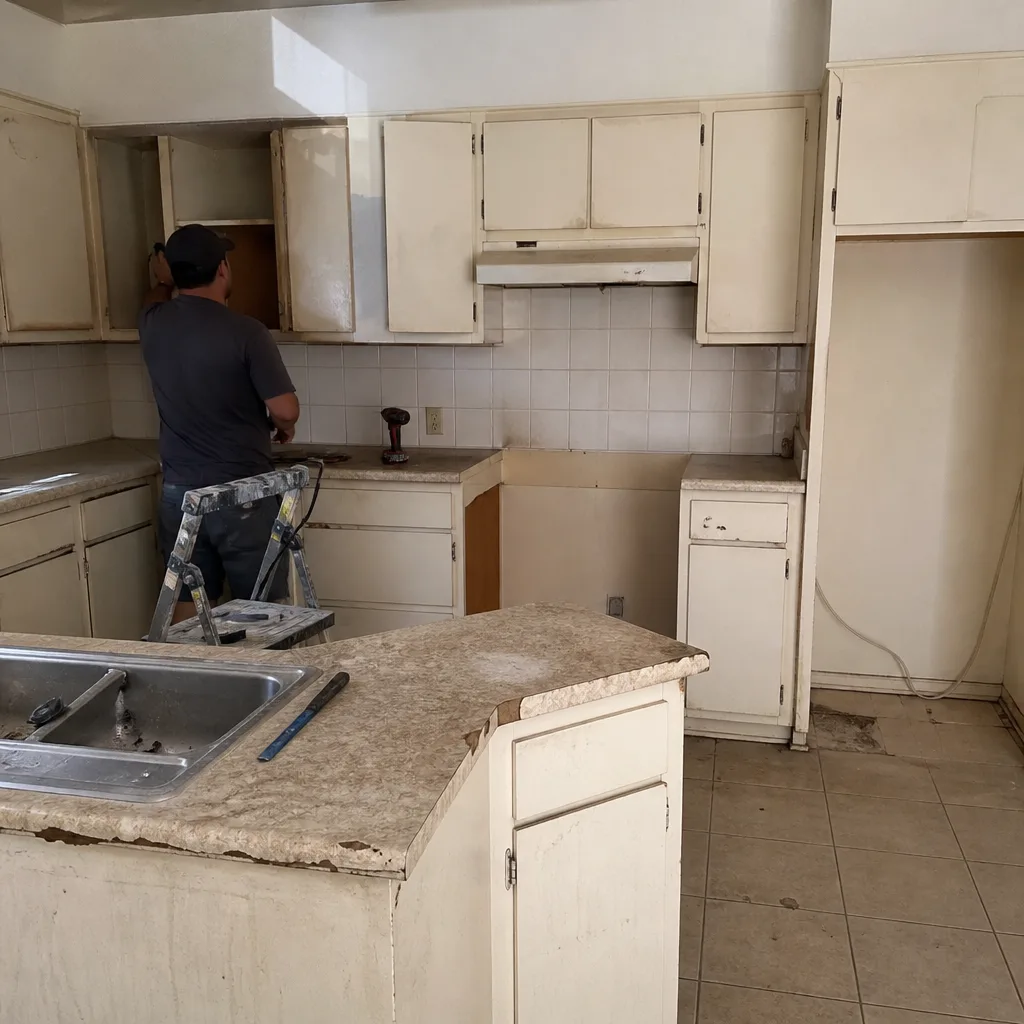
See the difference
 Before
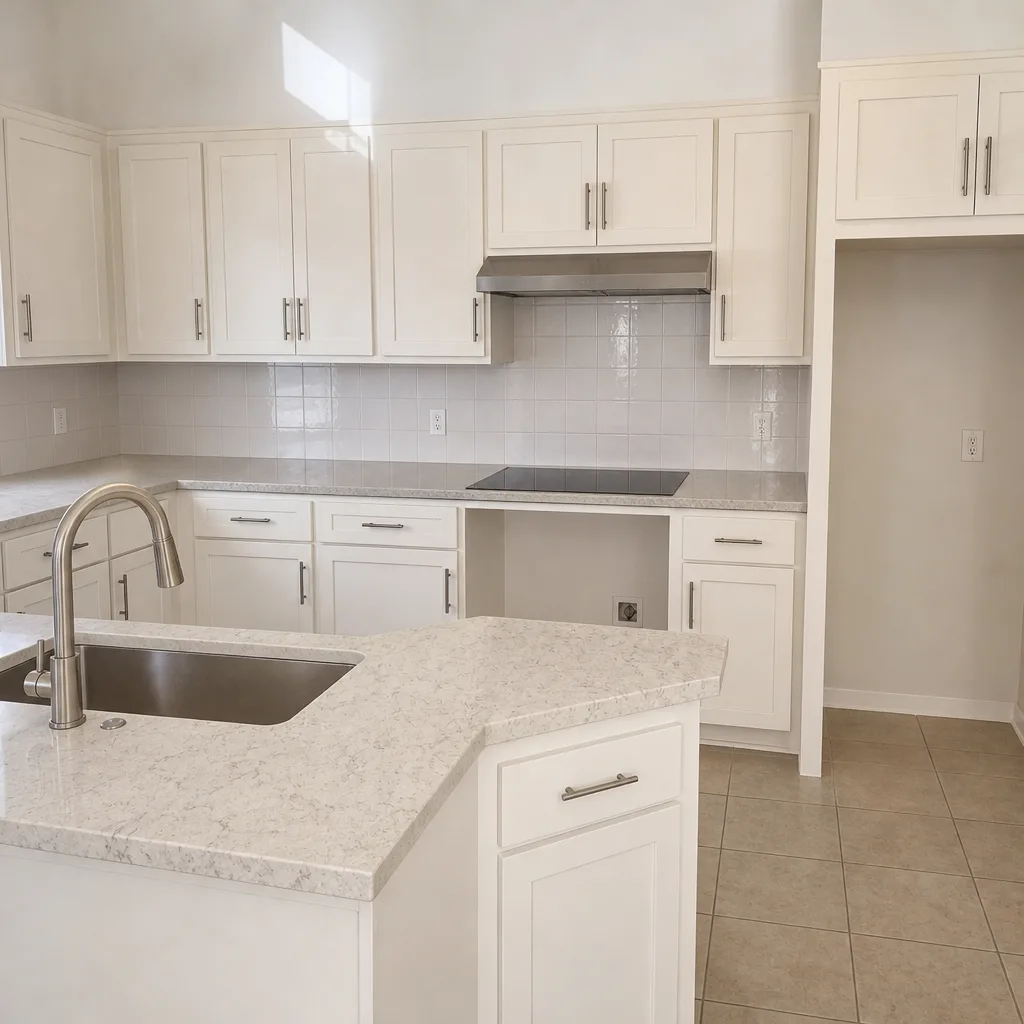 After
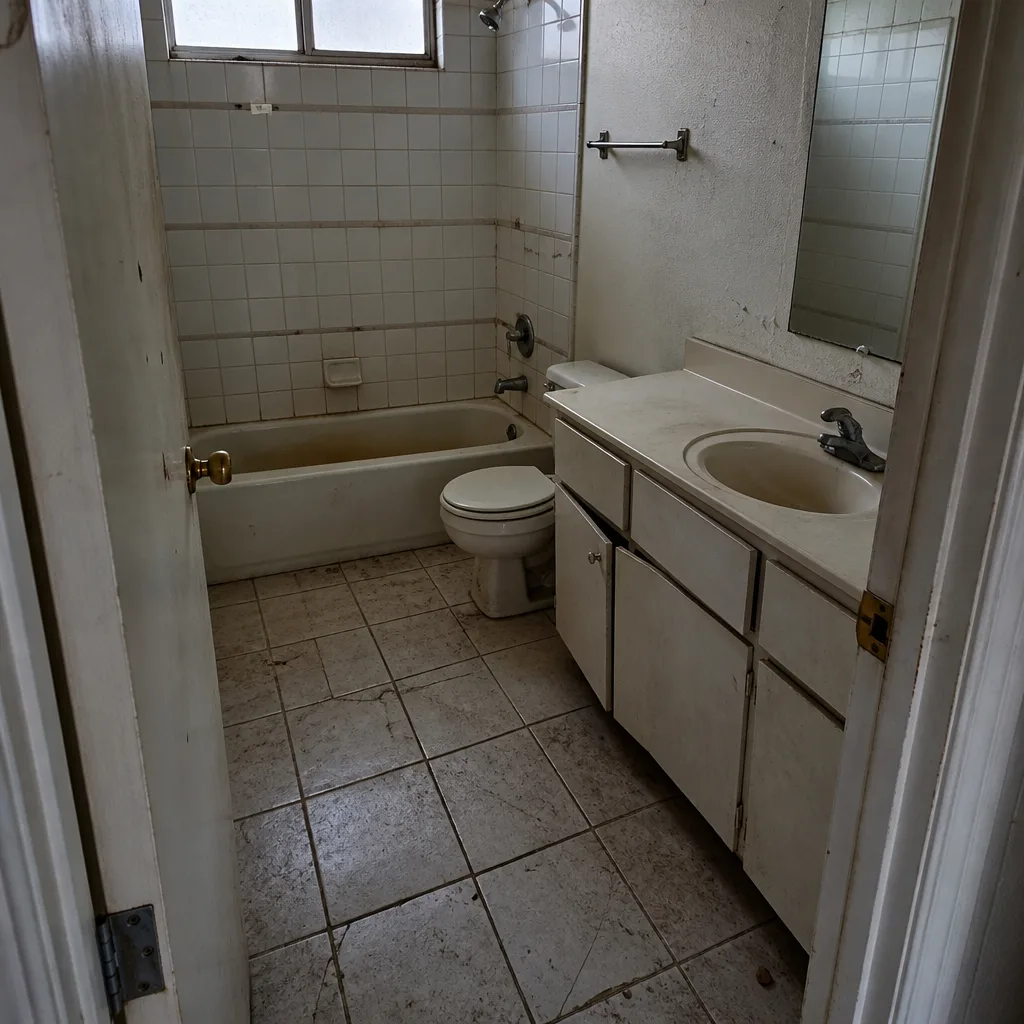 Before
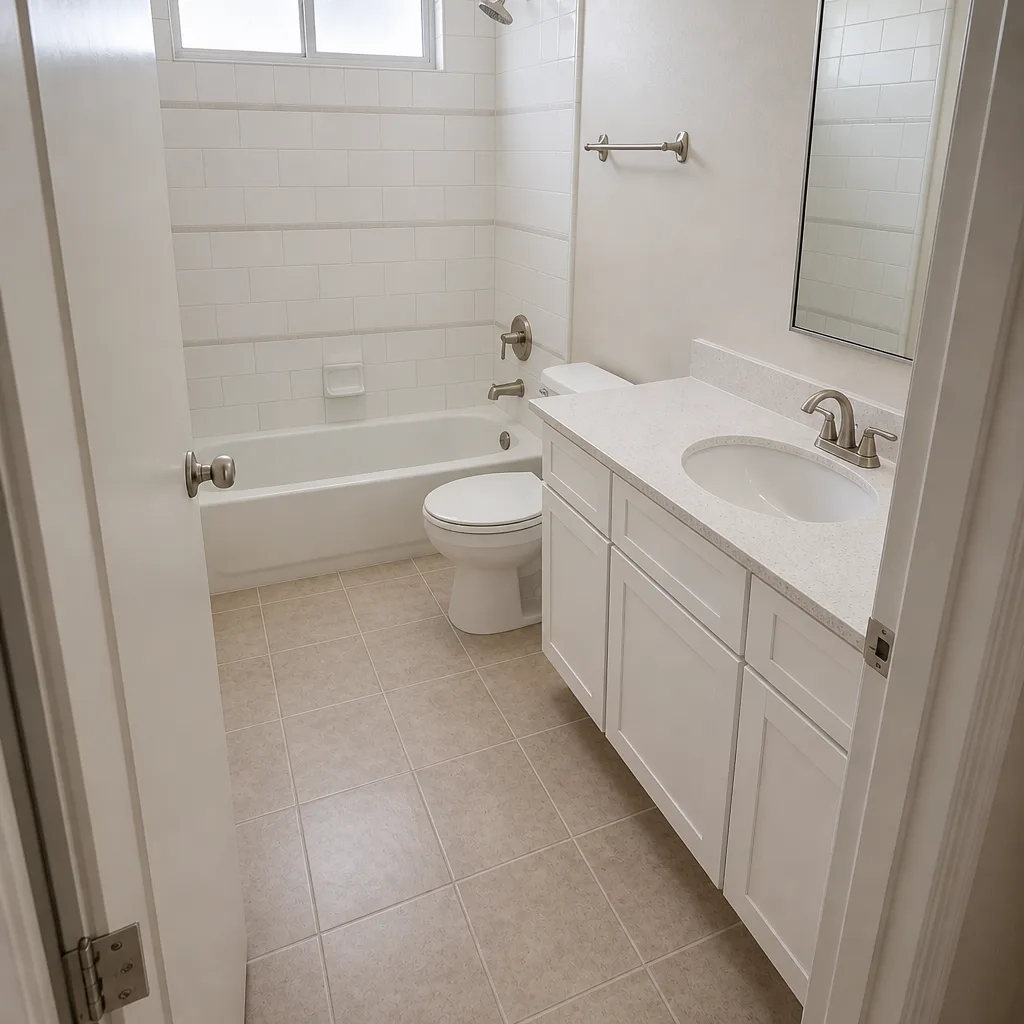 After
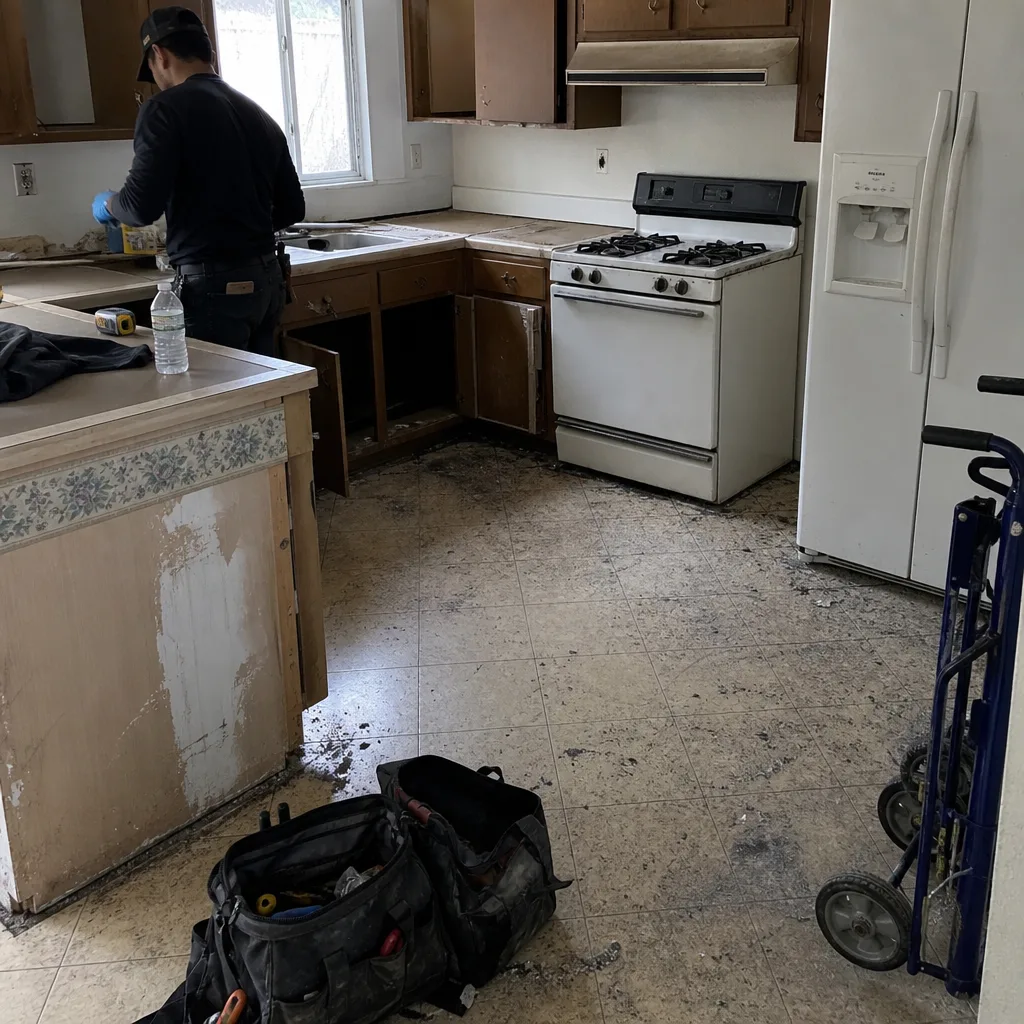 Before
 After
When to Call a Professional
Call for a licensed professional when water is actively entering your home, when a pipe has burst or a foundation has visibly cracked, when the HVAC platform has failed or a condenser is exposed, when roof damage has breached the weather seal, or when a Summerlin property shows interior moisture symptoms like efflorescence, swelling baseboards, or persistent damp smells. Also call if you’re unsure – a $0 diagnostic visit is always cheaper than a repaired surprise. Bradford Remodeling Co Summerlin offers free estimates in Summerlin – call (844) 588-0072 to schedule. You’ll get a written price before any work begins, background-checked uniformed technicians at your door, and the 365-Day Done Right Promise in writing on every completed project. If you’re planning the post-emergency rebuild, our Bathroom Remodeling in Sandy Valley page shows how we handle the plumbing-side scope.
Frequently Asked Questions
Emergency water mitigation in Summerlin typically runs $1,200 to $4,500 for most residential events, with cost driven by the affected square footage, water category (clean vs. gray vs. black), and how long before extraction begins. Foundation crack injection runs $500 to $1,800 per crack depending on depth. Call (844) 588-0072 for an exact quote – estimates are free, and a written price is provided before any work begins.
Not necessarily – the answer depends on the carrier and the claim type. Most Nevada carriers distinguish between weather-driven claims (which are generally treated as no-fault events) and negligence claims. That said, filing documentation now protects you either way. Photograph the pre-loss condition of your home yearly and keep the files cloud-stored. Call (844) 588-0072 for a free inspection before storm season.
You can tarp your own roof from the ground using rope and heavy poly tarp if you can do so safely without climbing a wet roof – never climb a wet roof. Tarps should overlap downward along shingle courses and be photographed during placement. For any roof access, call a licensed contractor. Call (844) 588-0072 for a free assessment.
Ask for the state contractor’s license number and verify it with the Nevada State Contractors Board online. The license should be active, and its classification should match the work being done. Bradford Remodeling Co Summerlin sends background-checked, uniformed technicians on every job, so you know exactly who’s arriving. Call (844) 588-0072 to schedule a free estimate.
It needs a clear scope (stabilization vs. deferred repair), a timeline, a rate structure that spells out exactly how emergency pricing is calculated, and explicit language about what emergency pricing does and does not cover. It should also state the guarantee term in full. Every Bradford project carries the 365-Day Done Right Promise. Call (844) 588-0072 for a free estimate with written pricing.
Yes. Bradford Remodeling Co Summerlin operates as a member of the Garrison Partners family, established in 2004, and every project goes through our state-licensed and fully insured process. Our technicians have up to 22 years of experience, and every completed project carries the 365-Day Done Right Promise. Call (844) 588-0072 for a free estimate.
The Bottom Line
Summerlin’s construction emergencies follow a season: monsoon flooding July through September, HVAC platform failures at peak heat, and winter cold-snap pipe bursts. The homeowners who recover cleanly are the ones who documented pre-loss condition in photos, permits, and material specs, and who had a licensed local contractor relationship before the event. You can’t prevent the weather, but you can make sure the recovery is fast, documented, and fully covered – with a written price before work begins and a written guarantee after it ends. If you need help now or want to prepare, call (844) 588-0072 for a free estimate.
Written by the team at Bradford Remodeling Co Summerlin.