
Belgard General Contractor in Summerlin: A Homeowner’s Guide
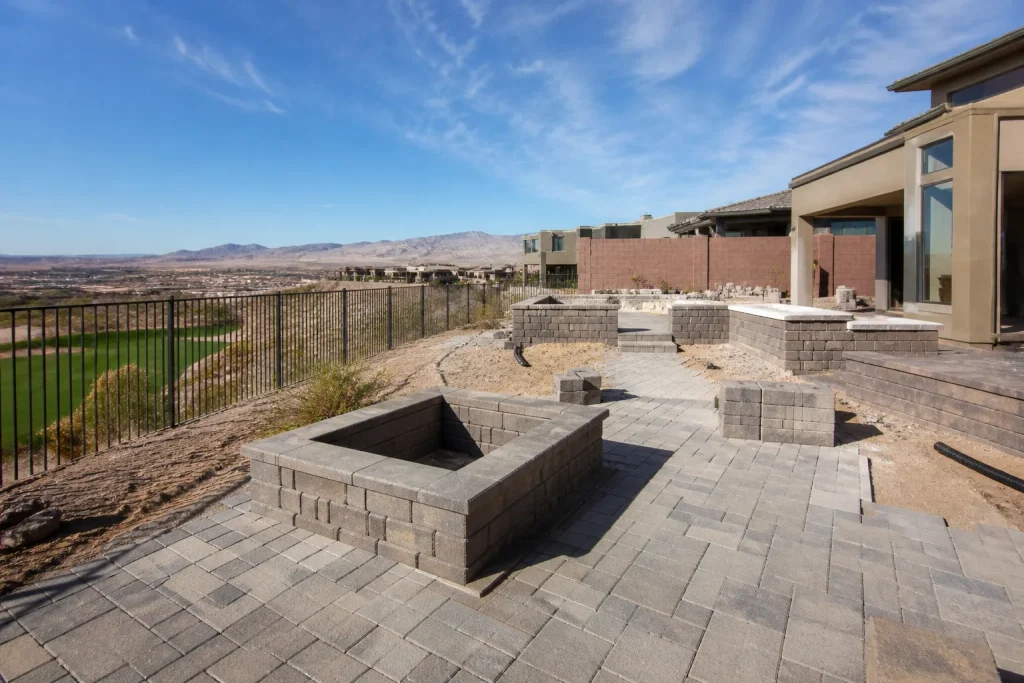
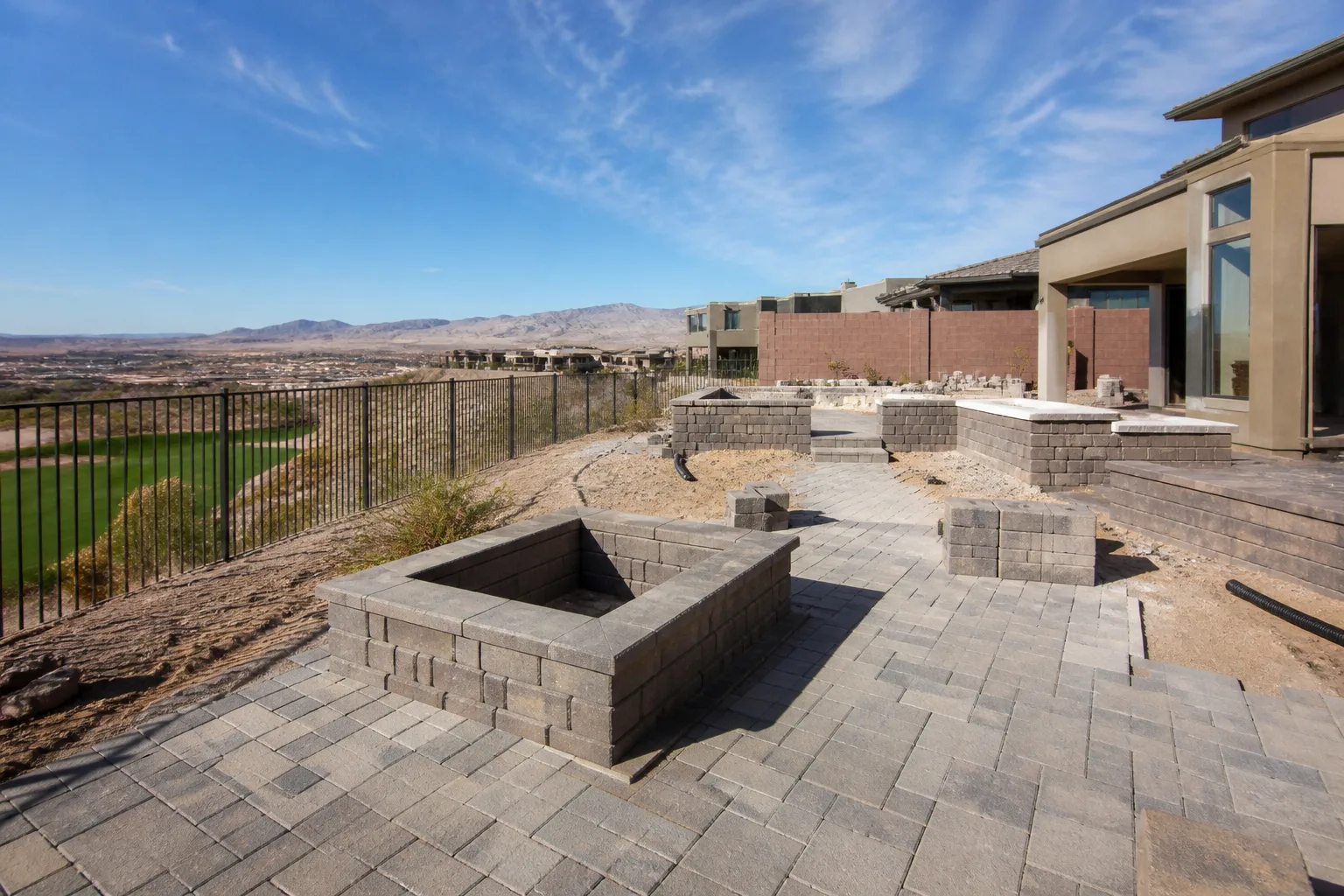
Belgard’s lifetime warranty has four base-preparation conditions. Most installed patios in the Las Vegas Valley fail at least one of them, and the homeowner never knew to ask. The warranty doesn’t cover the pavement surface so much as the system underneath it, and in Summerlin’s caliche soil, the base is where installs quietly go wrong. This guide is the checklist we wish every Summerlin homeowner had before signing a hardscape estimate.
If you’d rather not sort through base specs and warranty language on your own, call (844) 588-0072 and we’ll walk through what a compliant Belgard install actually requires in your yard.
Why does base preparation decide whether your Belgard pavers last in Summerlin?
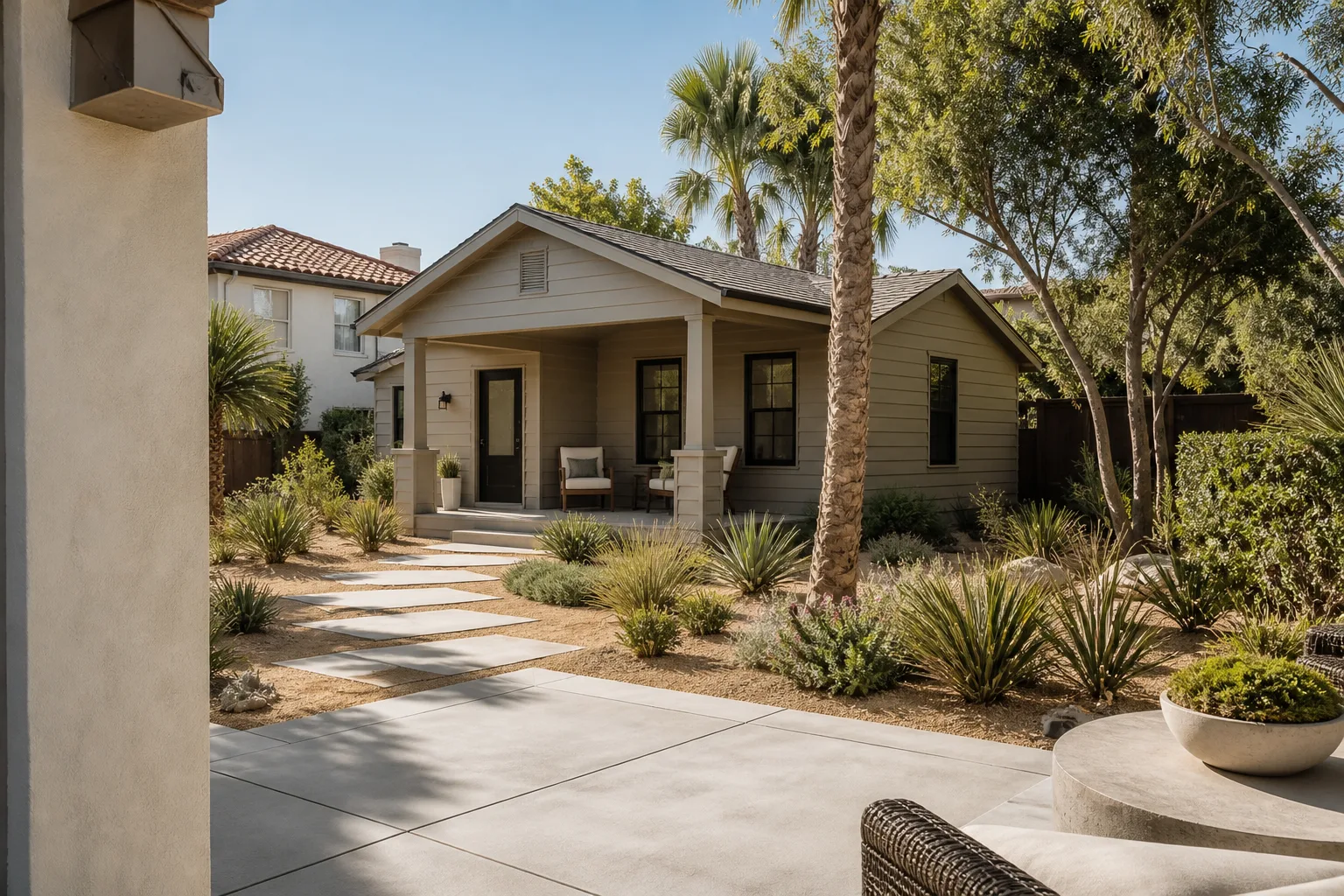
Base preparation decides whether Belgard pavers last in Summerlin because the product warranty is conditioned on it. Belgard’s lifetime warranty covers manufacturing defects in the pavers themselves. It does not cover failures caused by an inadequate base, missing edge restraint, or the wrong joint sand. When a paver cracks or a patio settles into a wave within three years, the cause is nearly always underneath the surface, and the remedy falls outside the product warranty.
What we see in Summerlin is specific. Caliche, the calcium-carbonate hardpan that runs under much of the valley, does two things to a paver job:
- It resists compaction. A plate compactor bounces off caliche rather than consolidating it. The aggregate base sitting on top never locks, and the pavement above it shifts under foot traffic and irrigation cycles.
- It holds water. Caliche is nearly impermeable. Water that soaks through the joints pools on the hardpan and softens the base from below. That’s why so many valley patios fail at the edges first.
A contractor who treats Summerlin like ordinary desert soil will over-compact the native ground, under-prepare the aggregate, and hand you a patio that looks right for two seasons. The fix isn’t exotic. It’s a deeper, properly graded base with the caliche broken up or removed where it interferes with drainage.
What compacted aggregate base depth does Belgard require for patios, walkways, and driveways?
Belgard specifies different compacted aggregate base depths by application, and Clark County’s residential standards line up closely with them. These are compacted depths after compaction, not loose fill depths. That distinction matters, because loose aggregate loses roughly a quarter of its depth once it’s compacted.
| Application | Compacted base depth | Notes for Summerlin soil |
|---|---|---|
| Walkways and garden paths | 4 inches | Break up caliche; add drainage fall away from the house |
| Patios and seating areas | 4 to 6 inches | 6 inches where irrigation runoff crosses the area |
| Residential driveways | 6 to 8 inches | 8 inches over caliche or where vehicles park on the pavement |
The aggregate itself should be crushed stone, angular, with a mix of sizes so it locks together. Rounded river rock doesn’t interlock and shouldn’t be in the base at all. Ask your contractor to name the aggregate spec and the compacted depth for each area in the written estimate. A contractor who can’t answer that in writing hasn’t planned the job.
How does caliche change the job in Summerlin compared to standard desert prep?
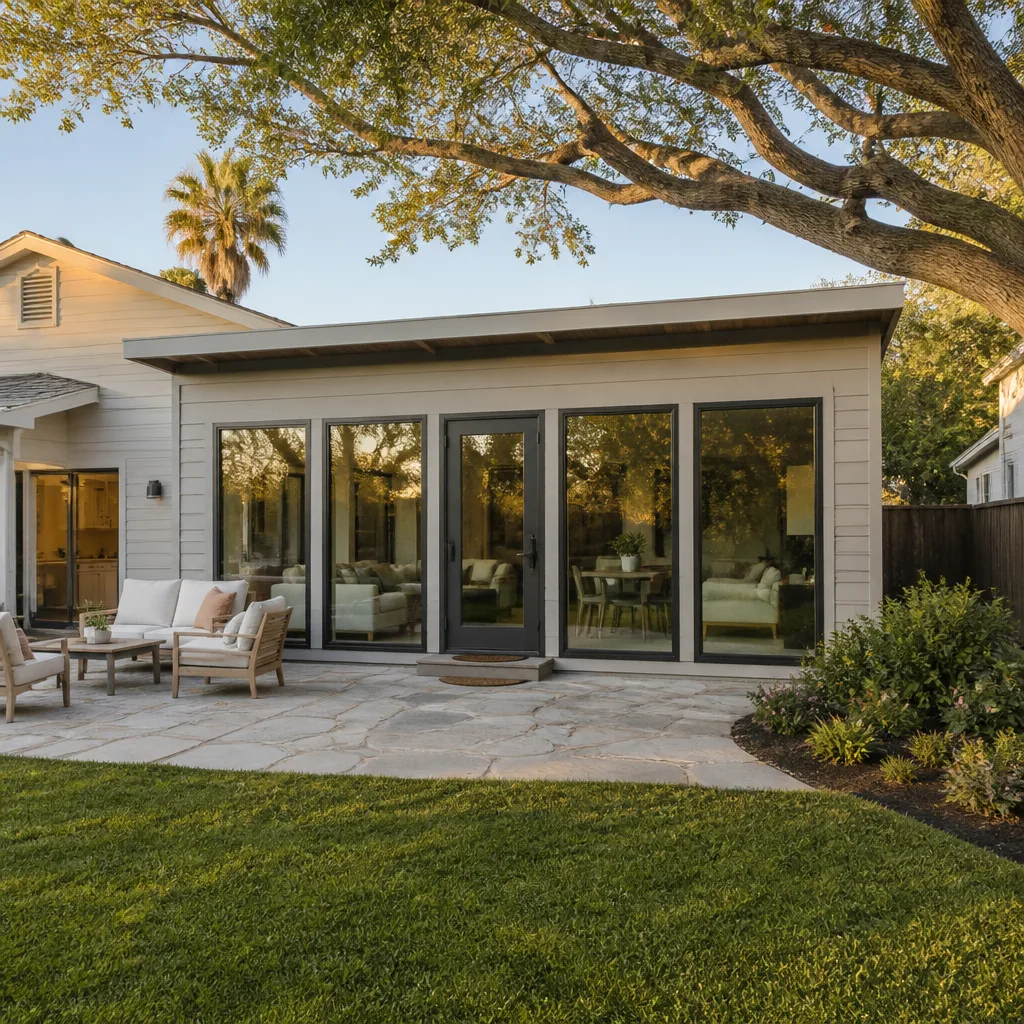
Caliche changes the job because standard desert prep assumes soil that drains. Most of the Las Vegas Valley doesn’t work that way, and the older Summerlin villages in particular sit over hardpan that behaves more like concrete than dirt. A contractor working from a generic desert template will skip the steps that caliche makes mandatory.
Here’s what proper caliche prep looks like on a Summerlin paver job:
- Test the subgrade. Dig a test hole in the actual work area. If the shovel rings off caliche two inches down, the plan changes.
- Break up or remove the hardpan. Scarify the caliche to a depth that lets water move, or excavate and replace the top layer with engineered fill. This is the step most estimates leave out.
- Grade for drainage before the base goes down. Fall should run away from the house and toward a planned low point, not toward the neighbor’s wall.
- Compact in lifts. Aggregate goes down in two-inch lifts, each one compacted before the next goes on. Dumping eight inches and running the compactor once leaves soft spots throughout.
- Verify with a proof roll. A loaded plate compactor or small roller should pass over the finished base without leaving ruts. If it ruts, the base isn’t done.
We pulled a patio out of a backyard over in The Ridges last season where the original crew had laid pavers directly over scarified caliche with about an inch of sand. The pavers were Belgard. The warranty was worthless because the base never existed. That’s a costly lesson a homeowner shouldn’t have to learn twice.
What edge restraint does Belgard require, and why does the type matter?
Belgard requires edge restraint that holds the paver field against lateral movement, and the restraint type has to match the application. Edge restraint is the border that keeps the pavers from spreading outward under load. Without it, the field fans apart at the edges, joints open, and the whole pavement starts to loosen.
- Plastic snap-edge restraint is standard for patios and walkways. It’s spiked into the base at the manufacturer’s specified spacing, typically every 8 to 12 inches, and set tight against the paver course.
- Aluminum or steel edge restraint is the correct choice for driveways and any surface taking vehicle loads. It’s a stiffer section, spiked more densely, and it resists the higher lateral forces a car or truck puts on the pavement.
Why the distinction matters for warranty compliance: a plastic snap-edge spiked loosely into soft base is the most common edge failure we correct. The spikes pull, the restraint shifts, and the outer course walks out of line within a season. On a driveway, plastic restraint is simply the wrong product. Ask for the restraint type and spike spacing in writing.
How do you read a Belgard contractor estimate in Summerlin and confirm the specs?
You read a Belgard estimate by checking whether it names the base depth, the aggregate, the edge restraint, the joint sand, and the sealer as line items. A credible estimate answers those five questions on paper before it gives you a total price. A one-line “Belgard paver patio, turnkey” bid tells you nothing and leaves every shortcut on the table.
Here’s what we put in a written estimate for a Summerlin paver job, and what you should require in yours:
- Excavation and caliche handling as a separate line, with a depth and haul-off included
- Aggregate base by spec and compacted depth, per area (patio vs. driveway)
- Edge restraint by product type and spike spacing
- Polymeric sand named by brand and spec, not just “joint sand.” Joint sand is a warranty condition, not a detail.
- Sealer named by product and application method (spray vs. roller), with a reapplication interval
- Belgard paver series named by SKU and color, so the paperwork matches what gets delivered
Belgard pavers sit in a documented brand roster alongside the rest of what we install, including KraftMaid cabinetry, GAF roofing, and James Hardie siding. That matters here because it means the product spec is traceable to the manufacturer, and the written price you’re handed can be matched line by line to the manufacturer’s own installation guidance.
We also hear the standard question on every hardscape estimate, so here’s the answer: will the price change once work starts? Not at Bradford. The written price is the price. If we find caliche where the test hole didn’t show it, that conversation happens before the work continues, not on the invoice. A hardscape job in Summerlin runs from about $12 to $28 per square foot installed, depending on paver series, site access, and how much caliche the excavation turns up. A simple patio sits near the low end; a driveway with aluminum edge restraint and a tight lot sits near the top.
When to call a pro
If your current patio is already rocking, settling at the edges, or holding water after rain, call a professional before you spend another season patching it. Re-laying pavers over a bad base just repeats the failure. If you’re considering a larger outdoor build alongside the hardscape, our Bradford Remodeling Co Summerlin home page shows the full scope of work we take on.
What does Bradford’s written guarantee cover beyond the Belgard product warranty?
Bradford’s written guarantee covers our labor and installation, which the Belgard product warranty does not. The Belgard warranty covers the pavers against manufacturing defects. Our 365-Day Done Right Promise covers the work: the base, the edge restraint, the joint sand, and the install itself. If a paver settles, a joint opens, or the edge restraint gives way within the first year, we come back and correct it at no charge.
The re-leveling timeline is part of that written guarantee. We specify the inspection window, the re-leveling scope, and the callback process in the paperwork you sign, so there’s no argument at the door about what’s covered and what isn’t. That’s The Garrison Standard at work: the guarantee is signed before the crew shows up, not after.
The 365-Day Done Right Promise goes beyond that. If the work fails inside the year, we come back and make it right, and the guarantee period resets on the corrected work. That’s the part most hardscape warranties don’t offer, and it’s the part that matters when caliche was better at hiding than your contractor was at finding it.
The Bottom Line
Belgard pavers are a solid product with a real warranty, but in Summerlin the warranty lives or dies on the base prep: compacted aggregate depth matched to the application, caliche handled correctly, edge restraint chosen to suit the load, and joint sand and sealer spec’d by name. Get those four things in writing and you’re buying a pavement that should last decades. Skip them and you’re buying a three-year headache. If you’re in Summerlin and need help, Bradford Remodeling Co Summerlin offers free estimates. Call (844) 588-0072.
Related services in Summerlin: We handle hardscape and full general contracting work at General Contractor in Sandy Valley, and if the project grows into the house, our Kitchen Remodeling in Sandy Valley and Bathroom Remodeling in Sandy Valley pages cover the interior side.
Frequently Asked Questions
A Belgard paver patio in Summerlin runs roughly $12 to $28 per square foot installed, depending on the paver series, site access, and how much caliche excavation the job needs. A 300-square-foot patio typically lands between $4,500 and $7,500. Call (844) 588-0072 for an exact quote – estimates are free, and we give you a written price before any work starts.
No. The Belgard lifetime warranty covers manufacturing defects in the pavers, not installation failures. Base problems, missing edge restraint, and improper joint sand fall outside the product warranty. That’s why our 365-Day Done Right Promise covers the install and labor separately, and in writing.
For a residential driveway, plan on 6 to 8 inches of compacted aggregate, with 8 inches over caliche. Patios need 4 to 6 inches, and walkways 4 inches. These are compacted depths and should be listed by area in the written estimate before work begins.
Edge settling almost always traces to inadequate edge restraint. A plastic snap-edge spiked too loosely or into a soft base will shift, and the outer paver course follows it. It’s the most common failure we correct on Summerlin paver jobs, and it’s preventable with the correct restraint type and spike spacing specified in writing up front. Call (844) 588-0072 if your patio is already settling and you want an honest look at what it’ll take to fix.
Written by the team at Bradford Remodeling Co Summerlin.
Need Construction Help?
Call Bradford Remodeling Co Summerlin - licensed & insured, here with fast after-hours help in Summerlin.
(844) 588-0072